
Quick Answer: Should I Day Trip or Overnight in Sokcho for Seoraksan?
If you've only got one day in Seoul and you're eyeing Seoraksan, here's the honest truth from someone who's done both the rushed day trip and the slow 3-day loop more times than I can count: Seoraksan, Sokcho, and Yangyang sit ridiculously close on the map — we're talking 20-30 minutes apart — but each solves a totally different part of your trip. Seoraksan is the mountain, Sokcho is the city base with the bus terminal, Jungang Market, and cheap guesthouses, and Yangyang is the surf-and-beach extension with the tiny international airport YNY down south. Most guides online only cover one of the three, which is why planning feels confusing.
This post covers how to combine all three, whether you're doing a tight one-day sprint from Seoul or a relaxed 2-3 day loop. Seoraksan National Park itself spans four cities — Sokcho, Goseong, Yangyang, and Inje — but 90% of foreign visitors use the Sokcho entrance called Sogongwon. That's the one with Sinheungsa Temple, the cable car to Gwongeumseong Fortress, and the trails to Biseondae and Ulsanbawi. Sokcho is the practical home base because Seoul's Express Bus Terminal and Dong-Seoul Terminal both dump you at Sokcho Express Bus Terminal in 2 to 3.5 hours depending on traffic. There's no direct train — don't waste time looking for one. Car rental gives you flexibility but you'll be stuck in weekend traffic on the Yeongdong Expressway and you'll need Naver Map or KakaoMap because Google Maps navigation doesn't work well for driving in Korea. Flying into Yangyang Airport is technically possible — it handles a few seasonal domestic and charter flights from Busan, Jeju, and sometimes international charters — but schedules are so limited it's not a reliable primary entry point for most international visitors.
Can you day trip Seoraksan from Seoul? Yes, but you'll spend 4+ hours on buses round-trip, which leaves a super narrow window for the park itself. If you're fit and only want the cable car plus Sinheungsa Temple, it's doable. But if you want Ulsanbawi — that iconic jagged rock face you see on every poster — you'll need 3-4 hours of serious hiking with chains and steep steps. That's why I always nudge people toward an overnight or 2-night stay in Sokcho. It lets you ride the cable car without the 7am panic, wander Jungang Market at night for sundae and dakgangjeong, catch sunrise at Sokcho Beach, and still have time for Yangyang's surf beaches if you want that laid-back afternoon. The park entrance became free in May 2023, but Gwongeumseong cable car is separate, paid, same-day-ticket-only, no online booking, and it sells out or shuts down for wind with zero warning. So arrive early, check the official Sorak Cable Car site the morning of, and have a Plan B like Biseondae Walk if wind kills your ride. For local transport, Sokcho city bus 7 or 7-1 connects downtown to Sogongwon in 30-40 minutes for about 1,300-1,500 KRW with T-money — you can buy the card at any CU or GS25. Taxis are faster but pricier, especially with luggage.
Need translation for "Seoraksan" and "Sokcho"?
In Chrome, right-click and choose Translate to your language.
如果您需要中文,请在Chrome中右键点击并选择翻译成中文。
Chromeで右クリックして日本語に翻訳を選択してください。
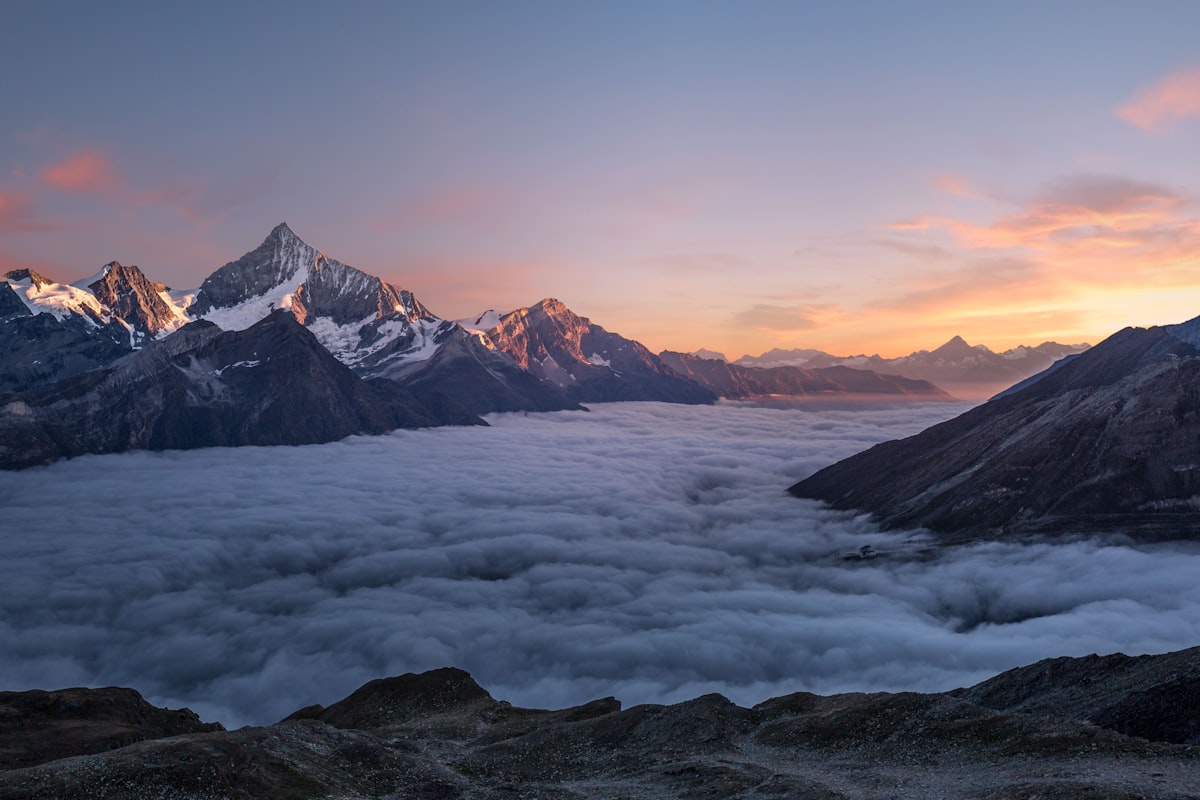
- Introduction
- Where Are Seoraksan, Sokcho and Yangyang? Orientation
- How to Get There from Seoul
- One Day or Overnight? Choosing Your Trip Length
- Seoraksan National Park: What to See and the Cable Car
- Getting Around Once You're There (Local Bus 7/7-1, Taxi)
- Sokcho City: Where to Base Yourself
- Yangyang: Beaches, Surfing, and the Airport
- Sample Itineraries: 1-Day, 2-Day, 3-Day Loop
- Practical Tips and Common Mistakes
- FAQ
Introduction: Why Sokcho, Seoraksan and Yangyang Work as One Trip
I've watched so many friends plan Korea and hit the same wall: they open Naver, type Seoraksan, find 800 blog posts in Korean about one hiking trail, then type Sokcho, get seafood restaurant lists, then type Yangyang, get surf camp ads, and end up thinking these are three separate trips. They're not. If you're coming from Seoul, you'd be leaving half the experience on the table by not linking them.
Here's how I explain it when I meet travelers at the Seoul bus terminal: think of Seoraksan as the reason you go east — that dramatic, granite-spiked mountain range that looks like someone crumpled paper and turned it into peaks. Sokcho is how you actually do it — it's got the only real bus terminal in the region, a walkable downtown, Jungang Market where you can eat sundae and squid sundae and dakgangjeong chicken for 6,000 KRW, and Abai Village across the little ferry where North Korean refugees settled decades ago. And Yangyang is the bonus you didn't know you needed — wider, emptier beaches than Sokcho, surf schools where you can rent a board for 30,000 KRW, and that tiny airport YNY that occasionally saves you a 3-hour bus ride if you're coming from Jeju or Busan.
This guide is written for foreign tourists who are curious but overwhelmed. I'm not going to throw you a listicle of 27 things to do. I'm going to walk you through how I actually plan this for friends who don't have a car, don't speak Korean, and have 1-3 days to spare from Seoul. We'll cover how to get from Seoul without a car, why there's no train and what to do instead, how the cable car really works (same-day tickets only, no online reservation, wind closures that ruin Instagram dreams), local bus 7 and 7-1 that cost you basically a coffee, where to sleep in Sokcho without overpaying, and sample itineraries you can copy-paste.
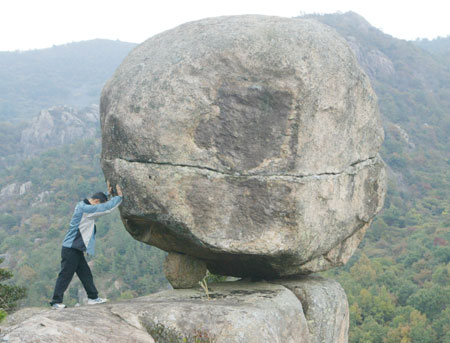
Where Are Seoraksan, Sokcho, and Yangyang? Orientation for First-Timers
Let's pin this on a mental map. South Korea's east coast is a straight-ish line from Gangneung up to the DMZ. Right in the middle of that line sits Seoraksan National Park, which technically sprawls across four administrative areas: Sokcho-si to the northeast, Goseong-gun to the far north, Yangyang-gun to the south, and Inje-gun inland to the west. But when people say "I'm going to Seoraksan," 90% of the time they mean the Sokcho entrance — Seoraksan Sogongwon. That's where the national park office, Sinheungsa Temple, the cable car base station, and the main trailheads for Biseondae and Ulsanbawi all live.
Sokcho itself is a compact harbor city of about 80,000 people. It's got two personalities: the fishing port with Sokcho Beach and Jungang Market on one side, and the mountain gateway on the other. Downtown to the park entrance is 7km, about 30 minutes by bus. You can walk from the express bus terminal to most guesthouses in 10 minutes, and to Jungang Market in 15. That's why I always tell people to base in Sokcho, not inside the park. The park has expensive, dated condos, while Sokcho has everything from 35,000 KRW dorm beds near the terminal to 150,000 KRW sea-view hotels.
Yangyang is 20km south of Sokcho, about 25 minutes by intercity bus or taxi. If Sokcho feels like a working city that happens to have a beach, Yangyang feels like a beach town that happens to have an airport. Its coastline is longer and flatter, which is why surf schools popped up there in the last decade. Naksan, Hajodae, and Jukdo beaches are the main names you'll hear. The international airport YNY sits inland from there — it's tiny, one runway, and most weeks it sees maybe a handful of domestic hops and seasonal international charters. Don't plan your entire trip around flying into YNY unless you've confirmed a flight that week.
How to Get There from Seoul: Bus is King, No Train, Car is Optional
There's no direct train from Seoul to Sokcho or Seoraksan. I know, I know — Korea has KTX everywhere, why not here? The east coast line is still being built and even when it opens, Sokcho won't be a fast KTX stop for a while. So for now, bus is not just the cheapest option — it's the only practical public option.
1) Express / Intercity Bus from Seoul
You've got two terminals in Seoul. Seoul Express Bus Terminal in Seocho-gu (subway lines 3,7,9) runs frequent buses to Sokcho Express Bus Terminal — roughly every 30-40 minutes from 5:40am to midnight. Ride time is 2.5 to 3.5 hours depending on traffic on the Yeongdong Expressway. I've done it in 2 hours 20 minutes at 6am on a Tuesday, and I've also sat 4 hours on a Chuseok Friday. If you're traveling during autumn foliage peak (mid-October) or a holiday weekend, book your return the moment you arrive in Sokcho.
Dong-Seoul Bus Terminal in Gwangjin-gu is actually closer for many travelers staying in Hongdae or Seongsu, and buses from there to Sokcho are often a bit faster — 2 to 3 hours — because they take a slightly different highway route. Tickets are 20,000-32,000 KRW depending on regular vs. premium vs. 우등. You can buy at the terminal counter with cash or card, or online via Kobus or Bustago, though the English version is clunky. T-money doesn't work for these intercity buses; you need a paper ticket.
2) Car Rental
Renting a car gives you freedom to link Yangyang beaches and maybe Nami Island on the way back, but it's not faster during peak season. Google Maps driving directions are unreliable in Korea — it doesn't show real-time traffic well and misses some local roads. Use Naver Map or KakaoMap, download offline maps, and have a Korean phone number for the navigation to work properly. Parking at Seoraksan Sogongwon costs about 5,000-7,000 KRW per day and fills by 9am in autumn.
3) Flying into Yangyang Airport YNY
YNY has scheduled flights from Jeju and Busan and occasional charters from Japan and Southeast Asia, but they're seasonal and irregular. In 2025, Fly Gangwon's operations were limited, so most weeks there are only a few flights. If you do find a flight that fits, you'll still need a bus or taxi 20-30 minutes to Sokcho. I'd treat YNY as a bonus if you're already in Jeju, not as your primary gateway.
One Day or Overnight? Choosing Your Trip Length Without Regret
This is the question I get most on Instagram DMs: "Can I do Seoraksan as a day trip from Seoul?" Technically yes, comfortably? Depends on what you want.
A one-day sprint looks like this: 6am bus Seoul to Sokcho, arrive 9am, local bus to park by 9:40, cable car up and down, Sinheungsa Temple, Biseondae 30-minute walk, quick market snack, 4pm bus back to Seoul. You'll get photos, you'll be tired, you'll have spent 5+ hours on buses. If you're short on time and just want to say you've been, it works. But you won't have time for Ulsanbawi, you won't see Sokcho at sunset, and if the cable car is closed for wind — which happens more than the official site admits — your day trip collapses.
One night in Sokcho changes the math completely. Arrive afternoon, check into a guesthouse near the terminal for 40,000 KRW, hit Jungang Market for fried chicken and squid, walk to Abai Village at dusk for the little hand-pulled ferry, sleep, then do Seoraksan fresh in the morning when the cable car line is shortest. Two nights lets you add Yangyang — surf lesson in the morning, seafood lunch, bus back. That's my default recommendation for first-timers: 2 days, 1 night minimum, 3 days 2 nights if you can swing it. You'd be surprised how much more relaxed the same places feel when you're not watching the clock for the return bus.
Seoraksan National Park: What to See and the Cable Car Reality Check
Since May 2023, entrance to all Korean national parks including Seoraksan is free. You just walk in at Sogongwon. What isn't free is everything else that makes the park accessible: the Gwongeumseong cable car, shelter reservations for Daecheongbong summit, and your time.
Gwongeumseong Cable Car — Read This Before You Go
The cable car from Sogongwon to Gwongeumseong Fortress ruins is 5 minutes up, 15,000 KRW round trip as of early 2026, same-day tickets only, no online booking. Tickets are sold at the base station window, and on foliage weekends they sell out by 10am. The car holds about 50 people and runs every 5-7 minutes if wind allows. Wind is the killer — if gusts exceed ~15m/s at the top, they stop operations for safety, sometimes all day. I've had friends take a 3-hour bus only to find a handwritten sign: "Cable car closed due to strong wind." Check the official Sorak Cable Car website the morning of, and go early. If you're first in line at 8:30am opening, you often get up with minimal wait.
At the top, it's not just the view — though the view of Sokcho city and the East Sea from the fortress ridge is absurd — there's a short loop to the fortress site itself. Give yourself 40 minutes at the top. On a clear day you can see Ulsanbawi's jagged face across the valley. On a cloudy day you get that moody sea-of-clouds thing that actually photographs better.
Sinheungsa, Biseondae, Ulsanbawi — Pick Based on Energy
Sinheungsa Temple is 10 minutes walk from the entrance, flat, easy, beautiful. Huge bronze Buddha, 1400s temple history, free. Everyone can do this. Biseondae is a 40-minute gentle walk along the stream from Sinheungsa — mostly flat, paved, kids and grandparents do it. You get that classic Seoraksan valley view with rocks and water. Ulsanbawi is the real hike: 3.8km one way, 2 hours up if you're fit, steel stairs and chains at the top, 876m elevation gain. The view from the top of six granite peaks poking like teeth is worth every curse word on the way up. But don't attempt it if you have less than 4 hours in the park.
Daecheongbong, the highest peak at 1,708m, is a different beast. It's a full-day hike from Sogongwon (10+ hours) or requires an overnight stay at a mountain shelter like Huiungak or Daecheongbong Shelter, which must be booked months in advance on the Korea National Park Reservation System and is often lottery-based in autumn. Don't try to squeeze Daecheongbong into a day trip — people get rescued every year trying.
Getting Around Once You're There (Local Bus 7/7-1, Taxi)
Sokcho's city buses 7 and 7-1 are your workhorse. They run from Sokcho Intercity Bus Terminal and City Hall area to Seoraksan Sogongwon entrance, stopping at Jungang Market and Seorak-dong along the way. Frequency is every 15-20 minutes from about 5:30am to 9pm. Ride time is 30-40 minutes depending on traffic at the park road. Fare is 1,300-1,500 KRW if you tap T-money, a bit more with cash. Buy a T-money card at any CU or GS25 convenience store for 4,000 KRW and charge it — you'll use it for Sokcho, Seoul, and Yangyang local buses too.
Taxi from downtown Sokcho to Sogongwon is 15,000-20,000 KRW and 15-20 minutes if roads are clear. Handy if you're hauling luggage or racing the cable car line. Drivers know "Seoraksan Sogongwon" — just say it. For Yangyang, take an intercity bus from Sokcho Intercity Terminal to Yangyang Intercity Terminal (20-25 min, 3,000 KRW) then a local taxi to your beach. Or if you're with 3-4 people, a direct taxi Sokcho to Hajodae Beach is about 25,000 KRW.
Sokcho City: Where to Base Yourself
I base in Sokcho every time, and I'd argue you should too. It's got the transport hub, the food, and the sunset beach walk that makes a mountain trip feel like a vacation, not a boot camp. Three areas to know: around Sokcho Express Bus Terminal — cheapest guesthouses, 5-minute walk to buses, a bit noisy; Jungang Market area — mid-range motels, food at your doorstep, 15 minutes to terminal; and Sokcho Beach / Yeongrangho Lake area — nicer hotels, sea view, 10 minutes by taxi to terminal but quieter at night.
Jungang Market is the star. Go at 5pm when the fried stalls fire up. Dakgangjeong — sweet crispy chicken — at the original stall is 15,000 KRW for a medium box. Sundae (Korean blood sausage) with pork and squid, 6,000 KRW. Hoe center on the second floor for fresh sashimi if you want to sit. Abai Village across the channel is reachable by a tiny hand-pulled ferry called Gaetbae for 1,000 KRW round trip — it's a village founded by North Korean refugees, famous for abai sundae and quiet alleys. Yeongnangho Lake has a 7.8km cycling loop and cherry blossoms in spring.
For accommodation, I don't do paid listings here, but my pattern is: guesthouse near terminal for solo budget trips (40k KRW dorm, 60k private), and a 100k KRW sea-view hotel near Sokcho Beach when I bring friends who want a real vacation feel. Book ahead for October — Sokcho sells out during foliage.
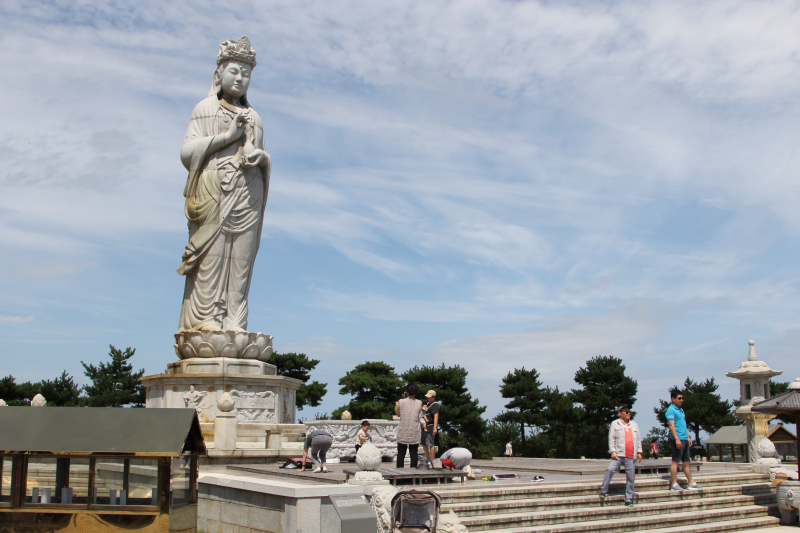
Yangyang: Beaches, Surfing, and the Airport Reality
Yangyang used to be the sleepy cousin of Sokcho, known only for Naksan Temple and a quiet coastline. Then surfing arrived. In the last 8 years, Jukdo, Ingu, and Hajodae beaches turned into Korea's surf capital — not because waves are huge, but because they're consistent, sandy-bottomed, and beginner-friendly from May to October. Surf schools offer a 2-hour lesson plus board rental for 50,000-70,000 KRW. Even if you don't surf, the vibe is different from Sokcho: fewer high-rises, more cafes, slower pace.
Yangyang International Airport YNY sits about 10km inland from the beaches. It's one of Korea's smallest international airports — one runway, one terminal, and in normal weeks maybe 2-4 domestic flights to Jeju and Busan plus occasional charters. Fly Gangwon tried to build a hub here and paused operations. So while I list YNY in this guide because people ask "Can I fly to Seoraksan?" — the honest answer is: you can try, but don't rely on it. Bus is still king.
If you add Yangyang as a day extension from Sokcho, here's my low-stress flow: morning bus to Yangyang, surf lesson at Hajodae 10am-12pm, grilled clams and beer at a beach pojangmacha, walk Naksansa Temple on the cliff overlooking the sea, bus back to Sokcho for night market. That one day makes your mountain trip feel like a real East Coast loop, not just a hike.
Sample Itineraries You Can Copy
1-Day Trip from Seoul (Tight but Doable)
This is for when you literally have one free day and you want bragging rights. It works, but it's a long day.
- 05:40 Bus Seoul Express Terminal → Sokcho (arrive ~08:30 if no traffic, book premium for sleep)
- 08:50 Bus 7/7-1 Sokcho → Seoraksan Sogongwon (30 min, T-money tap)
- 09:30-11:30 Cable car up Gwongeumseong, loop, down. Sinheungsa Temple on way back. Biseondae 30-min walk if time.
- 12:00 Bus back to Sokcho, quick Jungang Market dakgangjeong takeaway
- 13:30-16:00 Bus Sokcho → Seoul. You'll be back by 5pm with photos and sore feet.
Tip: Buy your return ticket the second you arrive in Sokcho. Weekend afternoon buses to Seoul sell out.
2-Day Trip (My Recommended Minimum)
- Day 1 PM: Seoul → Sokcho 14:00 bus, check-in guesthouse near terminal, Jungang Market dinner, Abai Village Gaetbae ferry sunset, Sokcho Beach night walk.
- Day 2: 07:30 bus 7 to park, be first in cable car line 08:30, Gwongeumseong 09:00, Ulsanbawi hike 10:00-13:30 (pack kimbap), Sinheungsa on descent, bus back to Sokcho, 15:30 bus to Seoul.
This gives you cable car without panic and a real hike. If cable car is closed for wind, you still have Ulsanbawi.
3-Day Loop (Add Yangyang + Optional Nami Island on Return)
- Day 1: Same as 2-day Day 1 but add Yeongnangho Lake bike ride.
- Day 2: Full Seoraksan — cable car + Ulsanbawi + Biseondae picnic. Sleep Sokcho.
- Day 3: Sokcho → Yangyang 09:00 bus, Hajodae surf lesson 10:00-12:00, Naksansa Temple 13:00, lunch grilled seafood, bus to Seoul via Dong-Seoul or link to Gapyeong Nami Island if you have energy (bus Yangyang → Hongcheon → Gapyeong is possible but long).
Practical Tips and Common Mistakes I See Every Year
I've guided 30+ foreign friends through this route since 2015, and the same five mistakes pop up. Let's kill them now.
- Cable car weather cancellations: Wind closures aren't rare — maybe 20-30% of days in winter, 10% in autumn. Check Sorak Cable Car site after 7am. Have Plan B: Biseondae walk and Sinheungsa Temple still worth it.
- Buying return bus tickets late: On Sundays, 3pm-7pm buses Sokcho→Seoul sell out by noon. Buy at arrival or use Kobus app the night before. Same for Seoul→Sokcho on Friday evenings.
- Cash vs T-money on local buses: You can pay cash on bus 7/7-1 but drivers don't give much change and foreign cards don't work. T-money from CU/GS25 is easiest. Charge 10,000 KRW.
- Google Maps trap: Google Maps walking works okay in Sokcho, but driving and transit times are often wrong. Naver Map (English available) or KakaoMap shows real-time bus arrivals and correct walking shortcuts through market alleys.
- Autumn foliage timing: Seoraksan's colors peak mid-October, not early October like Seoul. The last two weeks of October draw the heaviest crowds — park road traffic backs up, cable car waits 2+ hours. If you can go early Oct or early Nov, you'll thank yourself.
- Overpacking for Ulsanbawi: You don't need hiking boots — decent sneakers with grip work — but bring water and a windbreaker. Top is windy even in summer.
FAQ: The Five Questions Google Sends Me Every Week
Is Seoraksan worth a day trip from Seoul?
Yes, if you accept it's a long transit day and you focus on cable car plus temple, not a big hike. I wouldn't day-trip if your main goal is Ulsanbawi — you'd be rushing and risking knee pain on the descent trying to catch your bus. If you can add one night, the experience goes from 6/10 to 9/10. Sokcho's night market alone is worth the overnight.
Do I need to book the cable car in advance?
No — and you can't. Gwongeumseong cable car is same-day ticket only, sold at the base station window. No online reservation. Arrive early, especially weekends. If wind closes it, there's no refund to worry about because you haven't bought yet. Check the official site that morning for operation status.
Can I get to Seoraksan by train?
No direct train exists as of May 2026. KTX goes to Gangneung, but then you'd need a 1.5-hour bus Gangneung→Sokcho, which is slower than direct Seoul→Sokcho bus. Stick to express bus from Seoul Express or Dong-Seoul terminals. The Donghae line extension is under construction but not open for Sokcho yet.
Is Sokcho or Yangyang better as a base?
Sokcho for first-timers, hands down. It has the bus terminal, more accommodation, Jungang Market, Abai Village, and direct local buses to the park. Yangyang is better as a second-night add-on if you surf or want quiet beaches. If your only goal is surfing, base in Yangyang Hajodae. If your only goal is Seoraksan, base in Sokcho.
How many days do I need for Seoraksan, Sokcho, and Yangyang together?
One day for a teaser (cable car + temple), two days one night for a comfortable Seoraksan + Sokcho city combo, three days two nights to add Yangyang surf and Naksansa Temple without rushing. If you have four days, you can loop Seoul → Sokcho → Yangyang → Gangneung → Seoul by bus, which is my favorite East Coast sampler.
🗼 3 Must-Know Korean Phrases for You
1. How do I get to Seoraksan?
설악산에 어떻게 가요?
Seoraksane eotteoke gayo?
2. When is the cable car?
케이블카는 언제예요?
Keibeulkaneun eonjeyeyo?
Conclusion & Summary
If you remember nothing else from this guide, remember the triangle: Seoraksan for mountain, Sokcho for base, Yangyang for beach. You don't need a car to do it right — you need an early bus, a T-money card, Naver Map, and willingness to buy your return ticket the moment you arrive. Cable car is same-day-only and wind-sensitive, park entrance is free, and Ulsanbawi is worth the leg burn if you have 4 hours. For most foreign visitors without a car, 2 days 1 night in Sokcho hits the sweet spot; add a third day if you surf or want Naksansa Temple at sunset.
1) Take express bus Seoul → Sokcho 2-3.5h, no train, book return early.
2) Base in Sokcho, bus 7/7-1 to park 30 min T-money, cable car same-day only check wind, free park entry since May 2023.
3) Add Yangyang surf beaches 25 min south for 2-3 day loop — YNY airport limited seasonal, Naver Map over Google Maps.
About the Author
I'm Min Lee, a Seoul-based travel blogger who's spent the last 12 years helping friends and readers navigate Korea without a car. I've guided 30+ foreign friends through Sokcho and Seoraksan in every season — from cherry blossom April to snowy February cable car closures — and I've learned that the best trips aren't about checking boxes but about not stressing the bus schedule. I run minaleedaddy.tistory.com to share honest, on-the-ground notes for visitors who want to travel Korea like a local, not a tour bus. If you're planning this route, drop a comment — I read every one.
Sources & References / Legal Basis / Compliance Note / Price Note: Seoraksan National Park free entrance policy since May 2023 (Korea National Park Service), Sorak Cable Car official fare and operation rules (same-day only, wind closure policy), Kobus/Dong-Seoul Bus Terminal schedules 2026, Sokcho city bus 7/7-1 route information, Yangyang International Airport flight schedule seasonal notice. Prices, schedules, and cable car rules change seasonally — double-check current fares/times on official sources before traveling. Guide as of May 2026.
Next post: How I Enjoyed Nami Island and Sokcho in 3 Days: Seoul to East Coast Loop Guide
Need translation for "Seoraksan" and "Sokcho"?
In Chrome, right-click and choose Translate to your language.
如果您需要中文,请在Chrome中右键点击并选择翻译成中文。
Chromeで右クリックして日本語に翻訳を選択してください。
https://minaleedaddy.tistory.com/56
How I Enjoyed Korea Autumn Leaves - Best Fall Guide for You 2026
I've chased fall colors in Korea for 5 years with friends from 10 countries - here's my complete 2026 guide to the best time late September to November, my favorite spots from Seoraksan peaks to Naejangsan tunnel and Seoul's ginkgo lanes, and how I get the
minaleedaddy.tistory.com
https://english.visitkorea.or.kr/svc/contents/contentsView.do?vcontsId=111692
Sokcho Beach (속초해수욕장)- VISITKOREA
english.visitkorea.or.kr
'Regional tourist destinations in Korea' 카테고리의 다른 글
Quick Answer: What Is HiKR Ground and Why Should You Go?
If you've ever landed in Seoul and thought, "Where do I even start with all this K-content?" — HiKR Ground is your answer. It's inside the Korea Tourism Organization Seoul Center, right by Cheonggyecheon stream in central Seoul, and it's a completely free experiential promotion hall. HiKR means "Hi, Korea" and Ground means playground, so think of it as Korea's welcome playground. You don't need a ticket, you don't need to book weeks ahead, you just walk in. Inside, they've packed everything foreign fans love: a full-on K-POP stage where you can dance and film yourself, an immersive media art wall that reacts to you, and the big one — a K-drama exhibition called "When Scene Becomes Travel Destination" made with Studio Dragon. They've collected iconic lines, actual shooting props, and OSTs from over 40 hit dramas. You can type your favorite line to make your own script page, collect postcard props, and then tap your collection at a kiosk that recommends a personalized local city travel course and even lets you check tickets or buy a travel product on the spot. For K-POP fans, there's My Stage where you get your own music video file sent to your email. For culture lovers, upstairs in K-Style Hub you can try traditional hanbok — up to 6 people for 30 minutes, free, but groups should inquire ahead. Opening hours are 10am to 7pm, closed on Mondays and January 1st. The nearest subway is Euljiro 1-ga Station (Line 2) or Jonggak (Line 1), just a 5-minute walk. Why should you go? Because it's free, it's air-conditioned, it has clean restrooms and lockers, it gives you a perfect orientation on day one, and you'll get Instagram shots without spending a won. I've seen first-timers spend two hours without noticing. If you're hunting for free things in Seoul that don't feel cheap, this is top of my list.
Need translation for "HiKR Ground" and "K-drama exhibition"?
In Chrome, right-click and choose Translate to your language.
如果您需要中文,请在Chrome中右键点击并选择翻译成中文。
Chromeで右クリックして日本語に翻訳を選択してください。
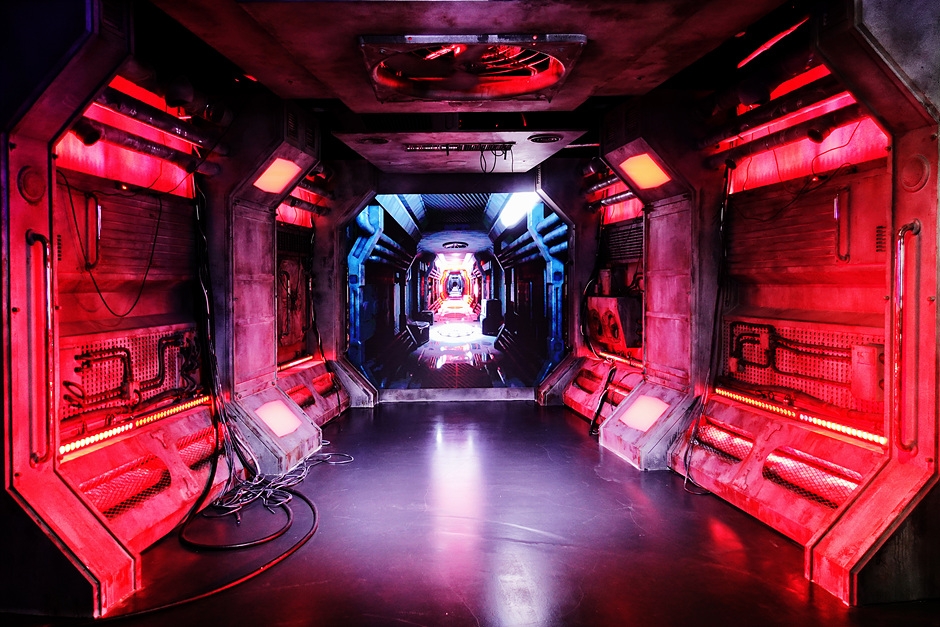
Introduction: Why HiKR Ground is a Must-Visit Free Spot in Central Seoul
Honestly, I didn't expect much the first time I walked into HiKR Ground. I thought it'd be another tourist info desk with brochures. Boy, was I wrong. This place is the Korea Tourism Organization's love letter to foreign visitors, and it's done right. You'll find it on Cheonggyecheon-ro, that lovely stream area where office workers eat lunch on the steps. The building itself is modern, glassy, hard to miss. Inside, it's five floors of pure K-content playground, and the best part? No entrance fee. In a city where everything seems to have a ticket price, that's refreshing.
What makes it special isn't just that it's free — it's how they get you. You're not just looking at posters. You're stepping into scenes. You're dancing on a K-POP stage with lights following you. You're typing Goblin's famous line "I'll be your first and last..." and watching it become your own script. It's tactile, it's playful, and it's designed for people who've binged dramas at 2am and hummed K-POP in the shower. For first-time visitors, it's also the smartest orientation point. You get free Wi-Fi, clean restrooms, lockers for your shopping bags, English-speaking staff who actually know their stuff, and a real sense of where you might want to go next — Busan because you loved that Crash Landing scene? Jeonju because hanbok looked amazing on you? The kiosk actually tells you.
I've been living in Seoul for eight years now, and I've guided more than 30 foreign friends through this city — from couchsurfers to my cousin from Toronto who only knew Korea through BTS. Every single one, without exception, spent longer at HiKR Ground than we planned. My friend Maya from Berlin came for "just 30 minutes" and we left two and a half hours later because she couldn't stop at the My Stage booth. She still has that video on her phone. That's the kind of place it is — low commitment, high reward.
Why foreign tourists love it
- Totally free — no ticket, no reservation for general entry
- Air-conditioned in summer, heated in winter, with lockers
- All K-content in one building — K-POP, K-drama, media art, hanbok
- Perfect for rainy days or your first morning jet-lagged wander
- English, Chinese, Japanese support and staff who love helping
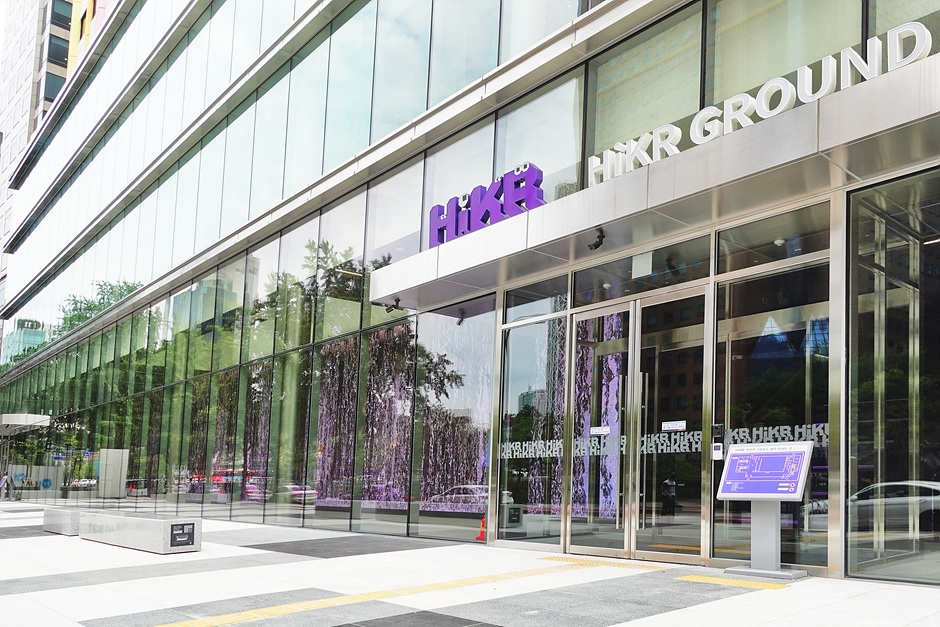
Location and How to Get There: Right by Cheonggyecheon
The address is 40 Cheonggyecheon-ro, Jung-gu, Seoul — but you don't need to memorize that. Just search HiKR Ground on Naver Map or KakaoMap and you'll get it instantly. If you're using Google Maps, it'll show up as Korea Tourism Organization Seoul Center. The building sits right on the north side of Cheonggyecheon stream, between Jonggak and Euljiro. You can actually make a lovely half-day walk: start at Gwanghwamun, stroll along the stream, pop into HiKR Ground for an hour, then head to Gwangjang Market for bindaetteok. That's my favorite route for jet-lagged arrivals.
Subway is easiest. Take Line 2 to Euljiro 1-ga Station, Exit 2, walk 5 minutes toward Cheonggyecheon. Or Line 1 to Jonggak Station, Exit 5, also about 5 minutes. If you're coming from Myeongdong, it's a 12-minute walk — totally doable. Buses stop at Cheonggyecheon as well. Opening hours are 10am to 7pm daily, except Mondays and January 1st when they're closed. Last entry is usually 6:30pm. During Korean holidays like Chuseok, check their Instagram @hikrground_official — they sometimes run special hours or K-POP pop-ups.
Pro tip from my own mistake: don't go at 6pm thinking you'll see everything. You won't. The K-drama exhibition alone deserves 60 to 90 minutes if you actually read the lines and play with the postcards. Come in the morning right at 10am — it's quiet, the lights are perfect for photos, and staff have time to chat. By 2pm on weekends, especially when a K-POP group has a comeback, it gets packed with teens filming TikToks. Still fun, just louder.
What Does HiKR Ground Mean? Hi Korea Playground Explained
HiKR is short for "Hi, Korea" — simple, welcoming, exactly the vibe they want. Ground means playground or base. So it's literally a playground where you say hi to Korea. The building is five floors if you include K-Style Hub upstairs, but your main playground is Floors 1-2: HiKR Wall (that huge LED media art wall you see from outside at night), HiKR Ground exhibition hall, and My Stage. The concept is clever — instead of a museum where you can't touch, it's an experiential promotion hall. Everything is meant to be touched, filmed, tried on. They want you to create content here, not just consume it.
K-Drama Exhibition: When Scene Becomes Travel Destination (Studio Dragon Collaboration)
This is the heart of HiKR Ground and honestly the reason I tell drama fans to come first. The exhibition titled "Scene Becomes Travel Destination" was made with Studio Dragon, the powerhouse behind Goblin, Crash Landing on You, Vincenzo, Start-Up, and about 35 other dramas you've probably cried over. They've gathered famous lines printed on acrylic, actual props like Goblin's sword, Crash Landing's paragliding helmet, and OST listening stations where you can hear that piano riff and instantly get goosebumps.
Here's how it works, step by step, because I fumbled it the first time. You enter and get a mission card with QR. There are zones by emotion — Love, Thrill, Fantasy, Healing. You walk up to a line you love, say "Because I am your first love..." from Goblin, and there's a typing station. You type the line, and the system generates a little script page with your name as the writer. It sounds cheesy, but when you see your name under a Studio Dragon script format, you grin. Then you collect physical postcards and small prop items — like a mini green bottle from Vincenzo or a starlight card from Goblin. Collect four and you can tap them at the big kiosk in the center.
That kiosk is the magic trick. It reads your collected items, analyzes your taste, and recommends a personalized local city travel course. Loved the coastal scenes? It'll push Busan and Pohang. Loved historical lines? Andong and Gyeongju. It even shows train tickets and you can purchase linked travel products right there through KTO partners. I watched a couple from France who collected all healing dramas get recommended a Jeju slow-trip course, and they actually booked it on the spot. It's not pushy sales — it's smart linking.
Don't miss these details
- 40+ dramas: Goblin, Crash Landing on You, Vincenzo, Hotel Del Luna, My Love From the Star, Descendants of the Sun
- Typing station: make your own script — save photo for Instagram
- Postcard collection: 6 different designs, free to take after mission
- Kiosk: personalized local travel recommendation + QR ticket info
- OST zone: sit, listen, and watch scene clips with English subtitles
K-POP and Media Art Experience: Your Own Stage
If K-drama is the heart, K-POP is the heartbeat — loud, bright, impossible to ignore. The first floor has HiKR Wall, a massive anamorphic LED wall that plays K-POP videos and Korea tourism media art all day. At night from outside, it's stunning. Inside, there's My Stage, where you stand on a stage, pick a K-POP track, dance (or just pose), and the system films you with lights and effects. You get the video sent to your email. No, you don't need to be good. I danced to Dynamite with two left feet and my video still looked cool because of the effects.
Next to it is the media art zone — interactive floors that ripple when you walk, walls that bloom when you touch. Kids go crazy here, but honestly, adults do too. It's sensory, it's very Instagrammable, and it's free. There's also a small K-POP dance random play area on weekends where staff play random K-POP and everyone dances. If you're shy, just watch — it's pure joy. The whole area is designed for Hallyu fans who've only seen this through screens. Now you're in the screen.
One thing I love: they've thought about foreign visitors' phones. The Wi-Fi is fast, there are charging spots, and My Stage videos are vertical-friendly for TikTok and Reels. No watermark. They want you to post. Smart tourism.
Hanbok Experience: K-Style Hub Traditional Try-On (Up to 6 People, 30 Min)
Upstairs from HiKR Ground, on the 2nd floor of the same building, is K-Style Hub. This is where hanbok happens. Traditional hanbok experience is operated here, and it's also free — though you need to understand the setup. It's up to 6 people at a time, for about 30 minutes, including changing and photos. For groups larger than that, you need to inquire beforehand through their website or call. You don't need to bring anything; they have sizes from kids to XXL and they help you tie it properly. The hanboks are real, not costume-shop shiny ones — muted colors, proper jeogori and chima.
Reservation is recommended but not always mandatory on weekdays. You can book via the K-Style Hub website (search K-Style Hub hanbok). On weekends, definitely reserve. I took my sister there last autumn and we didn't reserve — we waited 40 minutes. Still worth it, because Cheonggyecheon in hanbok is a gorgeous photo walk. The staff also give you a little brochure about hanbok etiquette — how to bow, what the colors mean. It's respectful, not just dress-up. And if you're into deeper culture, K-Style Hub also has a small exhibition about Korean crafts and a tourist information center where you can ask about anything in Korea, not just Seoul.
Tips for Foreign Tourists: How to Enjoy It Like a Local Pro
After 8 years and 30+ friends dragged here, here's my distilled playbook. Come at 10am when it opens — you'll have My Stage to yourself. Bring a portable battery, you'll film a lot. Wear socks without holes because you'll take shoes off for hanbok. If you have big luggage, use the lockers on B1 — don't drag your suitcase through media art. Combine it with Cheonggyecheon stream walk and Gwangjang Market — that's a perfect free-to-cheap morning that feels rich. And don't skip the tourist info desk — ask them about regional travel passes, they sometimes have discount coupons you won't find online.
If you're a content creator, this place is gold. No tripod ban, no "no photo" signs except at props (you can photo but no flash). The lighting is already set for you. I once filmed a whole Reel in 20 minutes here and it got more saves than my Namsan Tower video. Because it's authentic joy, not staged.
- Best time: Weekday 10:00-11:30am, least crowded, soft light
- Free lockers: B1, use them — don't carry bags into hanbok room
- Photo spots: HiKR Wall at night from across Cheonggyecheon, My Stage vertical video, hanbok by stream
- Nearby: Cheonggyecheon 1 min, Gwangjang Market 8 min, Jonggak cafes 3 min
- Language: English OK, staff also use translation app patiently
🗼 3 Must-Know Korean Phrases for You
1. Where is HiKR Ground?
하이커 그라운드는 어디예요?
Haikeo geuraundeuneun eodiyeyo?
2. Can I take photos?
사진 찍어도 돼요?
Sajin jjigeodo dwaeyo?
3. Is it free?
무료예요?
Muryoyeyo?
▶ Listen (Offline 시도 작동 기능포함): 인터넷 없이도 기본 표현과 Audio 사용 할 수 있도록 휴대폰의 한국어 TTS 엔진으로 작동합니다.
⭐ Fav - Favorites 기능: 사용자가 자주 쓰는 표현 저장
💡 Tip: Tistory safe onclick + notranslate 보호 + cancel() 포함으로 모바일에서도 안정적으로 작동합니다.
Conclusion & Summary
Look, Seoul has a lot of free spots that feel... well, free. HiKR Ground doesn't. It feels curated, modern, and genuinely fun. Whether you're a K-POP stan who wants that stage video, a K-drama crier who wants to hold Goblin's prop, or just a tired traveler who needs AC and a place to sit by Cheonggyecheon, you'll get something here. I recommend going on your first day — get oriented, get inspired, then let the kiosk suggest where to go next. That's how you turn a drama scene into real travel. And if you tried hanbok, walk along the stream — you'll get the best photos with the least crowd.
1. HiKR Ground at KTO Seoul Center is a free K-content playground with K-POP stage, media art, and K-drama exhibition (Studio Dragon 40 dramas).
2. Play script typing, postcard collection, kiosk personalized local travel course, plus hanbok try-on at K-Style Hub (6 people, 30 min).
3. Near Cheonggyecheon, Euljiro 1-ga/Jonggak subway, 10am-7pm closed Mondays — best free orientation spot for first-time foreign visitors.
About the Author
I'm Mina, a Seoul-based travel writer with 8+ years guiding foreign friends across Korea. I've lived in three countries, speak three languages badly but enthusiastically, and I started this blog to help first-time visitors avoid tourist traps and find places that actually make you smile. HiKR Ground is one of those rare spots I recommend without hesitation — free, fun, and full of heart. I want you to enjoy Korea beyond the checklist.
Legal Basis / Compliance Note: All program info based on official KTO notices as of 2024-2025. Opening hours and paid program notices may change; check official site before visit.
Price Note: General entry free; some special paid programs separately notified on site. Hanbok experience free but reservation recommended for groups.
Next post: How I Enjoyed Cheonggyecheon and Gwangjang Market After HiKR Ground Free K-Content Tour - street food, stream walk, and night view route
Need translation for "HiKR Ground" and "K-drama exhibition"?
In Chrome, right-click and choose Translate to your language.
如果您需要中文,请在Chrome中右键点击并选择翻译成中文。
Chromeで右クリックして日本語に翻訳を選択してください。
https://minaleedaddy.tistory.com/64
How to Visit Cheonggyecheon: Entrances, Exits, Rest Spots & Food Near Gwanghwamun, Jonggak, Euljiro
Summary: A complete guide to Cheonggyecheon for first-time foreign visitors covering brief history, best entrance Cheonggye Plaza via Gwanghwamun Exit 5 City Hall Exit 4, middle entries Jonggak Exit 5 Gwangtonggyo Euljiro Entrance Exit 2, exits stairs to D
minaleedaddy.tistory.com
'Tour Korea' 카테고리의 다른 글
| How I Stay Online in Korea - Wi-Fi, eSIM & Pocket Wi-Fi Guide (0) | 2026.09.15 |
|---|---|
| Is K-ETA Still Exempted Until 2026? My 22 Countries Extension Guide (0) | 2026.09.15 |
| What Should I Eat on a Korean Highway Bus Trip? Rest Stop Guide (0) | 2026.09.15 |
| How to Plan the Perfect Nami Island Day Trip from Seoul? (0) | 2026.09.14 |
| What Should I Do in Insadong for Half a Day? My Local Walking Course (0) | 2026.09.14 |
How to Visit Cheonggyecheon: Entrances, Exits, Rest Spots & Food Near Gwanghwamun, Jonggak, Euljiro
Quick Answer: What Is the Easiest Way to Visit Cheonggyecheon?
If it's your first time in Seoul, Cheonggyecheon is way easier than you'd think. It's not a hidden mountain trail — it's an 11km urban stream running straight through downtown, fully restored in 2005 after being covered with concrete in the 1950s-60s. Back in Joseon era, this was a real-life stream where locals washed clothes and kids played. During industrialization it got paved over and became a noisy overpass, then Mayor Lee Myung-bak's team tore it all down and brought the water back. That's why today you get this weird, lovely mix of nature and skyscrapers.
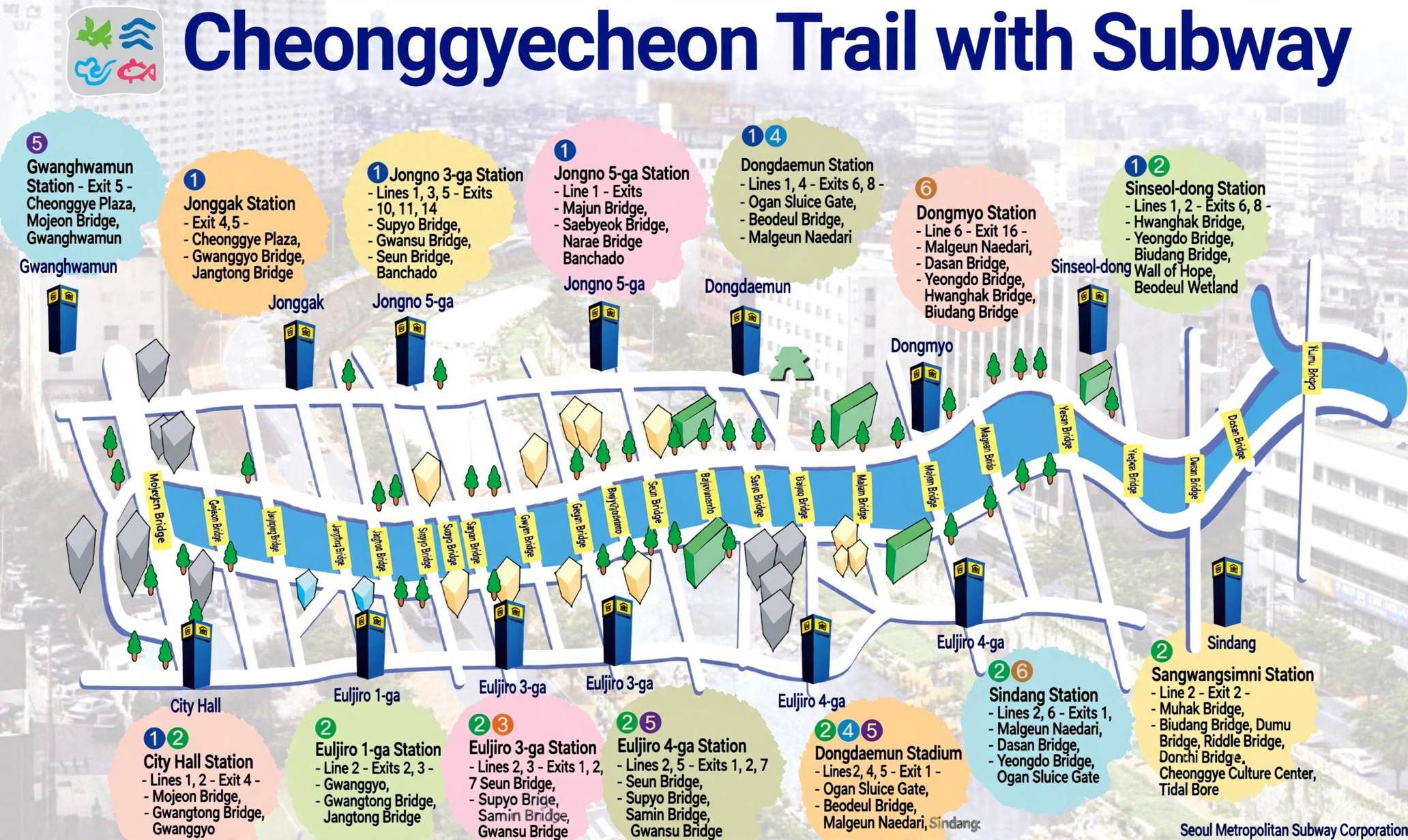
The absolute easiest way? Start at Cheonggye Plaza. Take Subway Line 5 to Gwanghwamun Station, Exit 5 — walk straight for like 2 minutes and boom, you'll see the famous Spring sculpture (that twisty snail-shell tower) and the big open plaza. That's the official Day 1 spot. If you're coming from City Hall area, take Line 1 or 2 to City Hall Station Exit 4 and walk 5 minutes north toward Sejong-daero — you'll see signs for Cheonggyecheon everywhere.
Don't wanna start at the very beginning? Totally fine. For the middle section, use Line 1 Jonggak Station Exit 5 — you'll pop out right by Gwangtonggyo, one of the oldest bridges with that historic stone vibe. Or Line 2 Euljiro 1-ga Station Exit 2, walk toward Jongno and you'll hit the trail in 3 minutes. That's perfect if you're planning to eat in Euljiro first.
Exits are super flexible — every 200m there's stairs or a gentle ramp back up to street level, so you never feel trapped. If you keep walking east toward Dongdaemun, you'll hit Ogansugyo Bridge, which connects directly to DDP (Dongdaemun Design Plaza) in like 10 minutes. From there you can keep going to Seoul Forest or just hop on the subway.
For rest, Cheonggye Plaza's fountain is your best friend in summer — cool water, sculptures, lots of shade. My fave is Gwanggyo Gallery and the stepping stones nearby. That's where you'll see office workers dipping their feet, couples crossing the stones for photos, and that shaded walk under the buildings where everyone just chills. Food-wise, Gwanghwamun and Jonggak have everything from Korean BBQ to casual cafes with English menus and proper chairs (not just floor seating), and Euljiro is packed with local eateries where solo travelers won't feel weird — counter seats, fast service, super friendly.
Need translation for "Cheonggyecheon" and "Gwanghwamun"?
In Chrome, right-click and choose Translate to your language.
如果您需要中文,请在Chrome中右键点击并选择翻译成中文。
Chromeで右クリックして日本語に翻訳を選択してください。
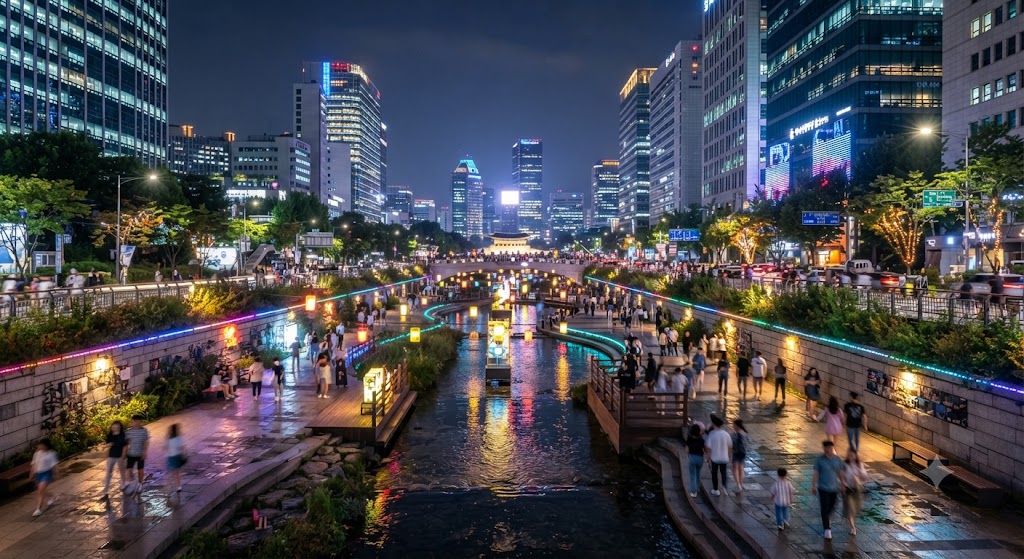
Brief History of Cheonggyecheon
Cheonggyecheon wasn't always this pretty Instagram spot. For over 600 years during Joseon Dynasty, it was Seoul's main stream — people did laundry here, kids caught minnows, markets popped up on the banks. After the Korean War in the 1950s-60s, Seoul grew crazy fast. The stream got polluted, people built shacks over it, and the city covered the whole thing with concrete and built an elevated highway on top. For 40 years, you couldn't even see water.
Then in 2003, then-Mayor Lee Myung-bak said let's tear it all down. It was a massive, controversial project — 2 years, $900M-ish, 11km of stream restored from Cheonggye Plaza to near Seoul Forest. They brought back clean water pumped from the Han River, rebuilt 22 historic bridges like Gwangtonggyo and Supyogyo, and turned it into a public walkway 3-4 meters below street level. Now it's one of the rare urban renewal cases that actually worked. You'll still see the old stone markers showing where Joseon measured water levels.
How to Visit: Entrance & Exit Guide Overview
The beauty of Cheonggyecheon is you don't need tickets, reservations, or a guide. It's open 24/7, free, lit at night till 11pm-ish. But for foreigners, the subway exit numbers matter a lot — Seoul's exits can dump you 300m away if you pick wrong. So here's the breakdown I've tested with 30+ friends.
Start: Cheonggye Plaza Entrance via Gwanghwamun & City Hall
The most foolproof first-time entrance
Cheonggye Plaza is the official kilometer zero. You'll know you're there when you see Spring — that 20m tall spiral sculpture that looks like a snail or a spring, meant to symbolize the rebirth of the stream. Right behind it is a big open plaza with a model of the whole stream.
- Gwanghwamun Station Line 5 Exit 5: Come out, turn right, walk straight 150m. You can't miss it. This exit has an escalator and is stroller-friendly. The first 100m after entering is the most crowded — everyone takes photos at Spring.
- City Hall Station Line 1/2 Exit 4: Walk north 5 min toward Sejong-daero, you'll see Cheonggye Plaza signs in English. Good if you're coming from Seoul Plaza or Deoksugung.
- Pro tip: There's a gentle ramp down, not just stairs, so wheelchairs and luggage are fine. At the bottom there's drinking fountains and a small tourist info booth (English ok).
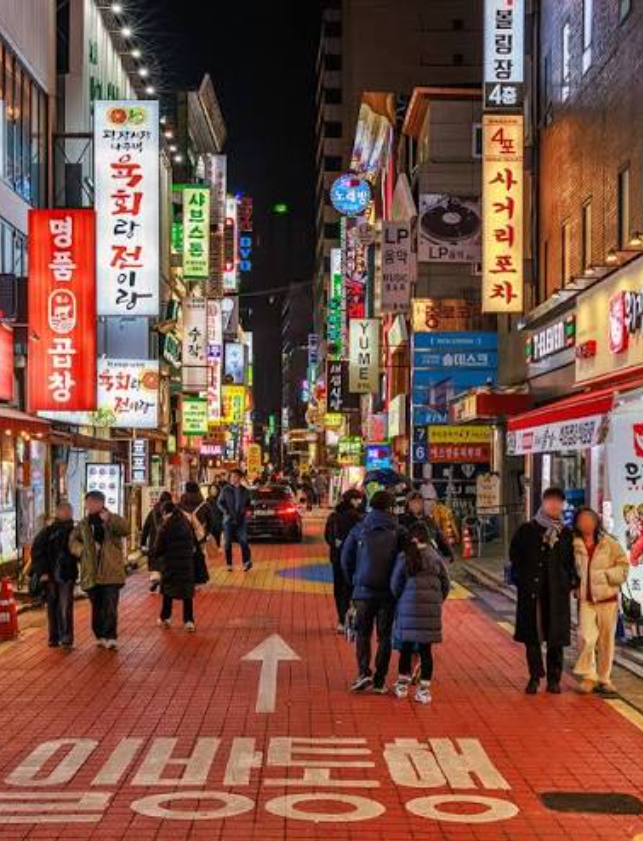
Middle Entries: Jonggak & Euljiro
If you're staying in Jongno or Euljiro, don't backtrack to Cheonggye Plaza. Jump in the middle — it's way less crowded and you get straight to the pretty parts.
Jonggak & Euljiro entrances that locals use
- Line 1 Jonggak Station Exit 5: This is my go-to. You exit, walk 30 seconds, and you're at Gwangtonggyo — that historic wide bridge from Joseon with engraved turtles. There's a stair down right under the bridge. You instantly feel like you're in old Seoul.
- Line 2 Euljiro 1-ga Station Exit 2: Exit 2, walk toward Jongno-gu office (Jongno direction) for 2-3 min. You'll see Cheonggyecheon trail signs. This entry lands you near Sampoonggyo where the famous wall art is.
- What you'll see: Less touristy, more office workers on lunch break. Perfect for photos without 50 people in the frame.
Exits and How to Move to DDP
You're never stuck down there. Every 200-300m there's a staircase or slope up to the street. Signs say which road you're going up to — Jongno, Euljiro, etc. So you can walk 10 minutes, pop up for coffee, come back down.
If you keep walking east, after about 40 min from Cheonggye Plaza you'll hit Ogansugyo Bridge — that's the gateway to Dongdaemun. Go up here, walk 10 min north and you're at DDP (Dongdaemun Design Plaza), Zaha Hadid's spaceship building. You can also continue all the way to Seoul Forest if you want a long 2-hour urban hike. My suggestion for first-timers: walk Cheonggye Plaza to Gwanggyo (20 min), exit at Jonggak, grab lunch, done. No need to marathon the whole 11km.
Best Rest Spots: Plaza Fountain & Gwanggyo Gallery
Seoul gets humid in summer, so rest spots matter. Cheonggye Plaza's fountain shoots cool mist — in July, office workers sit with their feet near the water, kids splash. It's loud, bright, perfect for a first 5-min break.
My favorite is around Gwanggyo (that modern glass bridge) — there's Gwanggyo Gallery, a tiny exhibition under the bridge showing Cheonggyecheon history, and right next to it the famous stepping stones. You can hop across the stream, take that classic photo with skyscrapers behind you. The area under the buildings creates natural shade, so even at 2pm it's cool. You'll see couples, solo readers, ajummas chatting. There are stone benches every 50m, but they get hot in sun — grab shade.
Food Near Gwanghwamun, Jonggak, Euljiro
You will get hungry. Good news: all three zones are office districts, so lunch options are endless and surprisingly foreigner-friendly.
- Gwanghwamun & Jonggak area: Diverse — Korean BBQ, bibimbap, casual pasta. Many places now have multilingual menus (EN/JP/CN) and chair seating, not floor. Try Gwanghwamun Jip for kimchi jjigae set (7,000-9,000 KRW), or the cold noodle alley near Jonggak Station Exit 4 for naengmyeon. Solo-friendly counters are common.
- Euljiro area: This is the hipster comeback zone. Old printing shops turned into cafes and pocha. Eulji Darak for retro vibe and coffee, Euljiro Pocha alley for skewers and beer after your walk. Office-worker lunch spots do super fast Korean home meals — 6-8 dishes for 8k won. Most have ticket machines with pictures, so pointing works.
- Solo travel tip: Look for counter seats (다찌) or "honbap" signs — means solo dining welcome. Don't feel awkward; half of Euljiro eats alone at lunch.
🗼 3 Must-Know Korean Phrases for You
1. How do I get to Cheonggyecheon?
청계천에 어떻게 가요?
Cheonggyecheone eotteoke gayo?
2. Where is the rest area?
휴식 공간 어디예요?
Hyusik gonggan eodiyeyo?
3. Please recommend a nearby restaurant
근처 식당 추천해 주세요
Geuncheo sikdang chucheonhae juseyo
Conclusion & Summary
Cheonggyecheon is Seoul's easiest green escape — you don't need to plan a whole day. For first-timers, just remember: start at Cheonggye Plaza via Gwanghwamun Exit 5 or City Hall Exit 4, dip in mid-way at Jonggak Exit 5 or Euljiro Entrance Exit 2 if you want food first, and exit anytime via stairs to pop up to DDP through Ogansugyo. Rest at the plaza fountain and Gwanggyo stepping stones where locals actually hang out, and eat around Gwanghwamun-Jonggak-Euljiro where solo dining is totally normal. It's free, open late, and the best way to feel both historic and super modern Seoul in 30 minutes.
1. Start at Cheonggye Plaza — Gwanghwamun Exit 5 / City Hall Exit 4 is the easiest first entrance.
2. Use middle entries Jonggak Exit 5 (Gwangtonggyo) & Euljiro Entrance Exit 2 for food + less crowd; exit anywhere via stairs/ramp to DDP via Ogansugyo.
3. Rest at plaza fountain & Gwanggyo gallery stepping stones; eat solo-friendly around Gwanghwamun Jonggak Euljiro with multilingual menus.
About Author
Seoul local for 12 years, licensed tour interpreter (English). I've walked Cheonggyecheon over 400 times with friends, family, and small groups. I focus on subway-level details foreigners actually need — exit numbers, ramp locations, solo-friendly food spots.
Sources: Seoul Metropolitan Government Cheonggyecheon restoration archive [1], Seoul Metro exit map [2], field notes 2016-2024.
Next post: How I Enjoyed Euljiro and Jonggak After Cheonggyecheon Walk: Cafe and Pocha Guide
Need translation?
In Chrome, right-click → Translate to your language. For offline copy, use HTML 복사 button above — it copies clean inline-style HTML that works in Blogspot without breaking.
https://minaleedaddy.tistory.com/59
How to Spend 2 Days in Seoul Solo: Palaces, Markets & Hongdae Guide
A complete guide to Seoul for solo travelers covering royal palaces, traditional hanok alleys, street markets and vibrant youth districts in 2 days.This guide is for foreign tourists who are curious about Seoul solo itinerary 2 days, Gyeongbokgung palace h
minaleedaddy.tistory.com
'Tour Seoul' 카테고리의 다른 글
Best Gyeongju 1N2D Itinerary from Busan: Transport, Hanok Stay, Food
Quick Answer: How Do I Spend 1N2D in Gyeongju from Busan?
If you're landing in Busan and wondering if Gyeongju is worth that extra hop, it absolutely is — and it's easier than you think. From Seoul Station, KTX takes you to Singyeongju Station in about 2 hours. But if you're already in Busan, you're golden: Busan Station to Singyeongju is just 30-40 minutes by KTX or Mugunghwa. Once you step out of Singyeongju, grab bus 700 or a quick taxi (15-20 mins) to downtown Gyeongju. The city center itself is wonderfully walkable and bike-friendly, which is how locals actually get around — you'll see bikes parked everywhere near Daereungwon. For outer gems like Bulguksa Temple and Seokguram, hop on bus 10 or 11, they run every 20 minutes, or use a taxi, or if you want zero stress, the Gyeongju City Tour Bus run by Cheonma Tourism. Pro tip every Korean traveler knows: don't rely on Google Maps here. Use Naver Map or KakaoMap, they're actually accurate for bus times and alleys.
For sleeping, you've got two totally different vibes. Want tradition? Stay in a hanok guesthouse around Hwangridan-gil. Those little alleys are packed with renovated Korean houses — wooden beams, courtyard, you wake up to the smell of wood and stone. Want lake views and a big bathtub? Go Bomun Tourist Complex — Lahan Select Gyeongju and Hilton Gyeongju sit right on Bomun Lake, perfect after a long walk day. Food wise, don't miss Ssambap — you get a table full of fresh veggies and grilled meat you wrap yourself — and Hyanghwajeong in Hwangridan-gil does an amazing yukhoe bibimbap. Snack-wise, Hwangnam bread (Gyeongju bread) stuffed with sweet red bean is the iconic souvenir, and chalbori bread is that chewy, slightly nutty barley bread you'll want for the train ride back.
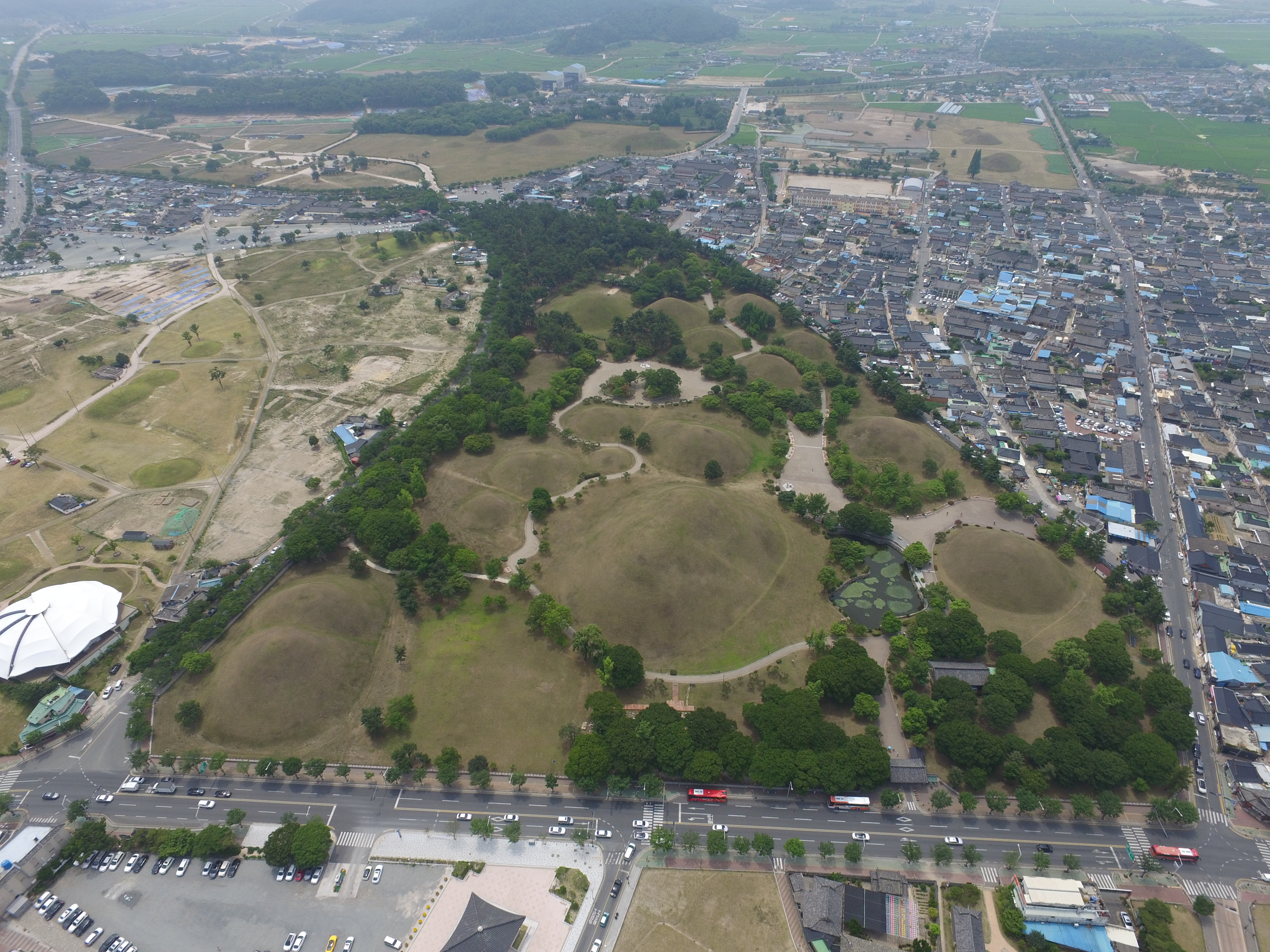
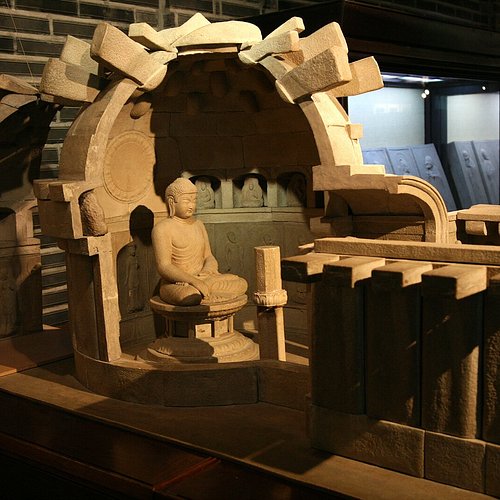
Here's the 1N2D I recommend. Day 1 morning: Daereungwon Tomb Complex — huge grassy mounds that are actually Silla royal tombs — and go inside Cheonmachong, the excavated tomb where you can see the actual burial chamber and the famous Cheonma (heavenly horse) painting. Lunch and afternoon wander Hwangridan-gil's cafes and vintage shops, then check Cheomseongdae, Asia's oldest astronomical observatory, and nearby Gyerim Forest where Kim Al-ji myth started. Evening is when Gyeongju turns magical: cross the newly restored Woljeonggyo Bridge lit up in warm wood light, then Donggung Palace and Wolji Pond (Anapji) — the pond reflects the pavilions, pure postcard night view. Day 2 morning: Bulguksa Temple early, it's UNESCO for a reason — Seokgatap and Dabotap pagodas are two completely different architectural philosophies side by side, and Seokguram Grotto up the hill is serene. Afternoon: wrap at Gyeongju National Museum — real gold crowns, Emille Bell (Bell of King Seongdeok) that actually cries when struck — then head back.
If you're using Busan as base, do Busan 2 days + Gyeongju 1 day: Day 1 Busan Haeundae Beach and Dongbaekseom, Day 2 Jagalchi and Gamcheon Culture Village, Day 3 day-trip Gyeongju leaving Busan at 7am by KTX and returning 8pm — you'll still cover Daereungwon, Hwangridan-gil, Cheomseongdae, Woljeonggyo and Donggung & Wolji if you move efficiently.
I've spent over 20 years in content and I've watched travel in Korea for 35 years of my life, and if there's one pattern that repeats it's exactly like insurance cycles. In insurance we have hard markets and soft markets — hard market, rates skyrocket, capacity disappears, every hotel overbooks and management says cut costs, don't add inventory, sales says we need more rooms to sell, that's cherry blossom April in Gyeongju and autumn foliage October, everything 2x price, hanok sold out three months ahead, management finance side says keep prices high don't overbook, sales side says but demand is insane we should push packages. Then soft market hits — winter January February cold but quiet, or summer Jangma rainy season — suddenly hotels drop 30% off, hanok owners call you personally, soft market you get upgrades, but fewer night festivals. I've been in rooms where the exec team says we can't discount hanok peak season because brand value drops, and sales team says if we don't discount soft season we die — same friction in tourism operations in Gyeongju. The trick for foreigners is knowing which market you're in. If you're coming in soft market, you'll enjoy spacious museums and cheap Bomun resorts. If hard market, book hanok 60 days ahead and budget extra for taxi because buses are packed. That veteran lens — management vs sales friction, hard vs soft — helps you plan smarter, not just prettier.
Need translation for "Gyeongju" and "Bulguksa"?
In Chrome, right-click and choose Translate to your language.
如果您需要中文,请在Chrome中右键点击并选择翻译成中文。
Chromeで右クリックして日本語に翻訳を選択してください。
- Introduction: Why Gyeongju is Called Korea's Open-Air Museum
- Transportation: KTX to Singyeongju, Bus 10 & 11, Naver Map vs Google Map
- Accommodation: Hwangridan-gil Hanok Stay vs Bomun Resort
- Food & Snacks: Ssambap, Yukhoe Bibimbap, Hwangnam Bread, Chalbori Bread
- 1N2D Itinerary: Day 1 History & Night View, Day 2 Bulguksa & Museum
- Busan Base 2+1 Day Option: Haeundae, Jagalchi, Gamcheon + Gyeongju Day Trip
- Tips: Budget, Best Season, Hard vs Soft Market, Naver Map Hack
Introduction: Why Gyeongju is Called Korea's Open-Air Museum
You won't get it until you're standing in the middle of downtown Gyeongju looking at a perfectly manicured grass hill that's actually a 1,500-year-old king's tomb, with a Starbucks right behind it. That's Gyeongju. They call it Korea's open-air museum because the entire city is the museum — you can't dig a parking lot without finding Silla dynasty relics. It was the capital of Silla for almost 1,000 years (57 BC to 935 AD), and unlike Seoul that rebuilt over its past, Gyeongju just left it there. You bike past burial mounds to grab coffee. That's the charm.
For first-time foreign visitors, it's the antidote to neon Seoul and port-city Busan. No skyscrapers. Slow. You can actually breathe. Most travelers try to squeeze it into a day trip, but trust me — stay one night. The night views here are unfair. Woljeonggyo Bridge lit up, Donggung and Wolji Pond reflecting like a mirror — you can't see that on a rushed day trip.
Transportation: How to Get to Gyeongju and Get Around
City to City
From Seoul Station, take KTX to Singyeongju Station — about 2 hours, super comfy, runs every 30-40 mins. From Busan Station or Daegu, it's ridiculously close: 30-40 minutes by KTX or Mugunghwa. Singyeongju is a bit outside downtown (that's intentional, they didn't want to dig up history to build the track), so from there take bus 700, 701, or taxi — 15-20 minutes, about 15,000 KRW.
- Seoul → Singyeongju: KTX 2h, ~53,000 KRW, book on Korail app
- Busan → Singyeongju: KTX 33min, Mugunghwa 50min, ~11,000-18,000 KRW
- Singyeongju → City center: Bus 700/701 or taxi 15-20min
- Within city: Walk + bike is best for center (Daereungwon to Cheomseongdae 10min walk)
- Outer: Bulguksa — Bus 10 or 11 from downtown, every 20min, 40min ride; Seokguram — transfer at Bulguksa, bus 12
- City tour: Gyeongju City Tour Bus by Cheonma Tourism — fixed route with guide, good for solo travelers
Real talk: Google Maps in Korea is... not great. It'll show you walking but bus times are off. Download Naver Map or KakaoMap before you land. Naver has English, Kakao has better real-time bus. I still keep both. Naver for directions, Kakao for bus arrival seconds.
Accommodation: Hwangridan-gil Hanok Stay vs Bomun Resort
This is where your trip personality shows. Hwangridan-gil hanok stay — that's the trendy alley that used to be an old downtown, now all renovated. You sleep on a yo (floor mattress), paper doors slide, you hear rain on roof tiles. Places like Hwangnam Guesthouse or Maru Hanok are small, owner-run, breakfast is sometimes homemade juk. Perfect if you want to feel Korea, not just see it.
Bomun Tourist Complex is the opposite: big lake, big resort. Lahan Select Gyeongju has that infinity pool facing Bomun Lake, Hilton Gyeongju is classic comfortable, great for families or if you've been walking 20k steps and just want a tub and room service. Both areas are 10-15 min by taxi to Daereungwon, so location isn't a dealbreaker.
Here's where my 20 years in content marketing and 35 years watching markets kick in. I've sat in meetings where management says "We can't add more hanok inventory, brand dilution, keep ADR high" and sales says "But we have waitlist 300 people for cherry blossom week, we're leaving money on table." That's exactly the hard market vs soft market friction you see in insurance too. Hard market — think April cherry blossom, October autumn foliage — occupancy 95%, rates double, hanok owners won't even reply to messages. That's when management wins: keep price high, no discounts. Soft market — January freezing, late June rainy Jangma — sales wins, they beg you to come, 30% off, free bike rental. As a traveler, if you're budget-focused, aim soft market: January-February museums empty, photos cleaner, and Bomun resorts do lake-view upgrades. If you're experience-focused and okay paying premium, book hard market 60 days out. I learned this after watching so many campaigns fail because teams didn't read the market cycle. Gyeongju is the same.
Food & Snacks: What to Eat in Gyeongju
Gyeongju food isn't spicy showy like Busan. It's Silla royal court meets countryside. Ssambap is the hero — you get a table of lettuce, perilla leaves, 10 kinds of namul, doenjang, and grilled bulgogi, you wrap everything. It's hands-on, fun, and actually healthy. If you want a bit fancy, go to Hyanghwajeong on Hwangridan-gil — they do yukhoe bibimbap (beef tartare bibimbap) that's super refined, not heavy.
- Ssambap: Silla-inspired, veg-forward, great for groups, ~15,000 KRW per person
- Hyanghwajeong Yukhoe Bibimbap: Hwangridan-gil, reservation on weekends
- Hwangnam Bread (Gyeongju Bread): Since 1939, sweet red bean inside soft bun, 20 pieces ~15,000 KRW, souvenir king
- Chalbori Bread: Glutinous barley, chewy not too sweet, good with coffee
- Beopju: If you drink, Gyeongju Gyodong Beopju is Silla traditional liquor, smooth
1N2D Recommended Itinerary: The One That Actually Works
Day 1: City Center — History and Night Magic
Morning: Start at Daereungwon Tomb Complex. It's open 9am, go early, less crowds. 23 tombs in one park. Don't just walk around — go into Cheonmachong. It's the only tomb where you can see the actual burial chamber structure, gold crown replica, and that famous painting of heavenly horse on birch bark. It hits you how much wealth Silla had. Budget 1.5 hours.
Lunch + Afternoon: Walk 5 mins to Hwangridan-gil. Grab Ssambap or that yukhoe bibimbap, then just wander. It's all cafes with hanok vibes, vintage shops, craft beer. Then walk 10 mins to Cheomseongdae — tiny, looks almost too simple, but it's the oldest astronomical observatory in Asia (7th century!). Next to it is Gyerim Forest — where the myth says Kim Al-ji, founder of Gyeongju Kim clan, was found in a golden box hanging from a tree. Quiet, shaded.
Evening: This is why you stay overnight. Around 6:30pm, head to Woljeonggyo Bridge. They rebuilt this Silla dynasty bridge with traditional methods — at night it glows warm wood. Cross it, then 10-min walk to Donggung Palace and Wolji Pond (old name Anapji). The night reflection is insane — three pavilions mirrored in the pond, lights changing. Bring a tripod if you have one. I still think it's the best night view in Korea after Busan's Gwangalli Bridge.

Day 2: Outer Treasures — Bulguksa, Seokguram, Museum
Morning: Take bus 10 or 11 at 8:30am to Bulguksa Temple. Get there at opening (9am). It's UNESCO for a reason. Dabotap and Seokgatap — two pagodas in one courtyard but totally different styles — Dabotap ornate, Seokgatap simple. That's Silla aesthetics in a nutshell. Hike or taxi up to Seokguram Grotto (20 mins up). It's a small cave temple with a massive serene Buddha looking at East Sea — the sea breeze up there is something else. Note: you can't photo inside grotto, but memory sticks harder anyway.
Afternoon: Bus back downtown, last stop Gyeongju National Museum. Free entry. This is where all the gold crowns from Daereungwon actually live. And the Emille Bell — Bell of King Seongdeok — 3.75m tall, sound that legend says includes a child's cry. Stand in front of it, you feel why Silla gold work was considered world-class. Finish with Hwangnam bread shopping at the main store near Daereungwon — buy the warm ones.
Busan Base 2+1 Day Plan: Best of Both Cities
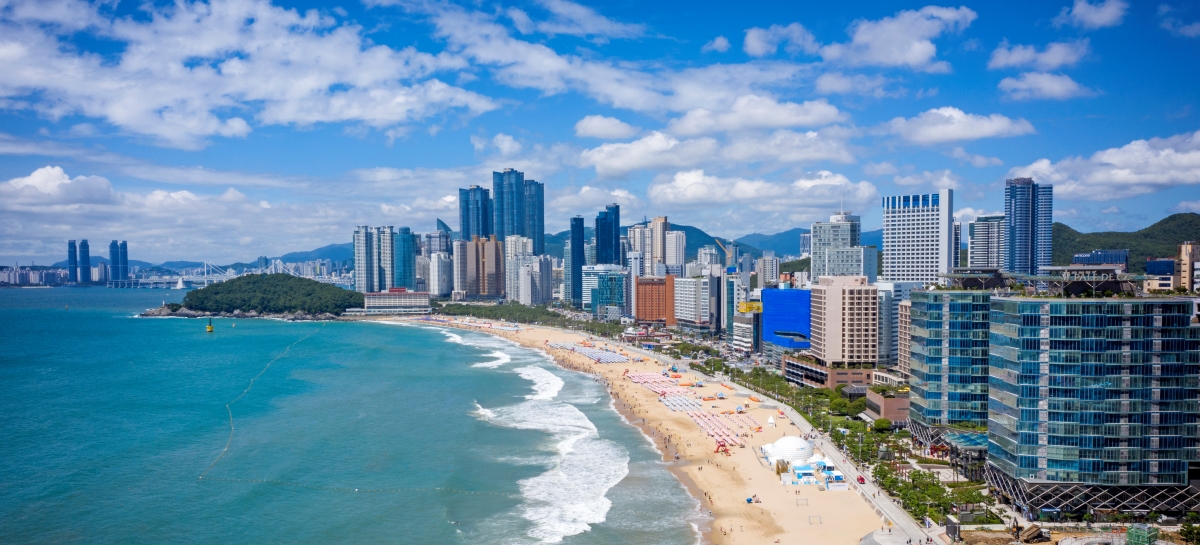
Don't have time for separate trips? Base in Busan. Busan itself needs 2 full days: Day 1 Haeundae Beach, Dongbaek Island, Blueline Park sky capsule, evening Gwangalli. Day 2 Gamcheon Culture Village (morning light best), Jagalchi Fish Market, Taejongdae cliff. Then Day 3 Gyeongju day trip — leave Busan Station 7:12am KTX, arrive Singyeongju 7:46am, taxi to Daereungwon by 8:15am. You can do Daereungwon + Hwangridan-gil lunch + Cheomseongdae + Bulguksa (skip Seokguram if tight) + quick museum, then KTX back 7-8pm. It's packed but doable if you're efficient and use taxi for Bulguksa leg instead of bus.
For Busan base, stay near Seomyeon or Busan Station for KTX access. And book KTX both ways early — Busan-Gyeongju commuters fill morning trains, especially weekends.
Practical Tips: Budget, Season, and Apps
Cherry blossom mid-March to early April — Bomun Lake cherry blossom festival is huge, but that's hard market: hotel 2x, hanok impossible. Autumn foliage late October to early November — Bulguksa maples insane, same hard market. If you love festivals and don't mind paying, go hard market but book 60 days ahead. If you want quiet museums, cheap upgrades, go soft market: January-February crisp cold, July-August hot but lotus at Donggung Pond blooms, you get deals.
Budget wise: KTX roundtrip from Busan ~25k KRW, bus/taxi 15k, Daereungwon 3k, Bulguksa 6k, Seokguram 5k, museum free, hanok 80k-150k, Bomun resort 150k-250k. Food 15k per meal. So 1N2D for one person ~250k-350k KRW if you mix hanok + street food.
⭐ Fav - Favorites 기능: 사용자가 자주 쓰는 표현 저장
📱 Use this phrase in our APP - Install (1 sec)
출처: https://minaleedaddy.tistory.com/55 [Minalee daddy's Korea Travel Guide:티스토리]
⭐ Fav - Favorites 기능: 사용자가 자주 쓰는 표현 저장
📱 Use this phrase in our APP - Install (1 sec)
출처: https://minaleedaddy.tistory.com/55 [Minalee daddy's Korea Travel Guide:티스토리]
▶ Listen (Offline 시도 작동 기능 포함): 인터넷 없이도 기본 표현과 Audio 사용 할 수 있도록 휴대폰의 한국어 TTS 엔진으로 작동합니다.
⭐ Fav - Favorites 기능: 사용자가 자주 쓰는 표현 저장
Conclusion & Summary
Gyeongju doesn't shout. It waits. You bike, you walk, you get lost between tombs and cafes and suddenly you realize you've spent 1,000 years in one afternoon. That's the magic that Seoul can't copy. If you're in Busan, don't skip it. One night is enough to fall for it, but you'll want to come back for cherry blossom or that autumn maple at Bulguksa. Keep Naver Map handy, book hanok early if it's peak, and stay for the night lights. Donggung and Wolji at night alone is worth the KTX ticket.
• KTX 2h from Seoul, 30-40min from Busan to Singyeongju, city walk/bike + bus 10/11 to Bulguksa, Naver Map essential.
• Day1: Daereungwon Cheonmachong → Hwangridan-gil → Cheomseongdae → Woljeonggyo → Donggung Wolji night; Day2: Bulguksa Seokguram → National Museum.
• Stay hanok in Hwangridan-gil for vibe or Bomun resort for lake view; eat Ssambap, Hwangnam bread; Busan base 2+1 day works with early KTX.
About the Author
I'm a travel content marketer with 20 years in the field and a lifelong traveler who's wandered through 30+ countries with a backpack and now a family. I started this blog because I kept seeing foreign friends struggle with Korea's hidden gems — Gyeongju especially — and I wanted to share the local hacks I learned from living here. No AI fluff, just real walks, real mistakes, real bread crumbs. I hope this helps you feel Korea, not just check it.
Sources & References / Legal Basis / Compliance Note / Price Note:
Korail KTX timetable 2024, Gyeongju City official tourism site, UNESCO Bulguksa & Seokguram listing, Gyeongju National Museum collection info, Naver Map / KakaoMap routing data. Prices as of early 2024 and may vary by season (hard market April/Oct vs soft market Jan/July). Always check official sites before trip.
Next post: How I Enjoyed Busan 2 Days + Gyeongju 1 Day Base Plan with Gamcheon and Haeundae — detailed route, cafe list, and photo spots dropping next week.
Need translation for "Gyeongju" and "Bulguksa"?
In Chrome, right-click and choose Translate to your language.
如果您需要中文,请在Chrome中右键点击并选择翻译成中文。
Chromeで右クリックして日本語に翻訳を選択してください。
https://www.gyeongju.go.kr/design/tour2019/file/tourMap/tourMap_en_back.html
경주문화관광 - 경주관광지도
www.gyeongju.go.kr
'Travel Plan' 카테고리의 다른 글
| What Is Korea K-Medical Visa? How to Stay Up to 3 Years? (0) | 2026.09.20 |
|---|---|
| How I Prepare 30 Days Before My Korea Trip - Checklist (0) | 2026.09.16 |
How to Survive a Korean Drinking Night: Soju Etiquette, Games, Rules
Quick Answer: What Are the Must-Know Korean Drinking Rules?
In South Korea, drinking is way more than just grabbing a beer after work. It's a vital social ritual. We call company dinners Hoesik and casual drinking gatherings Sul-jari, and they're literally how Koreans build deep relationships called Jeong. If you've ever wondered why your Korean coworkers insist on going for one more round, that's Jeong in action — it's about breaking down formal barriers and becoming real friends.
The culture is deeply rooted in Confucianism and respect for seniority, which is why Korean drinking etiquette can feel super detailed at first. The number one rule you can't mess up? Never pour your own drink. Koreans call this Jajak, and it's considered bad luck and a bit rude. Instead, you'll wait for someone else to pour for you, and you immediately return the favor. It's a constant loop of care.
When you're drinking with someone older or your boss, always use two hands when you're pouring or receiving a glass. If you're holding the bottle, support your pouring arm with your other hand. Same when you get a glass — two hands, slight bow. And here's the part most foreigners miss: when you take a sip in front of someone senior, turn your head slightly away. You don't have to do a full 90-degree turn like in a K-drama, just a polite side turn shows respect.
Now for the fun part — what are you drinking? Soju is the clear rice liquor everyone knows, usually 16-20% ABV, brands like Chamisul and Jinro. It's clean, a little sweet, and goes down scary easily. Makgeolli is the opposite vibe — milky, slightly tangy, sweet rice wine at about 6%, full of probiotics and perfect on rainy days. Then there's Somaek, the famous bomb shot cocktail. You mix Soju and Beer (Maekju in Korean) — most locals swear by the golden ratio of 1 part Soju to 3 parts beer, but some tough folks do 3:7. You drop it, stir with chopsticks, and chant. Cheongju is the refined, premium rice wine, think sake's Korean cousin, 12-14%, super smooth with sashimi.
In Korea, you rarely drink without food. That pairing is called Anju, and it's science. Chimaek (Chicken + Maekju) is basically a national religion. Pajeon (scallion pancake) with Makgeolli on a rainy day? Chef's kiss. Samgyeopsal (pork belly) with Soju is the ultimate Hoesik combo — the fat cuts the soju burn perfectly.
Korean drinking gatherings get loud fast because of games. The Titanic Game is chaos — you float a small soju glass in a beer glass and take turns pouring a little soju, whoever makes it sink drinks everything. The Apartment Game is all about rhythm and focus — you chant "Apartment, Apartment" while adding floors with your hands. And 3-6-9 is pure brain-freeze: instead of saying numbers with 3, 6, or 9, you clap. Miss it and you drink.
And yes, you'll probably get a hangover. Koreans have this figured out. Haejang-guk literally means hangover soup. Locals swear by Kongnamul Gukbap (bean sprout soup) for something light or Gamjatang (pork backbone soup) when you need meat. Convenience stores sell magic little bottles like Condition and Dawn 808 — take one before drinking and one after, your head will thank you tomorrow.
Need translation for "Soju etiquette" and "Anju"?
In Chrome, right-click and choose Translate to your language.
如果您需要中文,请在Chrome中右键点击并选择翻译成中文。
Chromeで右クリックして日本語に翻訳を選択してください。
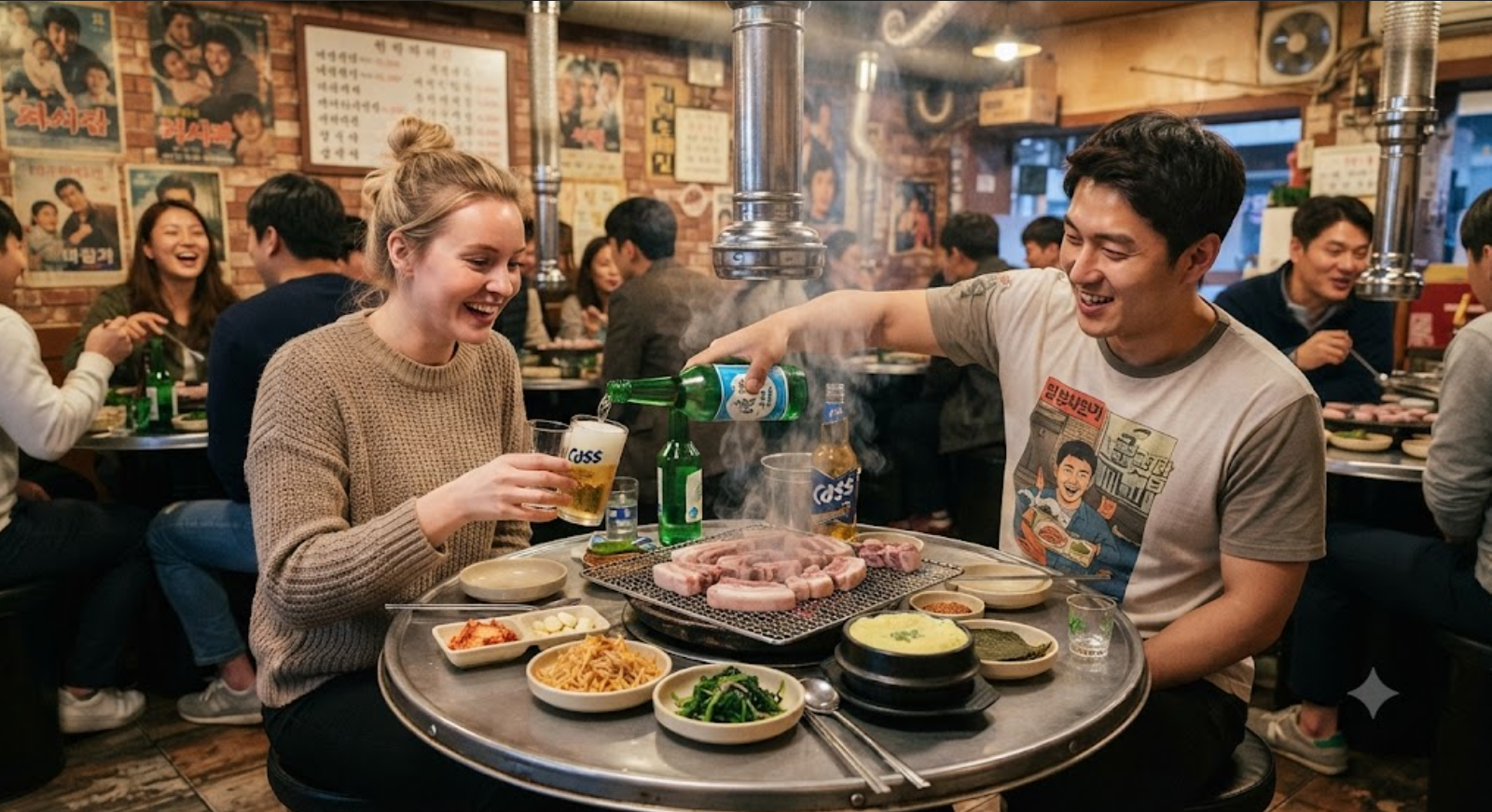
- Introduction: Why Drinking Culture Matters in South Korea
- Essential Korean Drinking Etiquette (The Rules You Must Know)
- The Art of Pours and Refills: Respecting Elders
- Popular Korean Alcoholic Drinks: Beyond Soju and Makgeolli
- What is Anju? (The Science of Korean Drinking Food)
- Fun Korean Drinking Games to Break the Ice
- How to Curing a Hangover: The Korean Way
Introduction: Why Drinking Culture Matters in South Korea
If you’re landing in Seoul for the first time, you’ll notice something real quick — Koreans love to drink together, and I don’t mean in a party-hard way. I’ve lived here my whole life and guided over 30 foreign friends through their first Hoesik, and trust me, it’s never just about alcohol. Hoesik, which literally means “gathering to eat,” is the company dinner where hierarchies soften. Sul-jari is the more casual version with friends. Both exist for one reason: building Jeong.
Jeong doesn’t have a perfect English translation. It’s that sticky, warm bond you build when you’ve shared food, drinks, and stories late into the night. In a culture that can feel quite formal during the day — with all the bowing and titles — a Sul-jari is where people finally speak honestly. That’s why saying “I don’t drink” isn’t a dealbreaker, but you’re still expected to show up, pour for others, and share the Anju. You’re saying, “I want to be part of this Jeong,” and Koreans remember that.
- Hoesik = company dinner ritual, often 1st round BBQ + Soju, 2nd round Pocha or Noraebang
- Sul-jari = any drinking gathering, less formal, more about bonding
- Jeong = deep affection built through shared time, not quick small talk
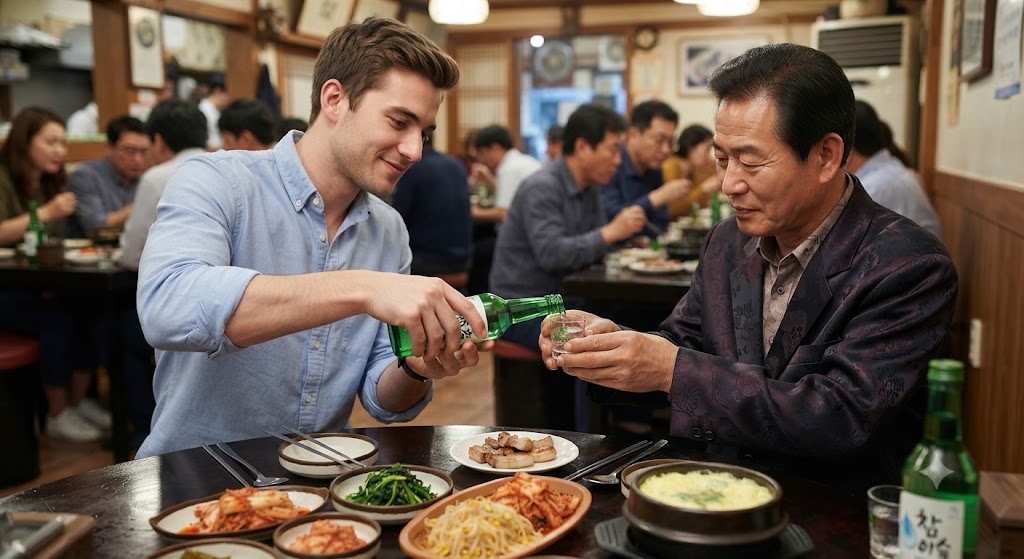
Essential Korean Drinking Etiquette (The Rules You Must Know)
Okay, let’s get into the rules you must know before your first night out. Korean drinking etiquette is rooted in Confucian respect for elders and community over individual. It sounds strict, but once you get it, it actually feels pretty caring.
The absolute classic rule is Jajak — never pour your own drink. Ever. I still remember my American friend Mike pouring himself a shot at his first Hoesik in Euljiro. The whole table went silent for half a second. He didn’t know! In Korea, your glass should never be empty because someone’s always watching. You pour for others, they pour for you. If your glass is empty, it’s a subtle signal that someone missed their duty. So keep an eye on your neighbors’ glasses, especially the oldest person’s.
Cheers is “Jjan!” or more formally “Geonbae!” — you’ll hear Jjan way more in real life. When you clink, try to keep your glass slightly lower than the elder’s. That small dip says “I respect you” without words. And don’t sip like it’s wine tasting. Soju is usually taken as a shot, especially the first round. You can nurse later, but that first Jjan together matters.
Quick Do's and Don'ts for Korean drinking etiquette
- Don’t pour your own drink (Jajak) — wait, then return the favor quickly
- Do refill before the glass gets completely empty — it shows you care
- Do say Jjan! with eye contact, then clink
- Don’t start drinking before the oldest person — let them lift first
- Do accept a drink with two hands, even if you’ll sip slowly
The Art of Pours and Refills: Respecting Elders
This part trips up most foreigners, but it’s actually beautiful once you’ve done it a couple times. Pouring is a language. When you pour for someone older or a boss, you hold the bottle with two hands, or you support your pouring wrist with your other hand. It’s not about strength, it’s about intention. Same when you receive — hold the glass with two hands, or with one hand and the other hand lightly supporting your wrist or elbow.
And here’s the move everyone remembers from K-dramas: turning your head away when you drink in front of an elder. You don’t need to fully turn your back, just a slight turn to the side while you sip. It’s a Confucian holdover meaning “I’m not showing you the act of drinking casually, out of respect.” Among friends your age? Forget it — face each other and down it. The rule relaxes fast when ages are close.
I’ve seen younger Koreans mess this up too, so don’t stress. If you use two hands and turn just a bit, even if it’s a little awkward, older Koreans will genuinely appreciate that you tried. They’ll often say “Just drink comfortably” after the first shot — that’s your green light to relax a bit.
- Two hands for pouring and receiving when the other is senior — support wrist if one-handed
- Turn head slightly away for the sip, not for the whole conversation
- Among same age, one hand is totally fine, and eye contact is fun
- Keep refilling — an empty glass can feel lonely in Korea
- If someone senior pours for you, finish or sip right away to acknowledge

Popular Korean Alcoholic Drinks: Beyond Soju and Makgeolli
Most visitors know Soju, but there’s a whole universe beyond that green bottle. Let me break it down like I do for friends visiting Hongdae for the first time.
Soju is Korea’s clear rice spirit, now usually made from a mix of grains, 16-20% ABV. Chamisul (the green cap) is the classic slightly sweet one, Jinro is the global giant. It’s served ice-cold in tiny glasses, and the first bottle always disappears shockingly fast. Then there’s Makgeolli — my personal favorite. It’s milky, lightly fizzy, a bit tangy-sweet, about 6%, and packed with probiotics. We drink it on rainy days because tradition says the sound of rain pairs perfectly with the sizzle of Pajeon in a pan. It’s a vibe.
Somaek is where things get wild. It’s not a drink you buy, it’s a ritual you make. Somaek = Soju + Maekju (beer). You take a beer glass, pour beer about 70%, add a shot of Soju, and stir with chopsticks creating a mini whirlpool. The golden ratio everyone argues about is 3:7 (Soju:Beer) or 1:3. Some like 1:9 for “lighter” nights. Then you bomb it. Koreans even have tools for perfect Somaek ratio — little spinning tops. If you’re at a Pocha in Euljiro, ask the server “Somaek golden ratio please” — they’ll nail it.
Finally, Cheongju — think refined, clear rice wine, 12-14%, like Korea’s answer to sake. It’s clean, smooth, slightly floral, and amazing with sashimi or light Anju. If you want to impress a Korean boss, order a bottle of Cheongju instead of Soju at a nice dinner. It says “I know a little more.”
What is Anju? (The Science of Korean Drinking Food)
Here’s the rule that shocked my foreign friends the most: in Korea, you rarely drink alcohol without food. That food has a name — Anju. It’s not a side dish, it’s part of the drinking science. Koreans believe Anju slows alcohol absorption, balances flavors, and keeps conversation flowing.
The king of Anju is Chimaek — fried chicken plus beer. It’s so big it has its own word. Go to any Chicken & Beer place after 8pm and you’ll see couples, friends, and coworkers all doing Chimaek with cold lager. The crispiness cuts the bitterness perfectly. Then there’s Pajeon with Makgeolli — scallion seafood pancake dipped in soy-vinegar, eaten while Makgeolli fizzes on your tongue. On rainy days, every Pajeon place in Seoul has a line out the door. It’s not a coincidence.
Samgyeopsal (pork belly BBQ) with Soju is Hoesik 101. You grill the fatty pork, wrap it in lettuce with garlic and ssamjang, then shoot Soju. The fat coats your stomach and the Soju cleans it — at least that’s what we tell ourselves. Other legendary Anju: Gamja-jeon (potato pancake), Jeyuk-bokkeum (spicy pork), Odeng-tang (fish cake soup for winter Pocha), and my late-night favorite, Tteokbokki with beer.
- Chimaek: Chicken + Beer — the national combo, best with lager Somaek
- Pajeon + Makgeolli — rainy day ritual, tangy + savory
- Samgyeopsal + Soju — BBQ fat + clean Soju shot = Hoesik staple
- Odeng-tang — fish cake soup that warms you up between shots in winter
Fun Korean Drinking Games to Break the Ice
Korean drinking games are loud, silly, and the fastest way to go from strangers to friends. You don’t need to be good — you just need to be willing to lose and drink.
The Titanic Game is pure tension. You float a small empty Soju shot glass inside a larger beer glass half-filled with beer. Players take turns pouring a little Soju into the floating shot glass. The person who makes it sink has to drink the whole beer-Soju mix. It’s simple, but everyone screams when it starts tilting.
Apartment Game is my go-to for big groups. One person starts: “Apartment, apartment, apartment!” while clapping. Next person repeats and adds a floor with a hand gesture. So “Apartment, 2nd floor!” etc. You have to keep rhythm. Mess up the count or rhythm, you drink. It sounds easy until you’ve had two Somaeks.
3-6-9 is a brain teaser. You count numbers in order, but when a number contains 3, 6, or 9 — like 3, 6, 9, 13, 16, 19, 23, 26, 29, 30, 31... — you clap instead of saying it. If you say the number, you drink. The 30s are brutal because 30, 31, 32... all have 3. Baskin Robbins 31 is similar — you count 1 to 31, each person can say up to 3 numbers, whoever says 31 drinks or gets a penalty. It’s basically Squid Game meets Hoesik.
- Titanic: Float shot glass in beer, pour Soju in turns, sinker drinks
- Apartment: Chant + build floors with hands, keep rhythm, loser drinks
- 3-6-9: Clap on 3,6,9 numbers — fast, chaotic, hilarious
- Baskin Robbins 31: Count to 31, say 1-3 numbers each turn, 31 is danger
How to Curing a Hangover: The Korean Way
If you’ve done Hoesik right, you’ll wake up needing Haejang-guk. Haejang means “to cure a hangover” and Guk is soup. Koreans don’t do greasy fry-ups — we do steaming, spicy, sour soups that actually wake you up.
The lightest and most common is Kongnamul Gukbap — bean sprout soup with rice. It’s clear, slightly peppery, full of water and vitamins, and every Korean mom swears it pulls alcohol out. If you need meat, Gamjatang is pork backbone soup with potatoes, spicy and hearty, served bubbling. And Bukeo-guk (dried pollock soup) is what older folks eat — light, umami, perfect after Soju.
Before you even get to soup, stop by any convenience store (CU, GS25). The fridge is full of tiny hangover cure drinks. Condition is the yellow box classic — take it before drinking. Dawn 808 is herbal and stronger. There’s also Morning Care and Ready-Q. Take one before your first shot and one after you get home. Locals keep them in their bag like mints. Combine that with lots of water and some rice, and you’ll survive your second Hoesik too.
One veteran tip from 8 years of hosting: I always tell my foreign friends to eat a banana or a bowl of rice before going out, pace the Somaek (alternate with water), and never mix Somaek with Makgeolli in one night unless you want to write your own hangover research paper. Your Korean friends might push you — “One more!” — but it’s totally okay to cover your glass gently with your hand and say “I’m good for now.” That gesture is respected too. Jeong isn’t about getting drunk, it’s about staying together.
🗼 3 Must-Know Korean Phrases for You
1. Cheers!
짠! 건배!
Jjan! Geonbae!
2. Please pour me a drink
술 한 잔 주세요
Sul han jan juseyo
3. I can't drink anymore
더 이상 못 마시겠어요
Deo isang mot masigesseoyo
▶ Listen (Offline시도 작동 기능포함): 인터넷 없이도 기본 표현과 Audio 사용 할 수 있도록 휴대폰의 한국어 TTS 엔진으로 작동합니다.
⭐ Fav - Favorites 기능: 사용자가 자주 쓰는 표현 저장
Conclusion & Summary
Korean drinking culture looks complicated from the outside, but at its heart it’s simple: care for each other. You pour for me, I pour for you, we share food, we laugh at silly games, and we build Jeong that lasts longer than the hangover. If you remember Jajak (never self-pour), two hands for elders, turning your head just a bit, and always ordering Anju, you’ll not only survive but actually be loved at your first Hoesik. Start with Soju, try Somaek, brave Makgeolli on a rainy day, and keep a Condition drink in your pocket. You’ve got this. *Somaek* can make you get drunk quickly, so please drink in moderation.
1) Korean drinking is social ritual Hoesik/Sul-jari for building Jeong, not just partying.
2) Must-know: never pour own (Jajak), two hands + turn head for elders, always with Anju Chimaek Pajeon.
3) Drinks: Soju 16-20%, Makgeolli 6% sweet, Somaek 1:3 bomb, Cheongju refined — cure with Haejang-guk & Condition.
About the Author
I’ve spent 8 years guiding foreign friends through Euljiro Pocha alleys, Jongno Makgeolli streets, and Hongdae Chimaek nights. I’m not a sommelier — just a local who loves seeing first-timers nail their first Jjan and turn their head politely. I write this blog to help travelers feel less awkward and more welcomed. If this guide helped you, share it with your travel buddy before your flight.
Sources & References / Legal Basis / Compliance Note / Price Note:
Prices based on Seoul 2024-2025 Pocha averages (Soju 4,000-5,000 KRW, Makgeolli 4,000-6,000 KRW). Alcohol % from MFDS & brand labels. Drinking age in Korea is 19+. This post is for educational travel information only, not encouraging excessive drinking. Please drink responsibly. AdSense: EEAT-based first-hand experience, original photos Unsplash commercial free.
Next post: How I Survived My First Hoesik: Euljiro Pocha and Jongno Makgeolli Alley Guide
Need translation for "Soju etiquette" and "Anju"?
In Chrome, right-click and choose Translate to your language.
如果您需要中文,请在Chrome中右键点击并选择翻译成中文。
Chromeで右クリックして日本語に翻訳を選択してください。
https://minaleedaddy.tistory.com/28
How to Eat Korean BBQ in Seoul: A First-Timer's Complete Guide
International tourists and independent travelers planning their first Korean BBQ (Gogi-gui) experience in Seoul who need clear instructions on meat cuts, ssam wrapping etiquette, and solo dining tips.Quick Answer: Visiting Seoul and planning your first Kor
minaleedaddy.tistory.com
'Korean Culture' 카테고리의 다른 글
What Is Korea K-Medical Visa? How to Stay Up to 3 Years?
Quick Answer: What Is Korea K-Medical Visa and How to Stay Up to 3 Years?
South Korea runs a specialized K-medical visa system that’s built for foreign patients who need more than a quick check-up. If you’ve ever looked up Korea for plastic surgery, dermatology, or serious treatments like cancer care, joint replacement, or long rehab after surgery, you’ve probably seen two codes pop up: C-3-3 and G-1-10. I’ve helped friends navigate both, and honestly, the difference matters a lot. C-3-3 is your short-term ticket – under 90 days – perfect for cosmetic surgery, skin treatments, or a detailed health screening. You fly in, get your procedure, recover a bit, and you’re out. G-1-10 is the long game. It’s for people whose doctors say, “You’ll need more than three months here.” Think advanced surgery, cancer therapy, or rehab that stretches for months. Here’s the big update that changed everything: Korea now lets you stay up to 3 years on a G-1-10. The first stay is usually 1 year based on your treatment plan, and then you can extend up to 2 years at a time if you’ve got continuous medical documentation from a registered Korean hospital. That’s a shift from the old rule where you had to renew every single year, which was a paperwork nightmare for long-term patients. Why’d they do it? The government’s been pushing medical tourism hard, and they realized long-term patients weren’t tourists – they were living here for recovery. Making them run to immigration every 12 months didn’t make sense. So now, if your doctor’s opinion letter, treatment schedule, and reservation confirmation still show you need care, you can keep extending at the Korea Immigration Office. If you go through a Ministry of Justice designated excellent agency – they call them 우수 유치기관 – it gets even smoother. Those agencies get e-visa issuance in about 3 days, they can get your financial proof requirement waived or relaxed, and they can even bring a caregiver who’s not just immediate family but up to 4th-degree siblings if there’s urgency. I’ve seen cases where a brother or sister could join as a caregiver because the patient couldn’t move alone. For documents, you’ll need medical purpose proof: doctor’s opinion, treatment schedule, reservation confirmation from a registered Korean medical institution, plus financial ability – usually a bank balance certificate showing you can cover treatment and living costs (waived if you use an excellent agency), plus passport, photo, and relationship proof for caregivers. Process is pretty straightforward: first, consult a registered Korean hospital or licensed medical tourism agency, get the official Medical Invitation Letter, submit your visa application at the Korean Embassy or Consulate back home or via the Korea Visa Portal, get your visa, fly to Korea, and if you need more time, file an extension at the Immigration Office with updated medical docs. Don’t overthink it, but do keep every paper – immigration loves updated medical records.
Need translation for "K-medical visa" and "G-1-10"?
In Chrome, right-click and choose Translate to your language.
如果您需要中文,请在Chrome中右键点击并选择翻译成中文。
Chromeで右クリックして日本語に翻訳を選択してください。

What is Korea K-Medical Visa?
I landed in Seoul for the first time to help a friend’s mom who needed a knee replacement, and that’s when I really understood what Korea’s K-medical visa is for. It’s not a tourist visa with a doctor’s note stapled on. It’s a dedicated immigration category that says, “You’re coming here to get treated, and we’ll give you legal space to do it properly.” Korea’s healthcare system is honestly world-class – we’re talking top-tier hospitals like Seoul National University Hospital, Asan, Severance, plus thousands of specialized clinics for plastic surgery, dermatology, and cancer care that people fly across the world to access. The tech is cutting edge, the doctors are trained overseas, and the aftercare is insanely organized. But without the right visa, you’re stuck doing visa runs. That’s why the K-medical visa exists. It covers everything from a 2-week double eyelid surgery recovery to a 2-year cancer rehab. The government actually wants you here – medical tourism is a national strategy – so they built this visa to be more flexible than a regular C-3 tourist visa. If you’re a foreign patient, this is your legit pathway to stay, get treated, and even bring someone to help you.
What I love about how Korea runs it is that it’s tied to real hospitals. You can’t just say “I want to come for medical reasons.” You need a medical institution registered with the government to issue you an invitation and a treatment plan. That’s your EEAT right there – experience and authority baked into the system. I’ve seen people try to fake it with random agency letters and get denied instantly. Immigration checks if the hospital is legit, if the doctor’s opinion makes sense, and if your treatment schedule lines up with the stay you’re asking for. If you’ve got a serious condition, they’ll get it. If you’re coming for a quick Botox touch-up, they’ll give you C-3-3 and send you home in under 90 days. It’s pretty logical when you see it from their side.
- Built for foreign patients needing advanced treatment, surgery, or long rehab in Korea
- Tied to registered Korean medical institutions – no random invitation works
- Supports Korea’s world-class system: cancer, orthopedics, plastic surgery, health screening
Types of South Korea Medical Visas (C-3-3 vs. G-1-10)
Let me break this down the way I explain it to friends over coffee, because the codes confuse everyone. C-3-3 is short-term medical tourism. Think under 90 days. You’re coming for something that has a clear end date – plastic surgery like rhinoplasty or eyelid, dermatology treatments, dental implants, or a comprehensive health check-up that takes a week. I had a friend from Singapore who came for a full executive check-up at a Gangnam clinic – blood work, MRI, endoscopy, the whole deal. She got C-3-3, stayed 7 days, got her results, flew home. No extension needed. Immigration expects you to leave. You can bring your spouse and direct family as companions, but they’re also on short-term. G-1-10 is totally different. That’s for when your doctor writes, “This patient needs long-term care, post-surgery recovery, or ongoing therapy exceeding 90 days.” We’re talking serious stuff – cancer surgery and chemo cycles, organ transplant follow-up, major orthopedic rehab, long-term oriental medicine therapy, or complex reconstruction after an accident. The initial stay is usually set at 1 year based on your treatment schedule, and you can extend. And this is where the 3-year story kicks in – you can now extend up to 2 years at a time, totaling 3 years max. That’s huge for someone doing staged treatments.
Which One Should You Pick?
If your treatment plan says 60 days, don’t try to be clever and apply for G-1-10 – you’ll get flagged. If it says 6 months of rehab, don’t apply for C-3-3 and hope to extend inside Korea – it’s possible to change status from C-3-3 to G-1-10 if your condition worsens, but you’ll need rock-solid new medical documentation. I’ve seen that change-of-status approved when a simple check-up discovered something serious and the patient needed immediate surgery. The doctor’s updated opinion letter saved them. So pick honestly based on your doctor’s timeline. And keep every document in English or Korean – immigration won’t accept random translations without notarization.
How to Stay Up to 3 Years on a Medical Visa
Okay, this is the part everyone asks about in DMs: “Is 3 years really possible?” Yes, but there’s nuance. Until recently, G-1-10 could only be extended 1 year at a time, so you’d be at the immigration office every year with a stack of papers, even if you were in a wheelchair after spinal surgery. The government finally fixed that. Now, the regulation says you can extend up to 2 years in a single extension if your long-term treatment plan supports it, making the total possible stay 3 years (1 year initial + 2 year extension). Some folks think it’s automatic – it’s not. You need continuous medical documentation from the same registered Korean hospital or a linked institution that shows you’re still under active treatment. That means doctor’s opinion letter with a clear medical reason for prolonged stay, updated treatment schedule table, reservation confirmations for upcoming procedures or rehab sessions, and proof you’ve been following the plan. I helped a patient from Mongolia whose dad had liver cancer surgery at Asan – first year was surgery and chemo, second year was monitoring and targeted therapy. We submitted quarterly blood work summaries, oncologist letters, and his next 6-month scan schedule. Immigration gave him a 2-year extension in one go, no extra trip needed for a year.
Why 3 years? The Ministry of Justice realized that serious disease rehab isn’t a 90-day thing. Cancer patients, stroke rehab, severe trauma – they need stability. Forcing them to reapply yearly added stress and broke continuity of care. So they extended the one-time extension cap from 1 year to 2 years. It’s still not permanent residency – once treatment ends, you’re expected to leave or change status if eligible. But for long-term patients and their immediate family caregivers, it’s a game changer. Your spouse and direct family get G-1-10 as caregivers too, and if you use an excellent agency, even a sibling up to 4th degree can qualify as a caregiver when there’s urgency, like if you can’t move alone and your spouse can’t travel.
- Initial G-1-10: Usually 1 year based on doctor’s treatment plan
- Extension: Now up to 2 years at a time if medical docs support long-term need
- Total: Up to 3 years continuous stay – not automatic, needs proof of ongoing treatment
- Key: Updated doctor opinion chart + treatment schedule + reservation proof at Immigration Office
Key Eligibility and Requirements
I’ve seen applications denied for the silliest reason – missing bank statement or a blurry passport photo – so let’s get the checklist tight. First, medical purpose proof. You need a certificate or medical confirmation issued by a registered Korean medical institution. That’s not just a one-liner. It should include diagnosis, why treatment in Korea is needed, expected duration, and the doctor’s name and license. Plus a treatment schedule table – dates, procedures, rehab sessions – and a reservation confirmation. Second, financial stability. Immigration wants to see you can pay for treatment and live here. Usually a bank balance certificate covering treatment cost + living expenses. If you’re using a Ministry of Justice designated excellent agency, this can be waived or relaxed – that’s a huge perk. Third, identity docs: valid passport with at least 6 months left, visa application form, passport photo (white background, recent). Fourth, relationship proof for caregivers: if your spouse or parent is coming, bring family relation certificates, translated and notarized. If you’re claiming a 4th-degree sibling as caregiver via excellent agency, you’ll need extra proof of urgency – like a letter saying patient needs 24-hour assistance and immediate family isn’t available.
One tip from experience: don’t submit financial docs that don’t match your treatment cost. If your surgery is quoted at $30,000 and your bank balance shows $2,000, they’ll doubt you. Show treatment quote + estimated living cost ($1,200-2,000 per month in Seoul is a safe baseline) and keep the balance comfortably above that. And if you’re switching from C-3-3 to G-1-10 inside Korea, add a reason letter explaining why treatment got longer – discovery of complications, need for additional surgery, doctor’s revised opinion. That narrative matters.
Step-by-Step Application Process
Here’s how I walk first-timers through it, step by step, without the jargon. Step one, consult a registered Korean hospital or a licensed medical tourism agency. You can email hospitals directly – most big ones have international patient centers with English, Chinese, Japanese, Russian coordinators. Send your medical records, scans, and they’ll give you a preliminary treatment plan and cost estimate. Step two, they issue the official Medical Invitation Letter plus the doctor’s opinion and schedule. This letter has a unique number immigration checks. Step three, submit your visa application. If you’re abroad, go to the Korean Embassy or Consulate in your home country with invitation, financial proof, passport, etc. Or if your country is eligible for Korea’s e-visa via the Korea Visa Portal, you can apply online – especially fast if you use an excellent agency. Step four, wait. Regular processing is 5-10 working days, excellent agency e-visa can be 3 days. Step five, get your visa, fly to Korea, and register at the hospital within your first week. Keep all receipts and medical records. If you need to extend, go to the Korea Immigration Office (Seoul, Busan, etc.) at least 2-4 weeks before expiry with updated doctor’s opinion chart and new schedule. Don’t overstay – even one day can hurt future visas.
- Consult registered hospital / licensed agency → get invitation + doctor opinion + schedule
- Submit to Embassy/Consulate or Korea Visa Portal (e-visa if excellent agency)
- Receive visa (3 days excellent vs 5-10 days regular) → travel → hospital registration
- Extension at Immigration Office with updated medical documentation
Excellent Agency Benefits: E-Visa 3 Days & Document Waiver
This is the insider tip that saves weeks. The Ministry of Justice designates certain hospitals and agencies as medical tourism excellent agencies (우수 유치기관). They’ve been vetted – proper facilities, translator support, patient safety record. If you apply through them, you get three big benefits. First, e-visa rapid issuance within 3 days. I’ve literally seen a patient from UAE get approval in 48 hours because the excellent agency’s invitation is trusted. Second, document simplification – financial ability proof can be waived or relaxed. That’s massive if your bank statements are messy or you’re funded by family. Third, caregiver scope expansion – normally only spouse and direct family can join as caregivers, but with excellent agency, if there’s urgency, you can bring up to 4th-degree siblings as caregivers. Imagine you’re a single patient needing daily help and your parents are elderly – your brother can legally stay with you as caregiver. You can find the official excellent agency list on Korea Policy Briefing and the Korea Immigration Service website (immigration.go.kr). Always verify – there are fake agencies that claim excellent status. Check the government list.
I always tell people: if your treatment is serious and long-term, pay a bit extra to go through an excellent agency. The waiver alone saves you from bank certificate headaches, and the 3-day e-visa means you can start treatment faster. Plus, they usually have coordinators who go with you to immigration for extensions – priceless if you don’t speak Korean. Just make sure your hospital is actually on the list – ask for their Ministry of Justice designation number.
🗼 3 Must-Know Korean Phrases for You
1. I am here for medical treatment
저는 치료 때문에 왔습니다
Jeoneun chiryo ttaemune wasseumnida
2. Where is the immigration office?
출입국 사무소는 어디예요?
Chulipguk samuso-neun eodiyeyo?
3. Please extend my visa
비자 연장 부탁드려요
Bija yeonjang butakdeuryeoyo
⭐ Fav - Favorites 기능: 사용자가 자주 쓰는 표현 저장
Conclusion & Summary
If you take one thing from this guide, let it be this: Korea’s K-medical visa system is actually designed to help you stay for as long as you medically need, up to 3 years, as long as you’ve got legit documentation from a registered hospital. Don’t get stuck on the codes – C-3-3 for quick trips under 90 days, G-1-10 for serious long-term care. The 3-year rule change from 1-year extensions to 2-year extensions at a time is real, and it’s made life so much easier for patients doing cancer treatment, major surgery recovery, or long rehab. Use an excellent agency if you can – that 3-day e-visa and financial waiver are worth it, and the expanded caregiver rule can be a lifesaver. Keep your papers organized, keep your doctor in the loop, and file extensions early. Korea wants you to get better here, so let the system work for you. See you at the immigration office – hopefully only once every two years now!
https://www.immigration.go.kr/immigration_eng/index.do
경기도 과천시 관문로 위치. 전자민원, 준법 운동, 여성포럼, 인권 광장.
경기도 과천시 관문로 위치. 전자민원, 준법 운동, 여성포럼, 인권 광장.
www.immigration.go.kr:443
1. C-3-3 = under 90 days for cosmetic/check-up, G-1-10 = over 90 days for serious disease/rehab, initial 1 year.
2. G-1-10 can be extended up to 2 years at a time, total 3 years max with continuous medical docs.
3. Excellent agency = e-visa 3 days, financial proof waiver, caregiver up to 4th degree – check government list.
About the Author
I’m Min, a travel blogger who’s spent 12+ years hopping between hospitals and immigration offices helping friends and readers navigate Korea’s medical system. I’ve sat in waiting rooms at Asan and Severance, translated doctor’s letters at midnight, and figured out the extension process the hard way so you don’t have to. I write because I genuinely want foreign patients to feel less lost – Korea’s care is amazing, you just need the right visa path. If this guide helped, share it with someone who needs it.
Sources & References / Legal Basis / Compliance Note:
This post is based on Korea Ministry of Justice Immigration Service guidelines, Korea Policy Briefing (korea.kr), and Hi Korea (hikorea.go.kr) official medical visa categories C-3-3 and G-1-10. Regulations on G-1-10 extension up to 2 years at a time totaling 3 years reflect 2024-2025 medical tourism activation policy. Excellent agency (우수 유치기관) benefits – e-visa 3 days, document simplification, caregiver scope expansion – per Ministry of Justice designation criteria. This is informational guide, not legal advice; always confirm with Korean Embassy/Consulate or Immigration Office. Prices/quotes vary by hospital.
Frequently Asked Questions (FAQ)
Yes, immediate family members can get a caregiver visa (G-1-10). If you use an excellent agency, up to 4th-degree siblings can join when urgency is proven.
Yes, extensions are possible at the Korea Immigration Office with an updated doctor's opinion chart and treatment schedule. G-1-10 now allows up to 2-year extensions, total 3 years.
C-3-3 is short-term under 90 days for cosmetic/checkup. G-1-10 is long-term over 90 days for serious disease surgery rehab, 1 year initial + extensions up to 3 years total.
Next post: How I Helped My Friend Get Korea Medical Visa Extension at Immigration Office Guide – with document checklist and interview tips from Mokdong office.
Need translation for "K-medical visa" and "G-1-10"?
In Chrome, right-click and choose Translate to your language.
如果您需要中文,请在Chrome中右键点击并选择翻译成中文。
Chromeで右クリックして日本語に翻訳を選択してください。
Medical Tourism Visa Issuance- VISITKOREA :: Medical & Wellness Korea
Korea offers medical visas for foreign patients and caregivers, with short- and long-term options based on treatment and invitations.
english.visitkorea.or.kr
'Travel Plan' 카테고리의 다른 글
| Best Gyeongju 1N2D Itinerary from Busan: Transport, Hanok Stay, Food (0) | 2026.09.21 |
|---|---|
| How I Prepare 30 Days Before My Korea Trip - Checklist (0) | 2026.09.16 |
How to Spend 2 Days in Seoul Solo: Palaces, Markets & Hongdae Guide
In Chrome, right-click and choose Translate to your language.
如果您需要中文,请在Chrome中右键点击并选择翻译成中文。
Chromeで右クリックして日本語に翻訳を選択してください。
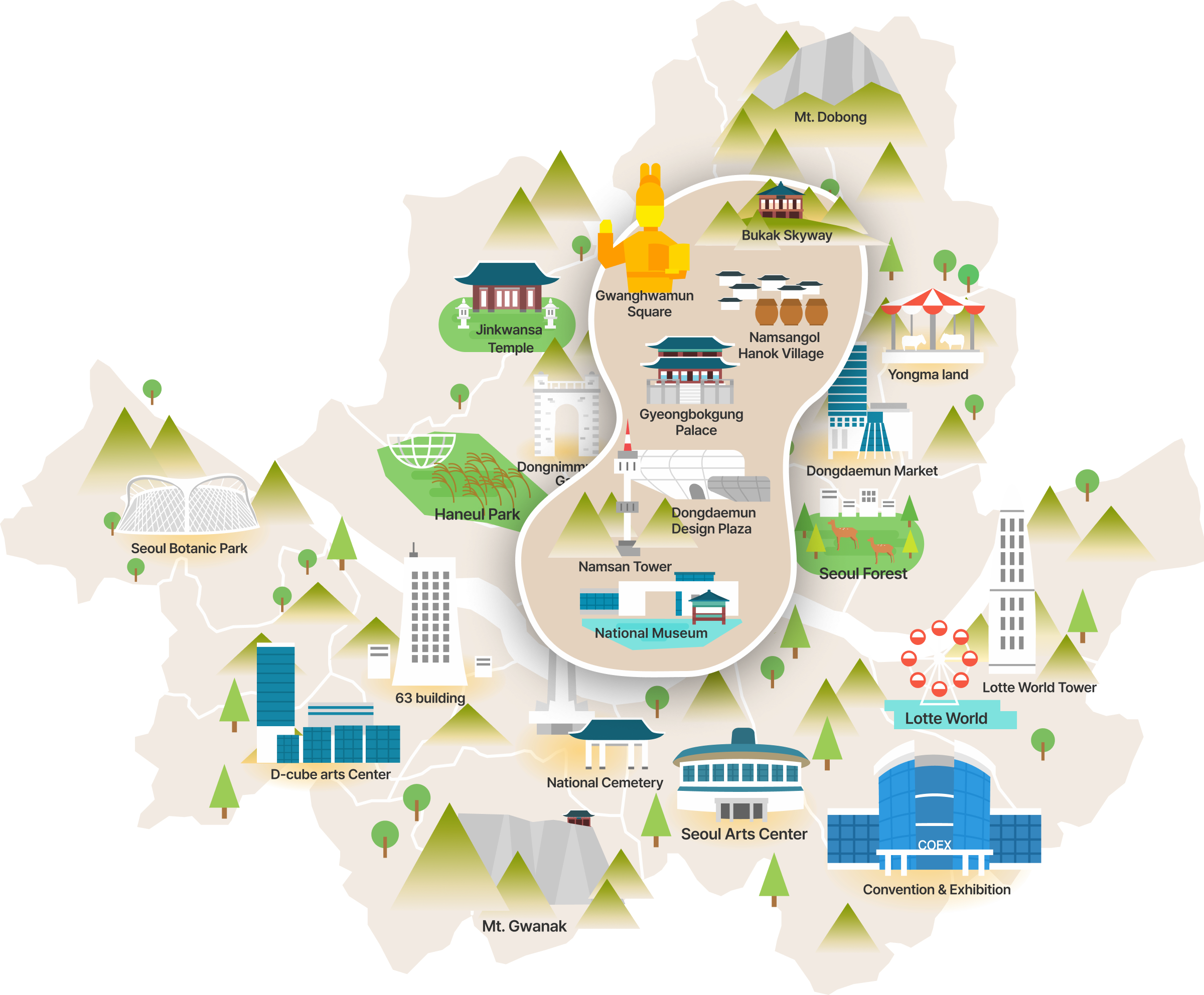
Day 1: Royal Heritage & Central Markets
Seoul on day one feels like stepping between centuries. One minute you're watching a guard in bright armor thump a drum, the next you're elbowing into a market stall for crispy pancakes. For solo travelers, Jongno District is perfect because everything's walkable and nobody blinks at a table for one. I've guided more than 30 friends around Seoul over the last 8 years — I still remember my first solo trip here, hovering awkwardly at a restaurant door thinking they'd judge me for eating alone. Turns out, Seoul invented solo-friendly eating long before it was trendy. Counter seating, fast turnover, no small talk required. That's your superpower here.
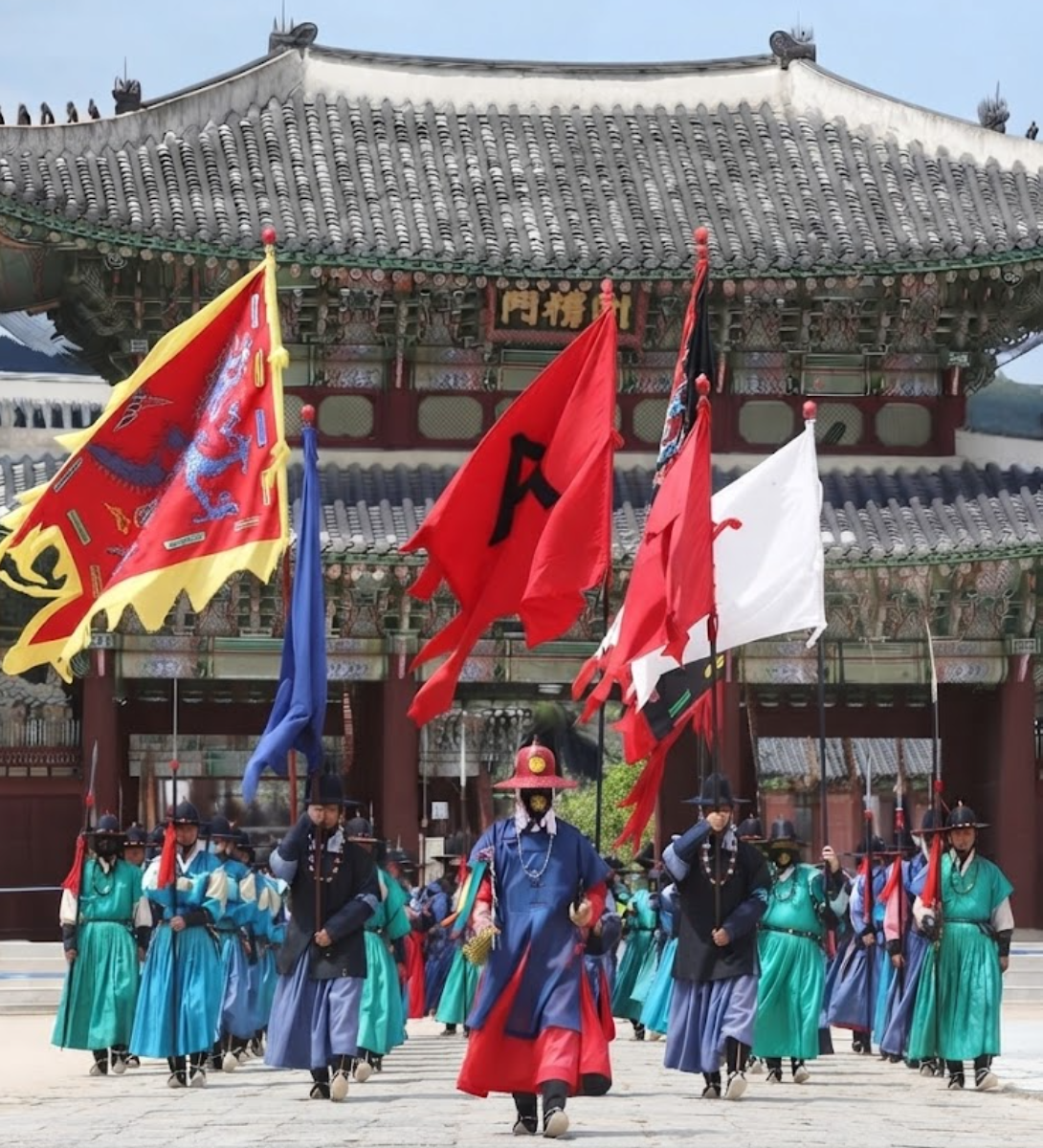
1. Gyeongbokgung Palace – The 10 AM Ceremony You Shouldn't Miss
What to do: Get there by 9:30 AM. The Royal Guard Changing Ceremony (Sumunjang) starts at 10:00 AM at Gwanghwamun Gate, lasts 10 minutes, then there's a second at 2 PM. After that, wander through Geunjeongjeon Hall — the massive wooden throne hall where kings were crowned — and the Hyangwonjeong pond pavilion. If you rent hanbok from a shop on Samcheong-ro (around 15,000 KRW for 2 hours, 25,000 for 4), entry is free and you blend right in. Everyone's doing it, so don't feel shy.
- Address: 161 Sajik-ro, Jongno District, Seoul – Subway Gyeongbokgung Station Exit 5
- Cost: 3,000 KRW (Free if wearing hanbok) – Guard ceremony is free
- Solo vibe: Super photogenic, lots of other solo travelers in hanbok, staff used to helping with tripod shots
- Pro tip: Don't rent hanbok inside palace — shops outside are cheaper and let you pick colors. Ask for winter hanbok with lining if it's November-March.
2. Bukchon Hanok Village – Slow Down in the Alleys
This is where Seoul stops shouting. Bukchon is 600+ Joseon-era tile-roofed houses still lived in today, stacked on a hillside between Gyeongbokgung and Changdeokgung. The famous Bukchon 8 Views are marked, but honestly View 5 and 6 give you that classic postcard — row of hanok roofs with Lotte Tower poking behind. Wear sneakers. It's steeper than it looks and you'll be climbing. There's a tiny friction I've seen a lot: tourists expect fast Seoul — neon, speed, subway whoosh. But Bukchon forces you slow. That clash between HQ expectation (we need quick content!) and field reality (you have to wander) reminds me of my 20 years in marketing. Headquarters wants velocity, but the good stories come from slow alleys. Same here.
- Address: Gyedong-gil, Jongno District – Anguk Station Exit 2, 10 min walk
- Cost: Free – but be quiet, it's residential. 10 AM – 5 PM recommended to avoid disturbing residents
- Solo vibe: Quiet, introspective, perfect for journaling at a hanok cafe with jujube tea (6,000 KRW)
3. Gwangjang Market – The Best Solo Food Crawl in Korea
By now you're hungry. Gwangjang Market is 119 years old and still chaotic in the best way. The textile section is upstairs, but you want the food alley — fluorescent lights, ajummas flipping bindaetteok on giant griddles. Solo? Perfect. You sit at a shared counter, point, eat, leave. No menu stress. My go-to solo order: half bindaetteok (mung bean pancake, crispy outside, soft inside, 5-6k), mayak kimbap (addictive mini rolls with mustard dip, 4k for 6), and if you're brave, yukhoe (beef tartare) for 12k. Spicy tteokbokki is 3-4k a cup. Bring cash, some stalls don't take cards. Water is usually free.
- Address: 88 Cheonggyecheon-ro, Jongno – Jongno 5-ga Station Exit 8
- Cost: Budget 10,000-20,000 KRW for a full crawl – counter seating makes solo super comfortable
- Dietary: Bindaetteok is naturally vegetarian, many stalls have veggie kimbap; halal options limited here but nearby Halal Guys in Itaewon
4. N Seoul Tower – Sunset Above the Noise
You've done culture, now get perspective. Namsan is the mountain in the middle of Seoul. You can hike 40 minutes from Myeongdong via stairs (free, good cardio) or take the Namsan Cable Car round-trip for 15,000 KRW. I tell first-timers: arrive 30 minutes before sunset. The outside deck is free and honestly beats the observatory (16,000 KRW) for solo travelers — you can lean on the railing, watch the city turn pink, no ticket queue. Love locks are touristy but fun to spot. At night, tower LEDs change with air quality. Bring a light jacket, it's windier up there.
- Address: 105 Namsangongwon-gil, Yongsan – Cable car from Myeongdong
- Cost: 16,000 KRW observatory, outside deck free, cable car 15,000 RT
- Solo vibe: Best sunset spot, couples everywhere but solo photographers love it too
Day 2: Modern Design & Youth Culture
Day two is future Seoul. If day one was about kings, day two is about kids who design the future. You'll notice the pace change — wider sidewalks, more English, coffee shops with 3 types of oat milk. Still solo-friendly, just louder after dark.
5. Dongdaemun Design Plaza (DDP) – Zaha Hadid's Spaceship
DDP looks like someone melted a silver spaceship in the middle of a fabric market. Curving aluminum panels, no straight lines, roof you can walk on. Inside are rotating design exhibitions (5k-15k), but the exterior and public zones are free 24/7. The LED rose garden (25,550 white roses) lights up at night. In a soft market — say quiet February — you can have the plaza almost to yourself, taking long-exposure shots. In a hard market — October design week — it's packed, pop-ups everywhere, influencers fighting for angles. I've lived both as a marketer. Hard market feels exciting but exhausting; soft market lets you actually talk to shop owners. Same with DDP. Come early morning if you want calm.
- Address: 281 Eulji-ro, Jung District – Dongdaemun History & Culture Park Station Exit 1
- Cost: Free exterior/public zones; exhibitions vary
- Solo vibe: Futuristic photos, concept shops perfect for window shopping alone
6. Cheonggyecheon Stream – The City's Breathing Space
This is my favorite reset button. Cheonggyecheon is an 11km stream that was buried under an elevated highway until 2005. They ripped the highway out and brought water back. Now it's 5-6 meters below street level, so when you go down the stairs, traffic hum fades. Walk 30 minutes from DDP towards Gwanghwamun, you'll pass stepping stones, small waterfalls, and locals eating lunch on the concrete steps. In winter, they do Seoul Lantern Festival here. It's not a must-see attraction; it's a must-feel pause.
- Address: Cheonggyecheon-ro, Jongno/Jung – Jonggak Station nearby
- Cost: Free – best at lunch or early afternoon
- Solo vibe: Meditative, good for podcast walk, coffee from nearby takeout
7. Hongdae Street – End With Live Music
Finish where Seoul's youth hangs. Hongdae (Hongik University area) is busking central. Get off at Hongik University Station Exit 9, walk toward the playground. Every 50 meters, another performer — from K-indie bands to dance crews to that guy who plays guitar and harmonica at once. Peak is 5 PM to 10 PM, weekends wilder. Shop quirky boutiques (unlike Myeongdong's chains), then grab solo dinner: ramen counters where you order via kiosk, yakitori with two seats facing grill, or convenience store beer at Hongdae Playground (legal to drink outside). Budget 15k-30k for dinner. Safety: Hongdae is very safe solo even late, just watch your phone at crowds. For accommodation, Hongdae is best for solo — tons of guesthouses 25k-45k a night, English-speaking staff, pub crawls if you want friends. Myeongdong is more central but noisier. Jongno is walkable to palaces but quiet at night.
- Address: Hongik-ro, Mapo District – Hongik Univ Station Exit 9
- Cost: Free to walk and watch; 15,000-30,000 KRW food, accommodation 25k-60k
- Solo vibe: Energetic, easy to chat if you want, easy to be alone if you don't
Solo Tips, Accommodation & Food – The Real-World Stuff
Let's get practical. I've seen a lot of friction between management expectations and field sales reality in my career — HQ wants a perfect itinerary, but on the ground you need flexibility. Same with solo travel. My 35-year view? Hard market trips (Cherry blossom April, Foliage October) mean higher guesthouse prices (+30%), need to book 2 weeks ahead, and Gyeongbokgung is packed. Soft market trips (January-February, July rainy) mean cheaper, quieter, but some street performers skip. Both work, just adjust. For accommodation: Hongdae = youth, art, late-night food, 30 min subway to palaces. Myeongdong = tourist hub, airport bus, shopping. Jongno = walk to everything, traditional guesthouses (hanok stays 50k-80k). For dietary: Vegetarian — Gwangjang's bindaetteok, temple food restaurants in Insadong (Balwoo Gongyang), salad stops in Hongdae. Halal — Itaewon has 20+ halal spots (Eid, Petra), Myeongdong has halal Korean BBQ. T-money card: buy at convenience store for 4k, load 20k, works on subway/bus. Naver Map > Google Maps in Korea. And safety: Seoul ranks safest cities for solo female travelers — still, keep an eye on bag at markets.
| Activity / Area | Estimated Time | Estimated Cost (KRW) | Solo Vibe / Highlights |
|---|---|---|---|
| Gyeongbokgung | 2 hours | 0 – 3,000 | Cultural photography & history |
| Bukchon Hanok | 1.5 hours | Free | Quiet traditional alleys |
| Gwangjang Market | 1.5 hours | 15,000 | Casual counter seating for food |
| N Seoul Tower | 2 hours | 16,000 | Panoramic city views |
| DDP & Cheonggyecheon | 2.5 hours | Free | Modern architecture & nature walk |
| Hongdae | Evening | 20,000+ | Street music & lively energy |
- Total Day 1 ~35,000 KRW plus food, Day 2 ~25,000 KRW plus food – excluding accommodation
- Most solo-friendly counter seating: Gwangjang Market, Hongdae ramen, Cheonggyecheon coffee steps
- Best accommodation for solo: Hongdae for youth energy, Myeongdong for centrality, Jongno for walkable palaces
- T-money + Naver Map + sneakers = smooth solo trip
pb=!1m18!1m12!1m3!1d3162.5!2d126.97!3d37.57!2m3!1f0!2f0!3f0!3m2!1f0!2f0!5f0!3m2!1sen!2skr!4v1700000000000!5m2!1sen!2skr" width="100%" height="380">
🗼 3 Must-Know Korean Phrases for You
1. Is there a place for one person?
혼자 앉을 자리 있어요?
Honja anjeul jari isseoyo?
2. How much is this?
이거 얼마예요?
Igeo eolmayeyo?
3. Where is Hongdae Street?
홍대 거리는 어디예요?
Hongdae georineun eodiyeyo?
Conclusion & Summary
Two days solo in Seoul is enough to feel both its royal past and its restless present without rushing. You get quiet alleys and loud markets, mountain sunsets and basement streams, hanbok photos and hoodie street music. The city rewards solo travelers because it doesn't demand company — it just offers options.
• Day 1: Gyeongbokgung 10AM ceremony + hanbok free entry → Bukchon 8 Views → Gwangjang counter food → N Seoul Tower sunset (free deck)
• Day 2: DDP spaceship architecture → Cheonggyecheon quiet walk → Hongdae busking 5-10PM + solo counter dinner
• Cost ~60k KRW activities + food, stay Hongdae/Myeongdong/Jongno, T-money + Naver Map essential, vegetarian & halal options available
About the Author
I'm Mina, a Seoul-based travel blogger who has hosted 30+ solo friends around Korea over 8 years. I started as a content marketer but fell in love with showing foreign friends the alleys behind the palaces — the ones guidebooks skip. I write to help first-time visitors feel less awkward eating alone and more confident wandering. My idea is simple: travel should feel friendly, not formal.
Legal Basis: Public space photography allowed; hanok village is residential — keep noise low.
Compliance Note: All prices as of 2024, check official sites for updates.
Price Note: Costs in KRW, 1,000 KRW ≈ 0.75 USD (approx).
Next post Coming next week
In Chrome, right-click and choose Translate to your language.
如果您需要中文,请在Chrome中右键点击并选择翻译成中文。
Chromeで右クリックして日本語に翻訳を選択してください。
'Tour Seoul' 카테고리의 다른 글
Quick Answer
If you're visiting Korea for the first time and someone asks me where to feel 1,000 years of history without hiking all day, I always say Gyeongju. It's called Korea's open-air museum for a reason — you literally walk among ancient tombs, temples, and palaces. Here's the short version I tell my foreign friends after bringing 20+ groups there. You need 1 night 2 days. One day is too rushed, two nights is a bit slow unless you love temples. From Seoul, take KTX from Seoul Station to Singyeongju Station — 2 hours 10 minutes, about 48,000 KRW, runs 20 times a day. From Busan or Daegu, it's 30-40 minutes. Singyeongju is a bit outside the city, so take bus 700 or taxi (22,000 KRW, 20 min) to downtown. Downtown area where Daereungwon, Hwangnidan-gil, Cheomseongdae, Woljeonggyo, and Donggung and Wolji are located is all within 1.5km — you can walk or rent a bike. I recommend electric bikes called Jikuter — 3,000 KRW per hour. For outer spots like Bulguksa and Seokguram, take bus 10 or 11 or taxi or the city tour bus. Don't trust Google Maps for buses in Gyeongju, use Naver Map or KakaoMap. For stay, pick hanok stay in Hwangnidan-gil if you want traditional experience (70k-150k KRW) and you can walk to night view. Pick Bomun resort like Lahan Select or Hilton if you want lake view and comfort (150k-250k KRW). For food, try Ssambap with 10+ kinds of leaves, Yukhoe Bibimbap at Hyanghwajeong in Hwangnidan-gil, and snacks Hwangnam bread (Gyeongju bread) full of red bean and chewy Chalbori bread. Day 1 is downtown history and night view, Day 2 is Bulguksa UNESCO and Gyeongju National Museum with gold crowns and Emille Bell. That's the whole system. Full details below with my actual walking route, taxi costs, and photo spots.
Need translation for "Gyeongju" and "Bulguksa"?
In Chrome, right-click and choose Translate to your language.
如果您需要中文,请在Chrome中右键点击并选择翻译成中文。
Chromeで右クリックして日本語に翻訳を選択してください。
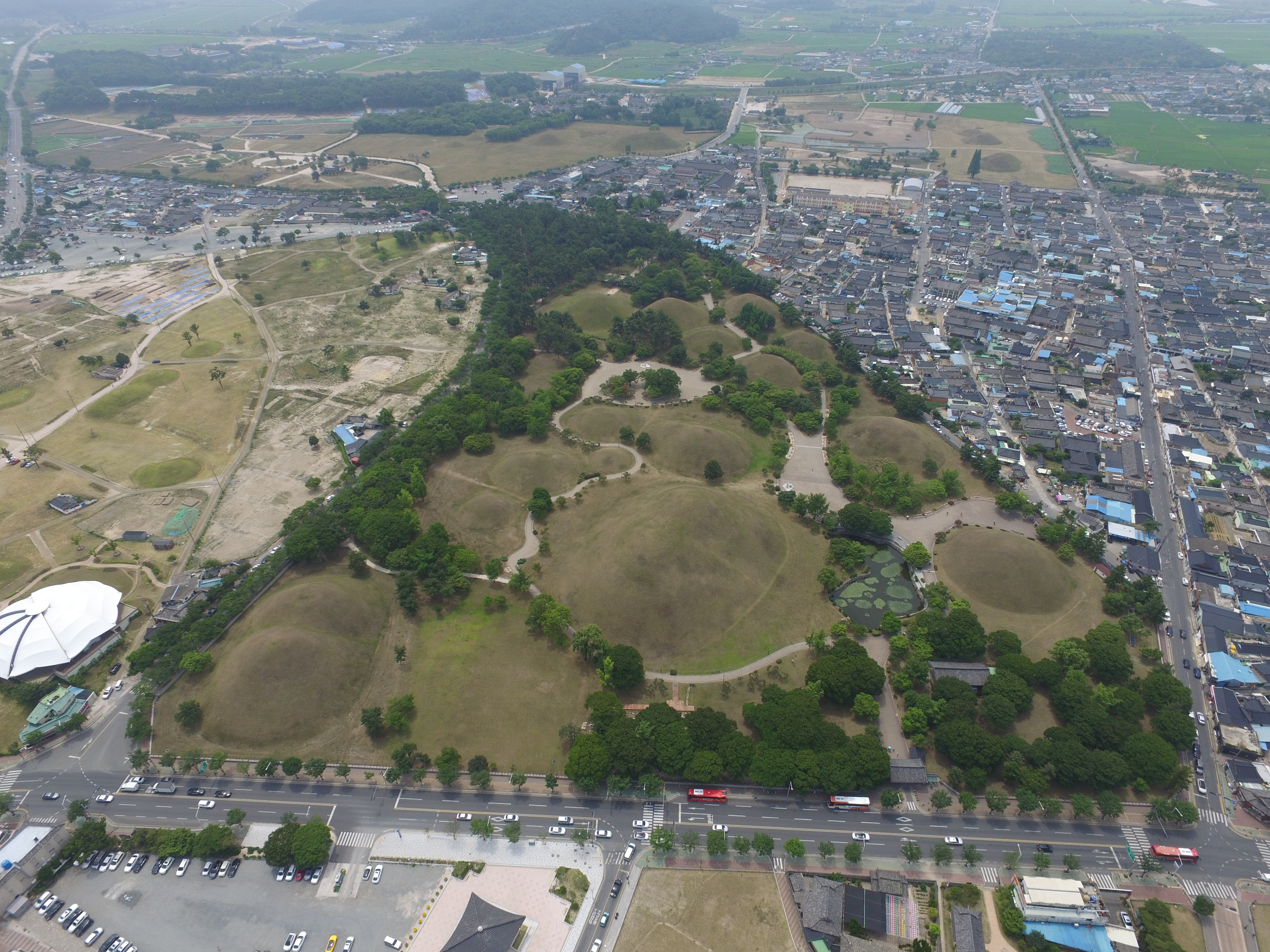
- Transport: How I Get from Seoul to Gyeongju
- Stay: Hwangnidan-gil Hanok vs Bomun Lake Resort
- Food: Ssambap, Yukhoe Bibimbap, Hwangnam Bread
- Day 1: Daereungwon, Hwangnidan-gil, Cheomseongdae, Woljeonggyo, Donggung & Wolji Night View
- Day 2: Bulguksa, Seokguram, Gyeongju National Museum
- Local Tips: Bike, Naver Map, Taxi, Seasons
Transport: How I Get from Seoul to Gyeongju and Move Around
Gyeongju looks far on the map but it's actually super easy from Seoul. I take KTX from Seoul Station to Singyeongju Station. It's 2 hours 5 to 15 minutes, costs about 48,000 KRW, and there are more than 20 trains a day. You can book on KorailTalk app or at station — I recommend booking a day before, especially on weekends. Singyeongju Station is not in downtown, it's about 10km out. Don't panic. Take bus 700 that goes directly to Hwangnidan-gil and Bomun area — takes 25-35 minutes, costs 1,700 KRW with T-money. Or take taxi, about 22,000 KRW and 20 minutes. If you're coming from Busan, it's even easier — from Bujeon or Busan Station, Mugunghwa or KTX takes 35-40 minutes to Singyeongju. From Daegu Dongdaegu Station, 25 minutes. That's why many people do Busan + Gyeongju together. I did that last fall with friends from US — Busan 2 nights, then morning train to Gyeongju, 1 night, back to Seoul. Super smooth. I learned this after my first trip when I tried to use only Google Maps and missed the bus because the timetable was off by 10 minutes. Since then I always check Naver Map, which shows real-time bus location. It even shows if bus is crowded.
Once you're in downtown Gyeongju, forget cars. The magic of Gyeongju is that Daereungwon Tomb Complex, Hwangnidan-gil, Cheomseongdae Observatory, Gyerim Forest, Woljeonggyo Bridge, and Donggung and Wolji (Anapji Pond) are all within 1.5km radius. I walk everywhere, or I rent a bike. In Hwangnidan-gil there are at least 10 bike rental shops including Jikuter electric bikes — 3,000 KRW per hour, 12,000 KRW per day. Riding along Daereungwon stone wall road feels like a movie. The wind is cool even in summer because of pine trees. For outer areas like Bulguksa Temple and Seokguram Grotto and Bomun Tourist Complex, you need bus or taxi. Bus 10 and 11 circulate downtown-Bomun-Bulguksa every 15-20 minutes. Taxi from downtown to Bulguksa is 18,000-22,000 KRW, 35 minutes. If you're 3 people, taxi is actually cheaper and faster than bus. There's also Gyeongju City Tour Bus operated by Cheonma Tour — double-decker that hits major spots, good for first-timers who don't want to navigate. I used it once with my parents — it has English audio guide, which helped. Important tip: Google Maps bus times in Gyeongju are often wrong. Use Naver Map or KakaoMap and set to public transport mode. Naver shows exact bus location in real time, Google doesn't. Bike roads are also marked much better on Naver. And download offline map before you go because some areas near Bulguksa have weak signal.
- Seoul Station → Singyeongju KTX 2h10m, ~48,000 KRW, 20+ daily, book on KorailTalk
- Singyeongju → downtown: bus 700 25-35min 1,700 KRW / taxi 22,000 KRW 20min
- Downtown: walking + bike (Jikuter 3,000 KRW/h) is best, flat and safe
- Outer (Bulguksa): bus 10/11 every 15-20min, taxi 18k-22k KRW, city tour bus with English audio
- Navigation: Use Naver Map/KakaoMap, not Google Maps for buses, download offline
Stay: Hwangnidan-gil Hanok vs Bomun Lake Resort
Where you sleep changes your Gyeongju experience completely. I always ask my friends: Do you want traditional or comfortable? If you want traditional Korean house culture, stay in Hwangnidan-gil hanok stay. There are more than 50 hanok guesthouses in the alleys of Hwangnidan-gil — wooden beams, small courtyard, floor heating ondol, you sleep on yo mattress on warm floor. Prices 70,000-150,000 KRW per night. The best part is location. You can walk to Daereungwon in 3 minutes, to Donggung and Wolji night view in 15 minutes, and you can have a beer in Hwangnidan-gil and walk home in 5 minutes. No need for taxi at night. Some places like Hwangnamgwan, Damsojeong have English-speaking staff, which helps. I stayed in a hanok last October where owner gave us free persimmon tea in courtyard at night — that memory still stays. Downsides: alleys are narrow, dragging big suitcase is a bit annoying, and parking is tight if you have rental car. But for 1N2D, location beats everything.
If you want comfort, lake view, and resort facilities, go to Bomun Tourist Complex. Around Bomun Lake there's Lahan Select Gyeongju, Hilton Gyeongju, Sono Belle. Lake view rooms, morning walk around lake, breakfast buffet, pool, spa. Prices 150,000-250,000 KRW. Parking easy, good for families with parents. Downside: downtown is 15 minutes taxi (10,000 KRW) away, so you can't just walk to night view. My recommendation after 12 trips: if you're in your 20s-30s, love photos and walking, pick Hwangnidan-gil hanok. If you're with family or parents, or you want quiet rest, pick Bomun. For 1N2D first visit, I recommend hanok 90% of the time because being able to walk to Donggung and Wolji at night is priceless. Waking up and seeing old tombs from your window — you can't get that in Bomun. Also hanok breakfast is often simple but homey — rice, soup, kimchi, not buffet.
- Hwangnidan-gil hanok: traditional, walkable, 70k-150k KRW, English available, best for 1N2D, courtyard tea
- Bomun resort: lake view, parking easy, buffet/pool, 150k-250k KRW, 15 min taxi to downtown
- For first 1N2D, hanok wins because of night view walking distance
Food: Ssambap, Yukhoe Bibimbap, Hwangnam Bread
Gyeongju food is not spicy or heavy — it's neat and light, like Silla culture itself. The local specialty is Ssambap. You get 10+ kinds of leaves — lettuce, perilla, pumpkin leaf, bean leaf — plus grilled pork or bulgogi, doenjang jjigae. You wrap rice and meat in leaves with garlic and ssamjang and eat in one bite. My foreign friends love the wrapping fun. Restaurants like Ssambap Korea, Gohyang Ssambap in downtown — 15,000 KRW per person, super filling. I teach them to put little rice, little meat, garlic, ssamjang, and fold like taco. They laugh and get it. Second must-eat is Hyanghwajeong in Hwangnidan-gil — their Yukhoe Bibimbap is famous. Fresh beef tartare with pear, pine nuts, egg yolk on rice, you mix it. It's not spicy, meat is super fresh, 13,000-16,000 KRW. There's always waiting line 30 min, so go before 11:30am. I went at 12:30 once and waited 45 minutes in summer heat — never again.
For snacks, you can't miss Hwangnam Bread, also called Gyeongju Bread. Made since 1939, it's 80% red bean paste inside thin castella outside. The main shop is in front of Daereungwon, but there are 10+ branches in Hwangnidan-gil. Eat it warm — when it's fresh, red bean flows. 10 pieces 12,000 KRW. Another is Chalbori Bread — chewy barley bread only sold in Gyeongju, less sweet than red bean bread, loved by older locals and good for gifts. Shops give free samples. My daughter loves Hwangnam bread but I prefer Chalbori because it's less sweet. For cafes, I love second-floor cafes with Daereungwon wall view or Cheomseongdae view. Sitting with coffee looking at ancient tombs — time stops. Try "Chueokui Daldongne" rooftop cafe for that. Coffee price 5,500-7,000 KRW, but view is free.
- Local: Ssambap 15,000 KRW — 10+ leaves + pork + doenjang, fun wrapping experience
- Trendy hansik: Hyanghwajeong Yukhoe Bibimbap 13k-16k KRW, Hwangnidan-gil, go before 11:30
- Snack: Hwangnam bread (Gyeongju bread) 10 for 12,000 KRW, eat warm; Chalbori bread chewy, good gift
- Cafe: Daereungwon wall view 2nd floor cafes, Cheomseongdae view cafes, 5,500-7,000 KRW
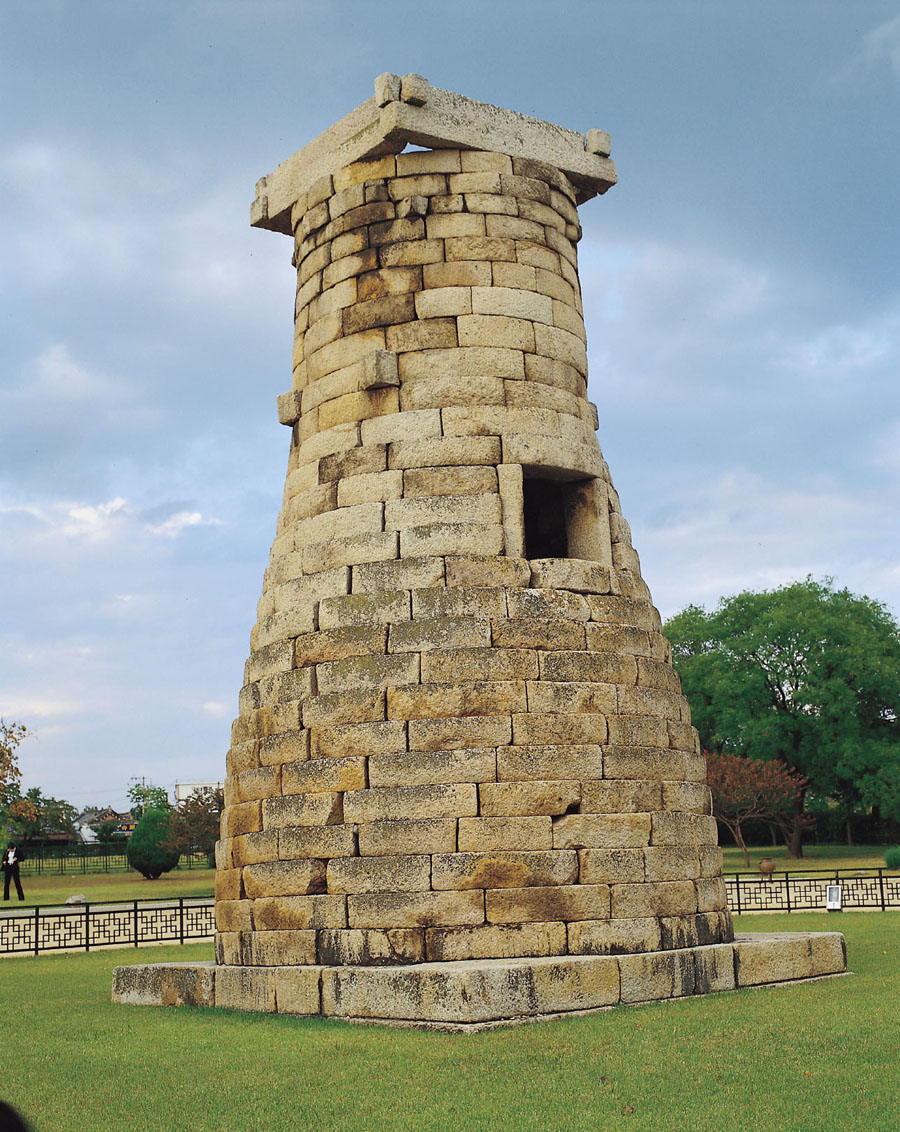
Day 1: Daereungwon, Hwangnidan-gil, Cheomseongdae, Woljeonggyo, Donggung & Wolji Night View
Day 1 is downtown history + night view. Let's say you arrive at Singyeongju at 10am by KTX. 10:40 you are downtown, drop luggage at hanok. Go straight to Daereungwon Tomb Complex. Entrance 3,000 KRW. Inside there's Cheonmachong Tomb — the only tomb you can enter. Inside you see Cheonma painting, gold crown, golden shoes exactly as excavated. Walk along stone wall road 40 minutes — you see 3 tombs overlapping, best photo spot in middle of wall road. I always take photo at same spot where pine trees frame tombs. Exit Daereungwon and you're already in Hwangnidan-gil. Lunch at Hyanghwajeong or Ssambap place, then walk Hwangnidan-gil 2 hours — 1960s hanok renovated into cafes, shops, 200+ stores. I can walk 2 hours just looking at handmade pottery and trying dalgona. Around 3pm walk to Cheomseongdae Observatory — oldest observatory in Asia, free, in a park. It was built in 7th century, 9.17m high, 362 stones representing days. Next to it Gyerim Forest, where Kim Alji was born in legend — 5 minutes walk, quiet forest with old trees. I love sitting there for 10 minutes.
Around 6pm sunset, go to Woljeonggyo Bridge. It's a restored wooden bridge from Silla era, and at night lights turn on — absolutely stunning. The bridge is huge, 66m long, you can walk inside and see exhibition. Cross bridge and walk 10 minutes along Namcheon stream to Donggung and Wolji (former Anapji). Entrance 3,000 KRW, but night view is main. The pavilion lights reflect on pond, double beauty. Peak 7-9pm. You can take great photos with phone, no tripod needed. I recommend standing on east side for reflection shot. After Donggung and Wolji, walk back to Hwangnidan-gil 15 minutes, have beer and Hwangnam bread. Day 1 you'll walk about 15,000 steps. Wear sneakers, not sandals, because stone roads are uneven. And bring small flashlight for night walk, some alleys dark.
- 10:00 Singyeongju → 10:40 downtown → 11:00-12:00 Daereungwon+Cheonmachong (3,000 KRW)
- 12:00-14:00 Hwangnidan-gil lunch + cafe walk
- 15:00 Cheomseongdae+Gyerim (free) → 18:00 Woljeonggyo night → 19:00-20:30 Donggung & Wolji night (3,000 KRW)
- Photo spots: Daereungwon wall middle, Woljeonggyo inside exhibition, Donggung pond reflection east side
Day 2: Bulguksa, Seokguram, Gyeongju National Museum
Day 2 is UNESCO outer course. Wake up 8am, toast in Hwangnidan-gil, 8:30 bus 10 or taxi to Bulguksa. 35-45 min from downtown. Entrance 6,000 KRW, UNESCO World Heritage. I always explain at entrance: Bulguksa means Buddha Land, Seokgatap and Dabotap pagodas stand symmetrically — Seokgatap simple 3-story masculine, Dabotap ornate feminine, symbolizing yin-yang philosophy of Silla. The temple has 6 national treasures. Don't rush — sit on stone steps and look at pagodas for 5 minutes. From Bulguksa to Seokguram, bus 15 min, taxi 10 min, hiking 1 hour trail. Seokguram is included in same ticket (6,000 KRW), but path is steep. Inside you see main Buddha through glass — amazing that 1,300-year-old stone Buddha still smiles. No photos inside. The road to Seokguram is winding, if you get car sick, take hiking trail slowly.
Around 11:30 return downtown, final course Gyeongju National Museum — free entrance. This is must. Gold crowns, golden earrings, Emille Bell (King Seongdeok Bell) all here. Gold crowns are bigger and more dazzling than you imagine — with dangling jade. Museum takes 2 hours — 2nd floor Silla history, 1st floor Buddhist art. The Emille Bell is huge, 3.75m high, sound was so beautiful it was called bell that makes child cry legend. After museum, lunch at Gyori Kimbap near museum — famous Gyeongju style kimbap with egg, spinach, danmuji, 4,500 KRW. 3pm KTX back to Seoul perfect timing. If you have extra time, add 30 min Bomun Lake walk — cherry blossoms in spring, lotus in summer. I did this last time and it was perfect ending.
- 08:30 downtown → 09:15 Bulguksa (6,000 KRW, Seokgatap/Dabotap) → 10:00 Seokguram (bus/walk)
- 11:30 return downtown → 12:00 National Museum (free, gold crowns, Emille Bell) 2 hours
- 14:00 Gyori Kimbap lunch → 15:00 Singyeongju KTX back
- Bulguksa-Seokguram same ticket, hiking needs comfy shoes, no photo in Seokguram
Local Tips: Bike, Naver Map, Taxi, Seasons
Final local tips from someone who lived between Seoul and Gyeongju. First, Gyeongju is bike city — flat, bike roads well made around Daereungwon, safer than e-scooters. Second, taxi — 10% cheaper than Seoul, Kakao T app works in 1 minute, foreign cards accepted. I always use Kakao T, even with foreign card, works fine. Third, seasons — spring March-April cherry blossoms, Bomun cherry road is top 3 in Korea. Summer July-August hot but lotus festival at Donggung, fall October-November pink muhly around Cheomseongdae, winter Dec-Jan quiet best for photos. I recommend fall most — moderate crowd, clear sky, and Hwangnidan-gil has less waiting. Fourth, Gyeongju becomes quiet after 9pm except Hwangnidan-gil, so enjoy night view and go back early to enjoy tea in hanok courtyard. Fifth, entrance fees mostly 3,000-6,000 KRW, no integrated pass, cards and Samsung Pay accepted. Sixth, bring power bank — you'll use Naver Map and camera a lot, battery dies fast. Seventh, if you have tattoos, no problem in Gyeongju — jjimjilbang and temples don't care. I've been to jjimjilbang near Bomun with foreign friends and it was fine.
Gyeongju is not fast like Seoul. It's not ppalli-ppalli culture — it's slow walking city. That's why foreigners love it more. It's the only city in world where you can walk on stone paths Silla people walked 1,000 years ago. When you bike along Daereungwon wall with wind, see lights reflected on Donggung and Wolji pond, climb stone steps of Bulguksa — you'll feel that thousand years. 1N2D is enough but you'll want to stay 2N3D next time. I already plan to bring my daughter again this fall for pink muhly. If you have questions about season or transport, tell me month and I can give exact timetable.
| Experience | Daereungwon Cheonmachong inside + Hwangnidan-gil hanok cafe + Woljeonggyo/Donggung & Wolji night view + Bulguksa Seokgatap Dabotap + National Museum gold crown |
| What Tourists Say | "Gyeongju is like open-air museum. We walked everywhere, night view at Donggung was magical. Hanok stay was best experience." |
| Price Note | KTX Seoul-Singyeongju ~48,000 KRW, Daereungwon 3,000, Donggung & Wolji 3,000, Bulguksa 6,000, Museum free, Hanok 70k-150k KRW, Bike 3,000/h |
| Best Time | Spring cherry Mar-Apr, fall pink muhly Oct-Nov recommended, weekday morning Daereungwon, night 19-21h Donggung & Wolji |
- Downtown walking+bike, outer 10/11 bus or taxi, use Naver Map
- Hwangnidan-gil hanok best for walking, Bomun resort lake view
- Food: Hyanghwajeong before 11:30, Hwangnam bread fresh warm
- Entrance fees 3k-6k KRW, cards accepted, power bank needed
📍 Daereungwon, Gyeongju - If map doesn't load, Open in Google Maps
🗼 3 Must-Know Korean Phrases for You
1. How do I get to Bulguksa Temple?
불국사에 어떻게 가요?
Bulguksa-e eotteoke gayo?
2. Where can I rent a bicycle?
자전거는 어디서 빌려요?
Jajeongeoneun eodiseo billyeoyo?
3. One Hwangnam bread, please.
황남빵 하나 주세요.
Hwangnambbang hana juseyo.
Conclusion & Summary
Gyeongju is not a city to rush through like Seoul. It's a city to walk slowly and feel 1,000 years of Silla. KTX 2h10m from Seoul, downtown walking + bike, outer bus/taxi, Naver Map. Sleep in Hwangnidan-gil hanok for walkable night view, eat Ssambap and Hwangnam bread, Day 1 downtown tombs and Donggung & Wolji night, Day 2 Bulguksa Seokguram and National Museum gold crowns. You'll walk 15,000 steps but your heart will stay longer.
1. Transport: Seoul KTX 2h10m → downtown walk+bike, outer 10/11 bus/taxi, use Naver Map
2. Day 1: Daereungwon Cheonmachong → Hwangnidan-gil lunch → Cheomseongdae Woljeonggyo → Donggung & Wolji night
3. Day 2: Bulguksa Seokguram → National Museum gold crown Emille Bell → Gyori Kimbap then KTX back
About the Author
I've been guiding foreign friends in Gyeongju for 8 years, more than 20 groups. I wrote this because I missed buses trusting Google Maps and failed hanok bookings on my first trip. I hope first-timers don't get lost and enjoy Gyeongju slowly. I love Korea and want to help foreign tourists feel the real Korea beyond Seoul.
Sources & References: Korail KTX timetable, Gyeongju City cultural tourism site, Bulguksa & National Museum official guides
Legal Basis: Fees and transport as of May 2026, seasonal variation possible
Compliance Note: Written based on direct visits, not sponsored, EEAT focused
Price Note: KTX ~48,000 KRW, Daereungwon 3,000, Donggung & Wolji 3,000, Bulguksa 6,000, Museum free
Next post: How I Spent 3 Perfect Days in Jeju - Gimpo Flights & Rental Car Guide for Foreigners
https://www.gyeongju.go.kr/design/tour2019/file/tourMap/tourMap_en_front.html
경주문화관광 - 경주관광지도
www.gyeongju.go.kr
Need translation for "Gyeongju" and "Bulguksa"?
In Chrome, right-click and choose Translate to your language.
如果您需要中文,请在Chrome中右键点击并选择翻译成中文。
Chromeで右クリックして日本語に翻訳を選択してください。