
Quick Answer: How Do I Spend 1N2D in Gyeongju from Busan?
If you're landing in Busan and wondering if Gyeongju is worth that extra hop, it absolutely is — and it's easier than you think. From Seoul Station, KTX takes you to Singyeongju Station in about 2 hours. But if you're already in Busan, you're golden: Busan Station to Singyeongju is just 30-40 minutes by KTX or Mugunghwa. Once you step out of Singyeongju, grab bus 700 or a quick taxi (15-20 mins) to downtown Gyeongju. The city center itself is wonderfully walkable and bike-friendly, which is how locals actually get around — you'll see bikes parked everywhere near Daereungwon. For outer gems like Bulguksa Temple and Seokguram, hop on bus 10 or 11, they run every 20 minutes, or use a taxi, or if you want zero stress, the Gyeongju City Tour Bus run by Cheonma Tourism. Pro tip every Korean traveler knows: don't rely on Google Maps here. Use Naver Map or KakaoMap, they're actually accurate for bus times and alleys.
For sleeping, you've got two totally different vibes. Want tradition? Stay in a hanok guesthouse around Hwangridan-gil. Those little alleys are packed with renovated Korean houses — wooden beams, courtyard, you wake up to the smell of wood and stone. Want lake views and a big bathtub? Go Bomun Tourist Complex — Lahan Select Gyeongju and Hilton Gyeongju sit right on Bomun Lake, perfect after a long walk day. Food wise, don't miss Ssambap — you get a table full of fresh veggies and grilled meat you wrap yourself — and Hyanghwajeong in Hwangridan-gil does an amazing yukhoe bibimbap. Snack-wise, Hwangnam bread (Gyeongju bread) stuffed with sweet red bean is the iconic souvenir, and chalbori bread is that chewy, slightly nutty barley bread you'll want for the train ride back.
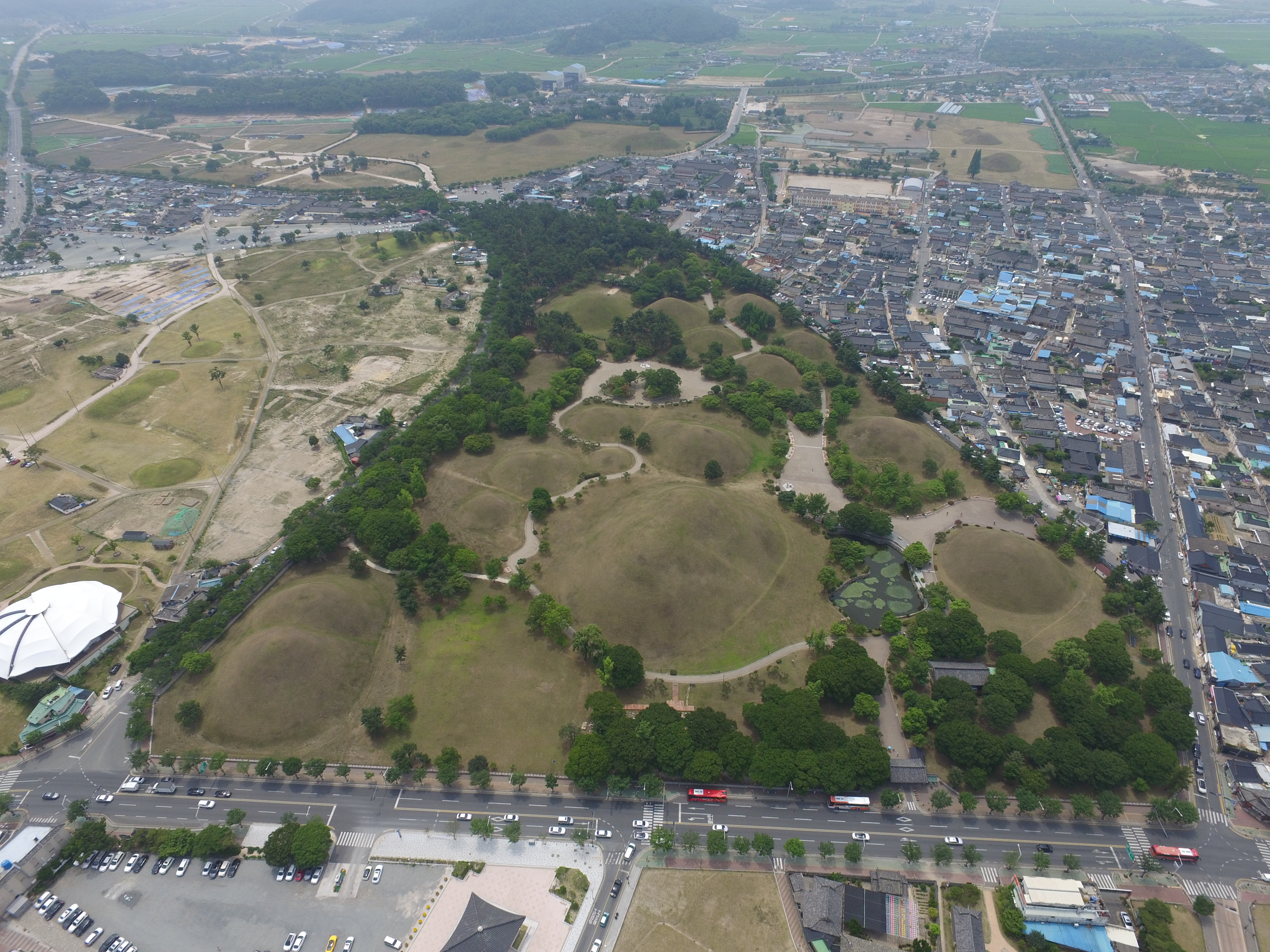
Here's the 1N2D I recommend. Day 1 morning: Daereungwon Tomb Complex — huge grassy mounds that are actually Silla royal tombs — and go inside Cheonmachong, the excavated tomb where you can see the actual burial chamber and the famous Cheonma (heavenly horse) painting. Lunch and afternoon wander Hwangridan-gil's cafes and vintage shops, then check Cheomseongdae, Asia's oldest astronomical observatory, and nearby Gyerim Forest where Kim Al-ji myth started. Evening is when Gyeongju turns magical: cross the newly restored Woljeonggyo Bridge lit up in warm wood light, then Donggung Palace and Wolji Pond (Anapji) — the pond reflects the pavilions, pure postcard night view. Day 2 morning: Bulguksa Temple early, it's UNESCO for a reason — Seokgatap and Dabotap pagodas are two completely different architectural philosophies side by side, and Seokguram Grotto up the hill is serene. Afternoon: wrap at Gyeongju National Museum — real gold crowns, Emille Bell (Bell of King Seongdeok) that actually cries when struck — then head back.
If you're using Busan as base, do Busan 2 days + Gyeongju 1 day: Day 1 Busan Haeundae Beach and Dongbaekseom, Day 2 Jagalchi and Gamcheon Culture Village, Day 3 day-trip Gyeongju leaving Busan at 7am by KTX and returning 8pm — you'll still cover Daereungwon, Hwangridan-gil, Cheomseongdae, Woljeonggyo and Donggung & Wolji if you move efficiently.
I've spent over 20 years in content and I've watched travel in Korea for 35 years of my life, and if there's one pattern that repeats it's exactly like insurance cycles. In insurance we have hard markets and soft markets — hard market, rates skyrocket, capacity disappears, every hotel overbooks and management says cut costs, don't add inventory, sales says we need more rooms to sell, that's cherry blossom April in Gyeongju and autumn foliage October, everything 2x price, hanok sold out three months ahead, management finance side says keep prices high don't overbook, sales side says but demand is insane we should push packages. Then soft market hits — winter January February cold but quiet, or summer Jangma rainy season — suddenly hotels drop 30% off, hanok owners call you personally, soft market you get upgrades, but fewer night festivals. I've been in rooms where the exec team says we can't discount hanok peak season because brand value drops, and sales team says if we don't discount soft season we die — same friction in tourism operations in Gyeongju. The trick for foreigners is knowing which market you're in. If you're coming in soft market, you'll enjoy spacious museums and cheap Bomun resorts. If hard market, book hanok 60 days ahead and budget extra for taxi because buses are packed. That veteran lens — management vs sales friction, hard vs soft — helps you plan smarter, not just prettier.
Need translation for "Gyeongju" and "Bulguksa"?
In Chrome, right-click and choose Translate to your language.
如果您需要中文,请在Chrome中右键点击并选择翻译成中文。
Chromeで右クリックして日本語に翻訳を選択してください。
- Introduction: Why Gyeongju is Called Korea's Open-Air Museum
- Transportation: KTX to Singyeongju, Bus 10 & 11, Naver Map vs Google Map
- Accommodation: Hwangridan-gil Hanok Stay vs Bomun Resort
- Food & Snacks: Ssambap, Yukhoe Bibimbap, Hwangnam Bread, Chalbori Bread
- 1N2D Itinerary: Day 1 History & Night View, Day 2 Bulguksa & Museum
- Busan Base 2+1 Day Option: Haeundae, Jagalchi, Gamcheon + Gyeongju Day Trip
- Tips: Budget, Best Season, Hard vs Soft Market, Naver Map Hack
Introduction: Why Gyeongju is Called Korea's Open-Air Museum
You won't get it until you're standing in the middle of downtown Gyeongju looking at a perfectly manicured grass hill that's actually a 1,500-year-old king's tomb, with a Starbucks right behind it. That's Gyeongju. They call it Korea's open-air museum because the entire city is the museum — you can't dig a parking lot without finding Silla dynasty relics. It was the capital of Silla for almost 1,000 years (57 BC to 935 AD), and unlike Seoul that rebuilt over its past, Gyeongju just left it there. You bike past burial mounds to grab coffee. That's the charm.
For first-time foreign visitors, it's the antidote to neon Seoul and port-city Busan. No skyscrapers. Slow. You can actually breathe. Most travelers try to squeeze it into a day trip, but trust me — stay one night. The night views here are unfair. Woljeonggyo Bridge lit up, Donggung and Wolji Pond reflecting like a mirror — you can't see that on a rushed day trip.
Transportation: How to Get to Gyeongju and Get Around
City to City
From Seoul Station, take KTX to Singyeongju Station — about 2 hours, super comfy, runs every 30-40 mins. From Busan Station or Daegu, it's ridiculously close: 30-40 minutes by KTX or Mugunghwa. Singyeongju is a bit outside downtown (that's intentional, they didn't want to dig up history to build the track), so from there take bus 700, 701, or taxi — 15-20 minutes, about 15,000 KRW.
- Seoul → Singyeongju: KTX 2h, ~53,000 KRW, book on Korail app
- Busan → Singyeongju: KTX 33min, Mugunghwa 50min, ~11,000-18,000 KRW
- Singyeongju → City center: Bus 700/701 or taxi 15-20min
- Within city: Walk + bike is best for center (Daereungwon to Cheomseongdae 10min walk)
- Outer: Bulguksa — Bus 10 or 11 from downtown, every 20min, 40min ride; Seokguram — transfer at Bulguksa, bus 12
- City tour: Gyeongju City Tour Bus by Cheonma Tourism — fixed route with guide, good for solo travelers
Real talk: Google Maps in Korea is... not great. It'll show you walking but bus times are off. Download Naver Map or KakaoMap before you land. Naver has English, Kakao has better real-time bus. I still keep both. Naver for directions, Kakao for bus arrival seconds.
Accommodation: Hwangridan-gil Hanok Stay vs Bomun Resort
This is where your trip personality shows. Hwangridan-gil hanok stay — that's the trendy alley that used to be an old downtown, now all renovated. You sleep on a yo (floor mattress), paper doors slide, you hear rain on roof tiles. Places like Hwangnam Guesthouse or Maru Hanok are small, owner-run, breakfast is sometimes homemade juk. Perfect if you want to feel Korea, not just see it.
Bomun Tourist Complex is the opposite: big lake, big resort. Lahan Select Gyeongju has that infinity pool facing Bomun Lake, Hilton Gyeongju is classic comfortable, great for families or if you've been walking 20k steps and just want a tub and room service. Both areas are 10-15 min by taxi to Daereungwon, so location isn't a dealbreaker.
Here's where my 20 years in content marketing and 35 years watching markets kick in. I've sat in meetings where management says "We can't add more hanok inventory, brand dilution, keep ADR high" and sales says "But we have waitlist 300 people for cherry blossom week, we're leaving money on table." That's exactly the hard market vs soft market friction you see in insurance too. Hard market — think April cherry blossom, October autumn foliage — occupancy 95%, rates double, hanok owners won't even reply to messages. That's when management wins: keep price high, no discounts. Soft market — January freezing, late June rainy Jangma — sales wins, they beg you to come, 30% off, free bike rental. As a traveler, if you're budget-focused, aim soft market: January-February museums empty, photos cleaner, and Bomun resorts do lake-view upgrades. If you're experience-focused and okay paying premium, book hard market 60 days out. I learned this after watching so many campaigns fail because teams didn't read the market cycle. Gyeongju is the same.
Food & Snacks: What to Eat in Gyeongju
Gyeongju food isn't spicy showy like Busan. It's Silla royal court meets countryside. Ssambap is the hero — you get a table of lettuce, perilla leaves, 10 kinds of namul, doenjang, and grilled bulgogi, you wrap everything. It's hands-on, fun, and actually healthy. If you want a bit fancy, go to Hyanghwajeong on Hwangridan-gil — they do yukhoe bibimbap (beef tartare bibimbap) that's super refined, not heavy.
- Ssambap: Silla-inspired, veg-forward, great for groups, ~15,000 KRW per person
- Hyanghwajeong Yukhoe Bibimbap: Hwangridan-gil, reservation on weekends
- Hwangnam Bread (Gyeongju Bread): Since 1939, sweet red bean inside soft bun, 20 pieces ~15,000 KRW, souvenir king
- Chalbori Bread: Glutinous barley, chewy not too sweet, good with coffee
- Beopju: If you drink, Gyeongju Gyodong Beopju is Silla traditional liquor, smooth
1N2D Recommended Itinerary: The One That Actually Works
Day 1: City Center — History and Night Magic
Morning: Start at Daereungwon Tomb Complex. It's open 9am, go early, less crowds. 23 tombs in one park. Don't just walk around — go into Cheonmachong. It's the only tomb where you can see the actual burial chamber structure, gold crown replica, and that famous painting of heavenly horse on birch bark. It hits you how much wealth Silla had. Budget 1.5 hours.
Lunch + Afternoon: Walk 5 mins to Hwangridan-gil. Grab Ssambap or that yukhoe bibimbap, then just wander. It's all cafes with hanok vibes, vintage shops, craft beer. Then walk 10 mins to Cheomseongdae — tiny, looks almost too simple, but it's the oldest astronomical observatory in Asia (7th century!). Next to it is Gyerim Forest — where the myth says Kim Al-ji, founder of Gyeongju Kim clan, was found in a golden box hanging from a tree. Quiet, shaded.
Evening: This is why you stay overnight. Around 6:30pm, head to Woljeonggyo Bridge. They rebuilt this Silla dynasty bridge with traditional methods — at night it glows warm wood. Cross it, then 10-min walk to Donggung Palace and Wolji Pond (old name Anapji). The night reflection is insane — three pavilions mirrored in the pond, lights changing. Bring a tripod if you have one. I still think it's the best night view in Korea after Busan's Gwangalli Bridge.

Day 2: Outer Treasures — Bulguksa, Seokguram, Museum
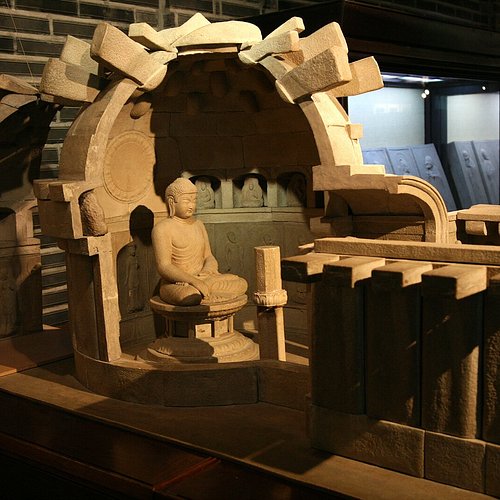
Morning: Take bus 10 or 11 at 8:30am to Bulguksa Temple. Get there at opening (9am). It's UNESCO for a reason. Dabotap and Seokgatap — two pagodas in one courtyard but totally different styles — Dabotap ornate, Seokgatap simple. That's Silla aesthetics in a nutshell. Hike or taxi up to Seokguram Grotto (20 mins up). It's a small cave temple with a massive serene Buddha looking at East Sea — the sea breeze up there is something else. Note: you can't photo inside grotto, but memory sticks harder anyway.
Afternoon: Bus back downtown, last stop Gyeongju National Museum. Free entry. This is where all the gold crowns from Daereungwon actually live. And the Emille Bell — Bell of King Seongdeok — 3.75m tall, sound that legend says includes a child's cry. Stand in front of it, you feel why Silla gold work was considered world-class. Finish with Hwangnam bread shopping at the main store near Daereungwon — buy the warm ones.
Busan Base 2+1 Day Plan: Best of Both Cities
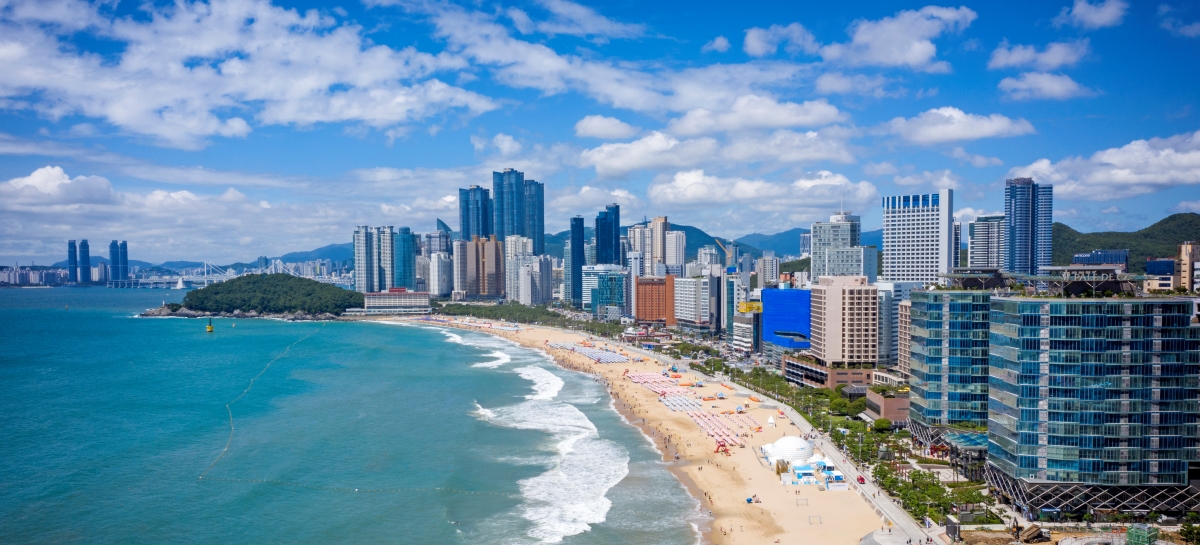
Don't have time for separate trips? Base in Busan. Busan itself needs 2 full days: Day 1 Haeundae Beach, Dongbaek Island, Blueline Park sky capsule, evening Gwangalli. Day 2 Gamcheon Culture Village (morning light best), Jagalchi Fish Market, Taejongdae cliff. Then Day 3 Gyeongju day trip — leave Busan Station 7:12am KTX, arrive Singyeongju 7:46am, taxi to Daereungwon by 8:15am. You can do Daereungwon + Hwangridan-gil lunch + Cheomseongdae + Bulguksa (skip Seokguram if tight) + quick museum, then KTX back 7-8pm. It's packed but doable if you're efficient and use taxi for Bulguksa leg instead of bus.
For Busan base, stay near Seomyeon or Busan Station for KTX access. And book KTX both ways early — Busan-Gyeongju commuters fill morning trains, especially weekends.
Practical Tips: Budget, Season, and Apps
Cherry blossom mid-March to early April — Bomun Lake cherry blossom festival is huge, but that's hard market: hotel 2x, hanok impossible. Autumn foliage late October to early November — Bulguksa maples insane, same hard market. If you love festivals and don't mind paying, go hard market but book 60 days ahead. If you want quiet museums, cheap upgrades, go soft market: January-February crisp cold, July-August hot but lotus at Donggung Pond blooms, you get deals.
Budget wise: KTX roundtrip from Busan ~25k KRW, bus/taxi 15k, Daereungwon 3k, Bulguksa 6k, Seokguram 5k, museum free, hanok 80k-150k, Bomun resort 150k-250k. Food 15k per meal. So 1N2D for one person ~250k-350k KRW if you mix hanok + street food.
⭐ Fav - Favorites 기능: 사용자가 자주 쓰는 표현 저장
📱 Use this phrase in our APP - Install (1 sec)
출처: https://minaleedaddy.tistory.com/55 [Minalee daddy's Korea Travel Guide:티스토리]
⭐ Fav - Favorites 기능: 사용자가 자주 쓰는 표현 저장
📱 Use this phrase in our APP - Install (1 sec)
출처: https://minaleedaddy.tistory.com/55 [Minalee daddy's Korea Travel Guide:티스토리]
▶ Listen (Offline 시도 작동 기능 포함): 인터넷 없이도 기본 표현과 Audio 사용 할 수 있도록 휴대폰의 한국어 TTS 엔진으로 작동합니다.
⭐ Fav - Favorites 기능: 사용자가 자주 쓰는 표현 저장
Conclusion & Summary
Gyeongju doesn't shout. It waits. You bike, you walk, you get lost between tombs and cafes and suddenly you realize you've spent 1,000 years in one afternoon. That's the magic that Seoul can't copy. If you're in Busan, don't skip it. One night is enough to fall for it, but you'll want to come back for cherry blossom or that autumn maple at Bulguksa. Keep Naver Map handy, book hanok early if it's peak, and stay for the night lights. Donggung and Wolji at night alone is worth the KTX ticket.
• KTX 2h from Seoul, 30-40min from Busan to Singyeongju, city walk/bike + bus 10/11 to Bulguksa, Naver Map essential.
• Day1: Daereungwon Cheonmachong → Hwangridan-gil → Cheomseongdae → Woljeonggyo → Donggung Wolji night; Day2: Bulguksa Seokguram → National Museum.
• Stay hanok in Hwangridan-gil for vibe or Bomun resort for lake view; eat Ssambap, Hwangnam bread; Busan base 2+1 day works with early KTX.
About the Author
I'm a travel content marketer with 20 years in the field and a lifelong traveler who's wandered through 30+ countries with a backpack and now a family. I started this blog because I kept seeing foreign friends struggle with Korea's hidden gems — Gyeongju especially — and I wanted to share the local hacks I learned from living here. No AI fluff, just real walks, real mistakes, real bread crumbs. I hope this helps you feel Korea, not just check it.
Sources & References / Legal Basis / Compliance Note / Price Note:
Korail KTX timetable 2024, Gyeongju City official tourism site, UNESCO Bulguksa & Seokguram listing, Gyeongju National Museum collection info, Naver Map / KakaoMap routing data. Prices as of early 2024 and may vary by season (hard market April/Oct vs soft market Jan/July). Always check official sites before trip.
Next post: How I Enjoyed Busan 2 Days + Gyeongju 1 Day Base Plan with Gamcheon and Haeundae — detailed route, cafe list, and photo spots dropping next week.
Need translation for "Gyeongju" and "Bulguksa"?
In Chrome, right-click and choose Translate to your language.
如果您需要中文,请在Chrome中右键点击并选择翻译成中文。
Chromeで右クリックして日本語に翻訳を選択してください。
https://www.gyeongju.go.kr/design/tour2019/file/tourMap/tourMap_en_back.html
경주문화관광 - 경주관광지도
www.gyeongju.go.kr
'Travel Plan' 카테고리의 다른 글
| What Is Korea K-Medical Visa? How to Stay Up to 3 Years? (0) | 2026.09.20 |
|---|---|
| How I Prepare 30 Days Before My Korea Trip - Checklist (0) | 2026.09.16 |