
Quick Answer: Gwangjang Market is traditionally a cash-heavy environment (about 90% at old food stalls), though card readers have expanded significantly. Bring around 100,000 KRW in small cash bills, utilize the newly introduced multilingual QR menus, and take Subway Line 1 to Jongno 5-ga Station, Exit 8. Visiting around 11:30 AM helps you beat the massive lunch rush.
如果您需要中文,请使用上方的谷歌翻译器(Translate)翻译成中文查看。广藏市场小吃摊位99%只收现金,请准备10万韩元现金。
日本語が必要な場合は、上のGoogle翻訳(Translate)を使って日本語に翻訳してご覧ください。広蔵市場は屋台의99%が現金のみですが、QRコードの多言語メニューがあります。
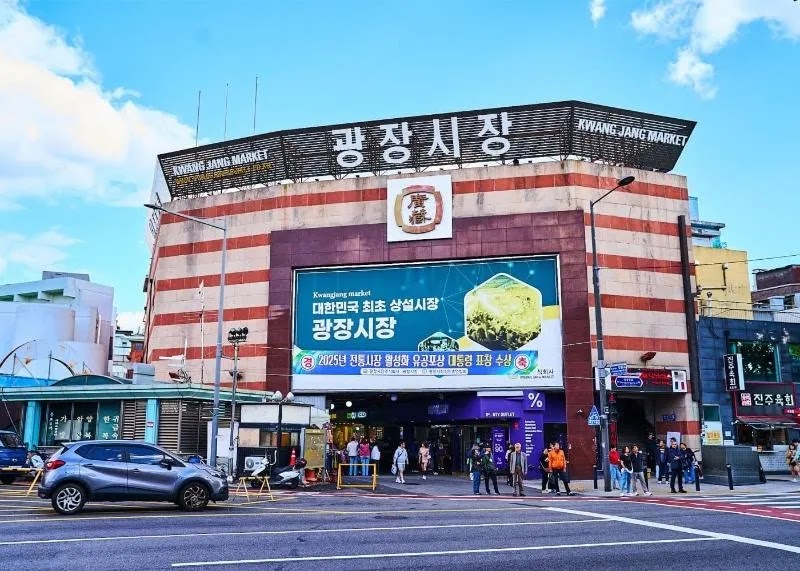
1. What is Gwangjang Market? From 1905 Heritage to Modern Culinary Fame
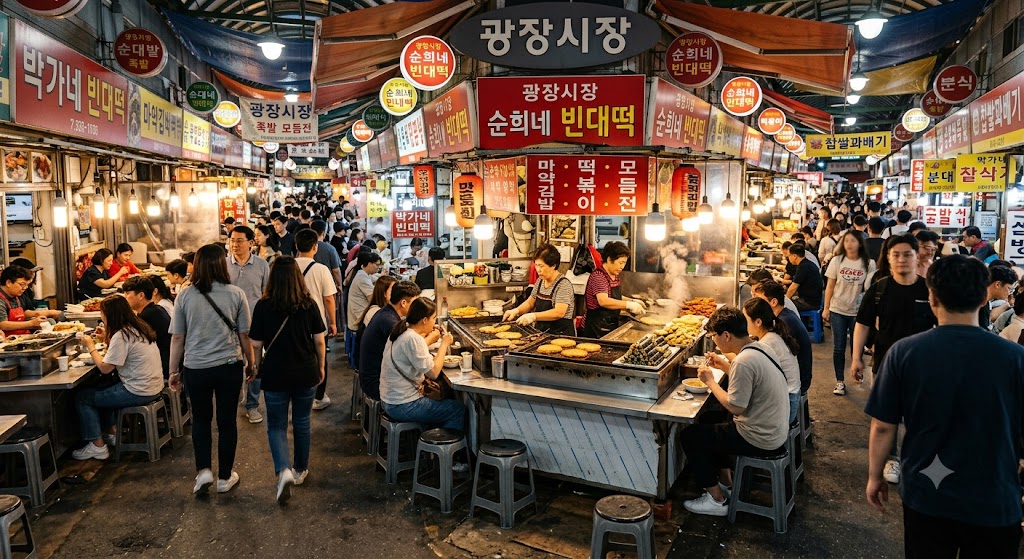
If you spend even ten minutes researching must-visit destinations in Seoul, Gwangjang Market is guaranteed to appear near the top of the list. It is loud, steamy, delightfully chaotic, and dripping with authentic historic character. Opened all the way back in 1905, Gwangjang holds the prestigious title of South Korea's first permanent daily market. It has weathered colonial rule, political upheaval, economic modernization, and dozens of shifting food trends, yet it remains the beating heart of local street culinary culture. Today, the market operates as two distinct worlds stacked vertically: the bustling ground floor is dedicated entirely to food—where mung bean pancakes (bindaetteok) sizzle in cast-iron pans, handmade knife-cut noodles are sliced to order, and miniature seaweed rice rolls (mayak kimbap) are packed at lightning speed. Meanwhile, the second floor houses a quieter textile market featuring fine hanbok fabrics, custom bedding, and vintage goods.
If global streaming platforms like Netflix introduced you to these vendors through documentary series like *Street Food: Asia*, seeing it on screen only captures a fraction of the real-world experience. The rich aroma of sesame oil and frying batter, combined with the cheerful shouts of veteran vendors welcoming guests in multiple languages, creates an unforgettable atmosphere. Recognizing its immense cultural weight, municipal authorities and cultural ministries designated Gwangjang Market an official K-Food Experience Zone. This initiative brought standardized pricing, mandatory photo menus, and multilingual QR codes to dozens of stalls, making navigation smoother than ever before.
2. How to Get There Without Getting Lost in Jongno
Reaching Gwangjang Market from your accommodation is remarkably straightforward if you choose the optimal transit route, avoiding confusing underground transfers or unnecessary walking under the hot sun.
Optimal Transit Instructions:
- Subway Route: Board Seoul Subway Line 1 and get off at Jongno 5-ga Station. Take Exit 8, walk straight for approximately two minutes, and you will arrive directly at the North Gate of the market. Avoid using Euljiro 4-ga Exit 4 if you are carrying heavy luggage, as it involves navigating multiple flights of stairs and confusing corridors.
- Bus Access: If you are departing from central areas like Myeongdong, convenient city buses such as routes 101, 103, 143, 150, and 401 drop you within easy walking distance.
- Taxi Option: Simply show your driver or pronounce the destination clearly: "Gwangjang Sijang"—virtually every taxi driver in Seoul knows its exact location.
3. Best Food to Try: Skip the Hype and Order What Locals Eat
First-time visitors often find themselves overwhelmed by social media hype, joining massive queues for whatever dish happened to trend online that week. Seasoned locals, however, focus on texture, preparation speed, and genuine culinary value.
Comparative Overview: Essential Gwangjang Market Menu
| Food Item | Approx. Price | Insider Pro-Tip |
|---|---|---|
| Bindaetteok (Mung Bean Pancake) | ₩6,000 – ₩8,000 | Pair with makgeolli (rice wine) and ask for complimentary onion kimchi on the side. |
| Mayak Kimbap (Mini Rice Rolls) | ₩4,000 – ₩5,000 (6 pcs) | Lightly dip into the mustard-soy sauce rather than pouring it over. |
| Kalguksu (Hand-Cut Noodle Soup) | ₩7,000 – ₩8,000 | Best enjoyed during lunch hours; arrive before 2 PM to secure a seat. |
| Yukhoe (Korean Beef Tartare) | ₩15,000 – ₩20,000 | Inspect meat coloration; vibrant bright red indicates supreme freshness. |
| Tteokbokki & Sundae | ₩5,000 – ₩7,000 | Portions are exceptionally generous, so share a single plate between two people. |
What to Avoid:
- Be cautious of overpriced "special mixed platters" pushed onto tourists by aggressive vendors; they often consist of uninspired leftovers. Always order individual items *a la carte* from photo menus.
4. How to Pay in 2026: Cash vs. Card Reality
Let's maintain complete transparency: traditional food stalls located in the central alleys of Gwangjang Market remain heavily reliant on cash transactions (roughly 90%). However, significant improvements have rolled out following municipal financial subsidies encouraging card reader adoption. Approximately 40% of vendors along the main North Gate rows now accept standard international credit cards like Visa and Mastercard. Furthermore, multilingual QR menus (supporting English, Chinese, and Japanese) have been integrated across dozens of stalls, allowing visitors to inspect fixed pricing before taking a seat.
Our recommended financial strategy is carrying roughly 100,000 KRW in smaller denomination cash notes (such as multiple 10,000 and 5,000 won bills), which easily covers a lavish two-person food feast. Always politely inquire "Kadeu dwaeyo?" (Do you take card?) before placing an order. Interestingly, if card payment is available, some vendors happily offer a small 500 to 1,000 KRW cash discount if you settle the bill with physical currency instead. Note that prepaid travel cards like WOWPASS are generally incompatible with older legacy card terminals in the market alleys; standard foreign credit cards work far more reliably where card readers are present.
5. Avoiding Rip-Offs and Navigating Post-2024 Market Reforms
International media headlines previously highlighted isolated incidents of overcharging targeting foreign tourists who failed to verify prices beforehand. In response, government and merchant associations instituted aggressive reforms, including mystery shopper audits and strict fine structures. Today, food stalls are mandated to display clear photo menus with transparent pricing.
- Rule 1: Always point to the item and ask "Igeo eolmayeyo?" (How much is this?) before sitting down. Price first, seating second.
- Rule 2: Cross-reference with digital QR menus if available to ensure verbal quotes match standardized rates.
- Rule 3: Settle your bill after you finish eating rather than paying upfront; legitimate stalls never demand prepayment.
- Rule 4: Feel free to request a thermal receipt by asking "Yeongsujeung juseyo."
Interactive Survival Korean & Browser TTS Toolkit
When inquiring about pricing, payment methods, or recommendations at market stalls, utilize the built-in browser speech synthesizer below to instantly hear accurate native Korean pronunciations.
1. How much is this?
이거 얼마예요?
I-geo eol-ma-ye-yo?
2. Do you take card?
카드 돼요?
Ka-deu dwae-yo?
3. Please give me a little less spicy.
조금 덜 맵게 주세요.
Jogeum deol maep-ge juseyo.
3. Please recommend something delicious.
추천해 주세요.
Chu-cheon-hae ju-se-yo.
Gwangjang Market Location Map
Use the interactive map below to locate Jongno 5-ga Station Exit 8, your direct gateway to Gwangjang Market.
Conclusion & Summary
Core Summary:
- Arrive via Subway Line 1 to Jongno 5-ga Station Exit 8 for direct access to Gwangjang Market.
- Bring roughly 100,000 KRW in small cash bills while utilizing new multilingual QR menus and checking for card acceptance.
- Savor iconic traditional specialties like bindaetteok pancakes, mayak kimbap, and hand-cut kalguksu noodles.
Sources & References:
- Seoul Metropolitan Government K-Food Experience Zone Archives
- Gwangjang Market Merchant Association Operating Guidelines
Compliance Note: This guide is independently curated for educational and practical reference to assist international tourists navigating South Korea.