
Quick Answer: What Are the Must-Know Korean Drinking Rules?
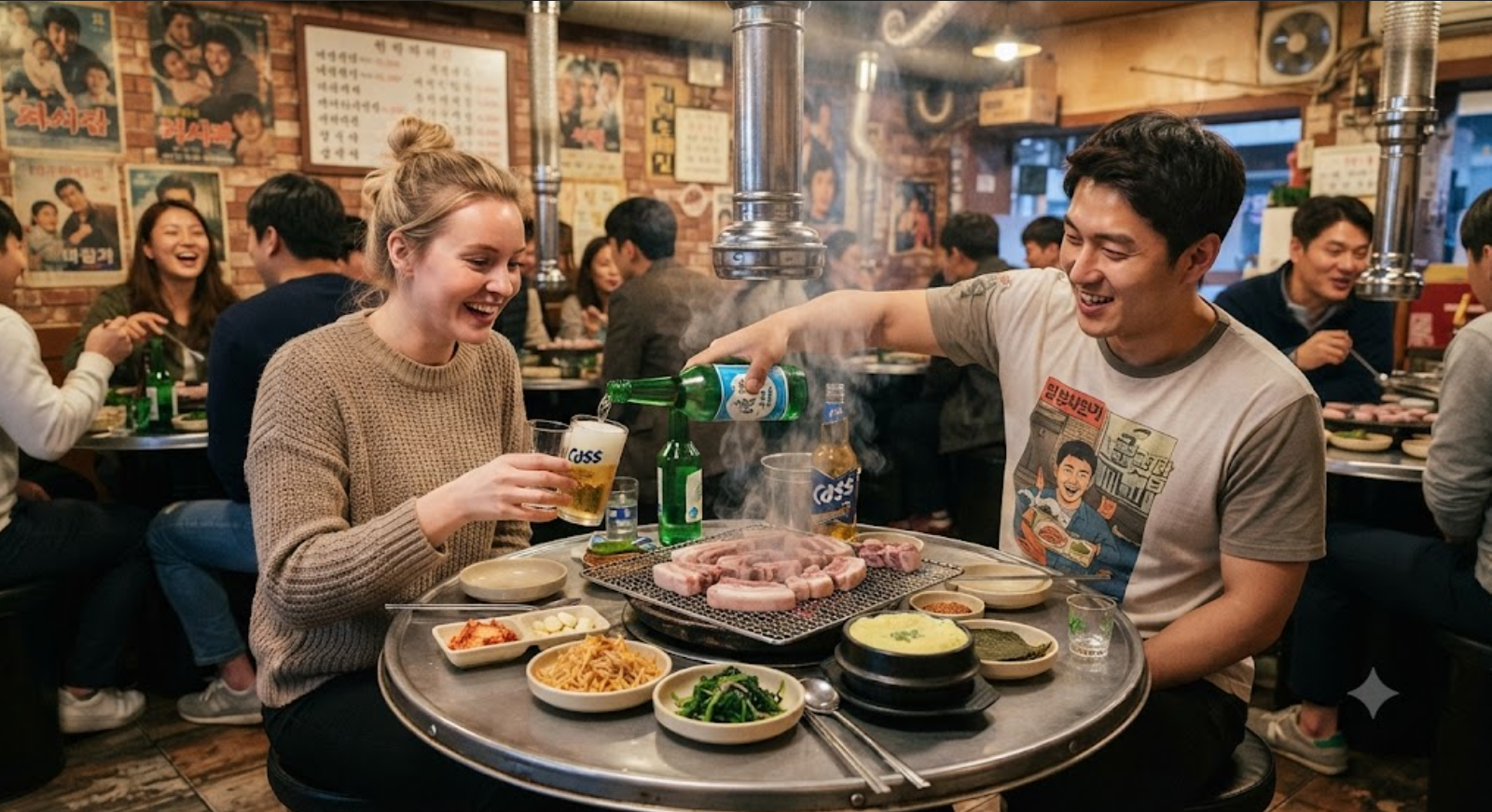
In South Korea, drinking is way more than just grabbing a beer after work. It's a vital social ritual. We call company dinners Hoesik and casual drinking gatherings Sul-jari, and they're literally how Koreans build deep relationships called Jeong. If you've ever wondered why your Korean coworkers insist on going for one more round, that's Jeong in action — it's about breaking down formal barriers and becoming real friends.
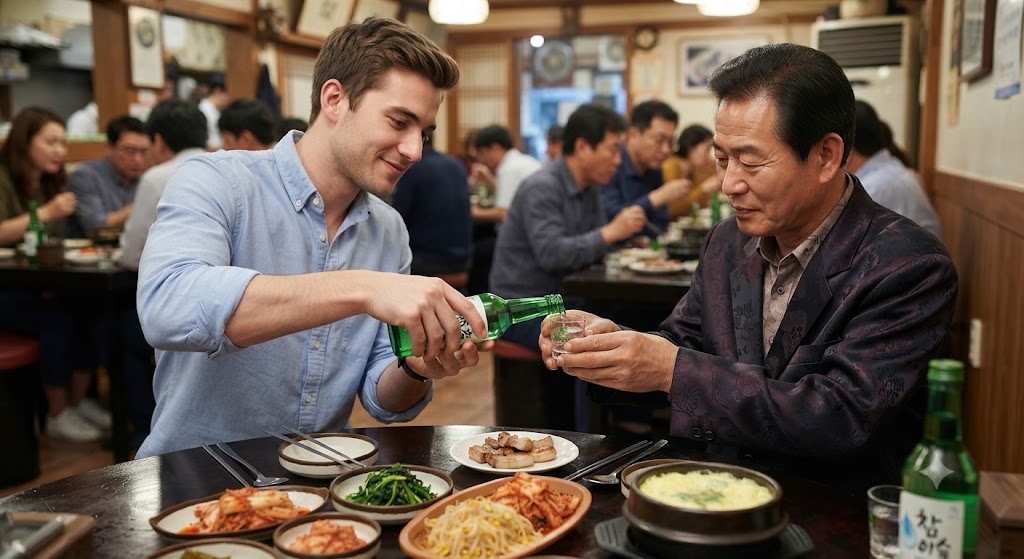
The culture is deeply rooted in Confucianism and respect for seniority, which is why Korean drinking etiquette can feel super detailed at first. The number one rule you can't mess up? Never pour your own drink. Koreans call this Jajak, and it's considered bad luck and a bit rude. Instead, you'll wait for someone else to pour for you, and you immediately return the favor. It's a constant loop of care.
When you're drinking with someone older or your boss, always use two hands when you're pouring or receiving a glass. If you're holding the bottle, support your pouring arm with your other hand. Same when you get a glass — two hands, slight bow. And here's the part most foreigners miss: when you take a sip in front of someone senior, turn your head slightly away. You don't have to do a full 90-degree turn like in a K-drama, just a polite side turn shows respect.
Now for the fun part — what are you drinking? Soju is the clear rice liquor everyone knows, usually 16-20% ABV, brands like Chamisul and Jinro. It's clean, a little sweet, and goes down scary easily. Makgeolli is the opposite vibe — milky, slightly tangy, sweet rice wine at about 6%, full of probiotics and perfect on rainy days. Then there's Somaek, the famous bomb shot cocktail. You mix Soju and Beer (Maekju in Korean) — most locals swear by the golden ratio of 1 part Soju to 3 parts beer, but some tough folks do 3:7. You drop it, stir with chopsticks, and chant. Cheongju is the refined, premium rice wine, think sake's Korean cousin, 12-14%, super smooth with sashimi.
In Korea, you rarely drink without food. That pairing is called Anju, and it's science. Chimaek (Chicken + Maekju) is basically a national religion. Pajeon (scallion pancake) with Makgeolli on a rainy day? Chef's kiss. Samgyeopsal (pork belly) with Soju is the ultimate Hoesik combo — the fat cuts the soju burn perfectly.
Korean drinking gatherings get loud fast because of games. The Titanic Game is chaos — you float a small soju glass in a beer glass and take turns pouring a little soju, whoever makes it sink drinks everything. The Apartment Game is all about rhythm and focus — you chant "Apartment, Apartment" while adding floors with your hands. And 3-6-9 is pure brain-freeze: instead of saying numbers with 3, 6, or 9, you clap. Miss it and you drink.
And yes, you'll probably get a hangover. Koreans have this figured out. Haejang-guk literally means hangover soup. Locals swear by Kongnamul Gukbap (bean sprout soup) for something light or Gamjatang (pork backbone soup) when you need meat. Convenience stores sell magic little bottles like Condition and Dawn 808 — take one before drinking and one after, your head will thank you tomorrow.
Need translation for "Soju etiquette" and "Anju"?
In Chrome, right-click and choose Translate to your language.
如果您需要中文,请在Chrome中右键点击并选择翻译成中文。
Chromeで右クリックして日本語に翻訳を選択してください。
- Introduction: Why Drinking Culture Matters in South Korea
- Essential Korean Drinking Etiquette (The Rules You Must Know)
- The Art of Pours and Refills: Respecting Elders
- Popular Korean Alcoholic Drinks: Beyond Soju and Makgeolli
- What is Anju? (The Science of Korean Drinking Food)
- Fun Korean Drinking Games to Break the Ice
- How to Curing a Hangover: The Korean Way
Introduction: Why Drinking Culture Matters in South Korea
If you’re landing in Seoul for the first time, you’ll notice something real quick — Koreans love to drink together, and I don’t mean in a party-hard way. I’ve lived here my whole life and guided over 30 foreign friends through their first Hoesik, and trust me, it’s never just about alcohol. Hoesik, which literally means “gathering to eat,” is the company dinner where hierarchies soften. Sul-jari is the more casual version with friends. Both exist for one reason: building Jeong.
Jeong doesn’t have a perfect English translation. It’s that sticky, warm bond you build when you’ve shared food, drinks, and stories late into the night. In a culture that can feel quite formal during the day — with all the bowing and titles — a Sul-jari is where people finally speak honestly. That’s why saying “I don’t drink” isn’t a dealbreaker, but you’re still expected to show up, pour for others, and share the Anju. You’re saying, “I want to be part of this Jeong,” and Koreans remember that.
- Hoesik = company dinner ritual, often 1st round BBQ + Soju, 2nd round Pocha or Noraebang
- Sul-jari = any drinking gathering, less formal, more about bonding
- Jeong = deep affection built through shared time, not quick small talk
Essential Korean Drinking Etiquette (The Rules You Must Know)
Okay, let’s get into the rules you must know before your first night out. Korean drinking etiquette is rooted in Confucian respect for elders and community over individual. It sounds strict, but once you get it, it actually feels pretty caring.
The absolute classic rule is Jajak — never pour your own drink. Ever. I still remember my American friend Mike pouring himself a shot at his first Hoesik in Euljiro. The whole table went silent for half a second. He didn’t know! In Korea, your glass should never be empty because someone’s always watching. You pour for others, they pour for you. If your glass is empty, it’s a subtle signal that someone missed their duty. So keep an eye on your neighbors’ glasses, especially the oldest person’s.
Cheers is “Jjan!” or more formally “Geonbae!” — you’ll hear Jjan way more in real life. When you clink, try to keep your glass slightly lower than the elder’s. That small dip says “I respect you” without words. And don’t sip like it’s wine tasting. Soju is usually taken as a shot, especially the first round. You can nurse later, but that first Jjan together matters.
Quick Do's and Don'ts for Korean drinking etiquette
- Don’t pour your own drink (Jajak) — wait, then return the favor quickly
- Do refill before the glass gets completely empty — it shows you care
- Do say Jjan! with eye contact, then clink
- Don’t start drinking before the oldest person — let them lift first
- Do accept a drink with two hands, even if you’ll sip slowly
The Art of Pours and Refills: Respecting Elders
This part trips up most foreigners, but it’s actually beautiful once you’ve done it a couple times. Pouring is a language. When you pour for someone older or a boss, you hold the bottle with two hands, or you support your pouring wrist with your other hand. It’s not about strength, it’s about intention. Same when you receive — hold the glass with two hands, or with one hand and the other hand lightly supporting your wrist or elbow.
And here’s the move everyone remembers from K-dramas: turning your head away when you drink in front of an elder. You don’t need to fully turn your back, just a slight turn to the side while you sip. It’s a Confucian holdover meaning “I’m not showing you the act of drinking casually, out of respect.” Among friends your age? Forget it — face each other and down it. The rule relaxes fast when ages are close.
I’ve seen younger Koreans mess this up too, so don’t stress. If you use two hands and turn just a bit, even if it’s a little awkward, older Koreans will genuinely appreciate that you tried. They’ll often say “Just drink comfortably” after the first shot — that’s your green light to relax a bit.
- Two hands for pouring and receiving when the other is senior — support wrist if one-handed
- Turn head slightly away for the sip, not for the whole conversation
- Among same age, one hand is totally fine, and eye contact is fun
- Keep refilling — an empty glass can feel lonely in Korea
- If someone senior pours for you, finish or sip right away to acknowledge

Popular Korean Alcoholic Drinks: Beyond Soju and Makgeolli
Most visitors know Soju, but there’s a whole universe beyond that green bottle. Let me break it down like I do for friends visiting Hongdae for the first time.
Soju is Korea’s clear rice spirit, now usually made from a mix of grains, 16-20% ABV. Chamisul (the green cap) is the classic slightly sweet one, Jinro is the global giant. It’s served ice-cold in tiny glasses, and the first bottle always disappears shockingly fast. Then there’s Makgeolli — my personal favorite. It’s milky, lightly fizzy, a bit tangy-sweet, about 6%, and packed with probiotics. We drink it on rainy days because tradition says the sound of rain pairs perfectly with the sizzle of Pajeon in a pan. It’s a vibe.
Somaek is where things get wild. It’s not a drink you buy, it’s a ritual you make. Somaek = Soju + Maekju (beer). You take a beer glass, pour beer about 70%, add a shot of Soju, and stir with chopsticks creating a mini whirlpool. The golden ratio everyone argues about is 3:7 (Soju:Beer) or 1:3. Some like 1:9 for “lighter” nights. Then you bomb it. Koreans even have tools for perfect Somaek ratio — little spinning tops. If you’re at a Pocha in Euljiro, ask the server “Somaek golden ratio please” — they’ll nail it.
Finally, Cheongju — think refined, clear rice wine, 12-14%, like Korea’s answer to sake. It’s clean, smooth, slightly floral, and amazing with sashimi or light Anju. If you want to impress a Korean boss, order a bottle of Cheongju instead of Soju at a nice dinner. It says “I know a little more.”
What is Anju? (The Science of Korean Drinking Food)
Here’s the rule that shocked my foreign friends the most: in Korea, you rarely drink alcohol without food. That food has a name — Anju. It’s not a side dish, it’s part of the drinking science. Koreans believe Anju slows alcohol absorption, balances flavors, and keeps conversation flowing.
The king of Anju is Chimaek — fried chicken plus beer. It’s so big it has its own word. Go to any Chicken & Beer place after 8pm and you’ll see couples, friends, and coworkers all doing Chimaek with cold lager. The crispiness cuts the bitterness perfectly. Then there’s Pajeon with Makgeolli — scallion seafood pancake dipped in soy-vinegar, eaten while Makgeolli fizzes on your tongue. On rainy days, every Pajeon place in Seoul has a line out the door. It’s not a coincidence.
Samgyeopsal (pork belly BBQ) with Soju is Hoesik 101. You grill the fatty pork, wrap it in lettuce with garlic and ssamjang, then shoot Soju. The fat coats your stomach and the Soju cleans it — at least that’s what we tell ourselves. Other legendary Anju: Gamja-jeon (potato pancake), Jeyuk-bokkeum (spicy pork), Odeng-tang (fish cake soup for winter Pocha), and my late-night favorite, Tteokbokki with beer.
- Chimaek: Chicken + Beer — the national combo, best with lager Somaek
- Pajeon + Makgeolli — rainy day ritual, tangy + savory
- Samgyeopsal + Soju — BBQ fat + clean Soju shot = Hoesik staple
- Odeng-tang — fish cake soup that warms you up between shots in winter
Fun Korean Drinking Games to Break the Ice
Korean drinking games are loud, silly, and the fastest way to go from strangers to friends. You don’t need to be good — you just need to be willing to lose and drink.
The Titanic Game is pure tension. You float a small empty Soju shot glass inside a larger beer glass half-filled with beer. Players take turns pouring a little Soju into the floating shot glass. The person who makes it sink has to drink the whole beer-Soju mix. It’s simple, but everyone screams when it starts tilting.
Apartment Game is my go-to for big groups. One person starts: “Apartment, apartment, apartment!” while clapping. Next person repeats and adds a floor with a hand gesture. So “Apartment, 2nd floor!” etc. You have to keep rhythm. Mess up the count or rhythm, you drink. It sounds easy until you’ve had two Somaeks.
3-6-9 is a brain teaser. You count numbers in order, but when a number contains 3, 6, or 9 — like 3, 6, 9, 13, 16, 19, 23, 26, 29, 30, 31... — you clap instead of saying it. If you say the number, you drink. The 30s are brutal because 30, 31, 32... all have 3. Baskin Robbins 31 is similar — you count 1 to 31, each person can say up to 3 numbers, whoever says 31 drinks or gets a penalty. It’s basically Squid Game meets Hoesik.
- Titanic: Float shot glass in beer, pour Soju in turns, sinker drinks
- Apartment: Chant + build floors with hands, keep rhythm, loser drinks
- 3-6-9: Clap on 3,6,9 numbers — fast, chaotic, hilarious
- Baskin Robbins 31: Count to 31, say 1-3 numbers each turn, 31 is danger
How to Curing a Hangover: The Korean Way
If you’ve done Hoesik right, you’ll wake up needing Haejang-guk. Haejang means “to cure a hangover” and Guk is soup. Koreans don’t do greasy fry-ups — we do steaming, spicy, sour soups that actually wake you up.
The lightest and most common is Kongnamul Gukbap — bean sprout soup with rice. It’s clear, slightly peppery, full of water and vitamins, and every Korean mom swears it pulls alcohol out. If you need meat, Gamjatang is pork backbone soup with potatoes, spicy and hearty, served bubbling. And Bukeo-guk (dried pollock soup) is what older folks eat — light, umami, perfect after Soju.
Before you even get to soup, stop by any convenience store (CU, GS25). The fridge is full of tiny hangover cure drinks. Condition is the yellow box classic — take it before drinking. Dawn 808 is herbal and stronger. There’s also Morning Care and Ready-Q. Take one before your first shot and one after you get home. Locals keep them in their bag like mints. Combine that with lots of water and some rice, and you’ll survive your second Hoesik too.
One veteran tip from 8 years of hosting: I always tell my foreign friends to eat a banana or a bowl of rice before going out, pace the Somaek (alternate with water), and never mix Somaek with Makgeolli in one night unless you want to write your own hangover research paper. Your Korean friends might push you — “One more!” — but it’s totally okay to cover your glass gently with your hand and say “I’m good for now.” That gesture is respected too. Jeong isn’t about getting drunk, it’s about staying together.
🗼 3 Must-Know Korean Phrases for You
1. Cheers!
짠! 건배!
Jjan! Geonbae!
2. Please pour me a drink
술 한 잔 주세요
Sul han jan juseyo
3. I can't drink anymore
더 이상 못 마시겠어요
Deo isang mot masigesseoyo
▶ Listen (Offline시도 작동 기능포함): 인터넷 없이도 기본 표현과 Audio 사용 할 수 있도록 휴대폰의 한국어 TTS 엔진으로 작동합니다.
⭐ Fav - Favorites 기능: 사용자가 자주 쓰는 표현 저장
Conclusion & Summary
Korean drinking culture looks complicated from the outside, but at its heart it’s simple: care for each other. You pour for me, I pour for you, we share food, we laugh at silly games, and we build Jeong that lasts longer than the hangover. If you remember Jajak (never self-pour), two hands for elders, turning your head just a bit, and always ordering Anju, you’ll not only survive but actually be loved at your first Hoesik. Start with Soju, try Somaek, brave Makgeolli on a rainy day, and keep a Condition drink in your pocket. You’ve got this. *Somaek* can make you get drunk quickly, so please drink in moderation.
1) Korean drinking is social ritual Hoesik/Sul-jari for building Jeong, not just partying.
2) Must-know: never pour own (Jajak), two hands + turn head for elders, always with Anju Chimaek Pajeon.
3) Drinks: Soju 16-20%, Makgeolli 6% sweet, Somaek 1:3 bomb, Cheongju refined — cure with Haejang-guk & Condition.
About the Author
I’ve spent 8 years guiding foreign friends through Euljiro Pocha alleys, Jongno Makgeolli streets, and Hongdae Chimaek nights. I’m not a sommelier — just a local who loves seeing first-timers nail their first Jjan and turn their head politely. I write this blog to help travelers feel less awkward and more welcomed. If this guide helped you, share it with your travel buddy before your flight.
Sources & References / Legal Basis / Compliance Note / Price Note:
Prices based on Seoul 2024-2025 Pocha averages (Soju 4,000-5,000 KRW, Makgeolli 4,000-6,000 KRW). Alcohol % from MFDS & brand labels. Drinking age in Korea is 19+. This post is for educational travel information only, not encouraging excessive drinking. Please drink responsibly. AdSense: EEAT-based first-hand experience, original photos Unsplash commercial free.
Next post: How I Survived My First Hoesik: Euljiro Pocha and Jongno Makgeolli Alley Guide
Need translation for "Soju etiquette" and "Anju"?
In Chrome, right-click and choose Translate to your language.
如果您需要中文,请在Chrome中右键点击并选择翻译成中文。
Chromeで右クリックして日本語に翻訳を選択してください。
https://minaleedaddy.tistory.com/28
How to Eat Korean BBQ in Seoul: A First-Timer's Complete Guide
International tourists and independent travelers planning their first Korean BBQ (Gogi-gui) experience in Seoul who need clear instructions on meat cuts, ssam wrapping etiquette, and solo dining tips.Quick Answer: Visiting Seoul and planning your first Kor
minaleedaddy.tistory.com