Quick Answer: Using a few basic Korean phrases like "Annyeonghaseyo" (Hello) and "Gamsahamnida" (Thank you) instantly melts cultural ice. In Korea, showing a little linguistic politeness often results in exceptionally warm hospitality, extra service, or bonus side dishes from local vendors and restaurant owners.
如果您需要中文,请使用上方的谷歌翻译器(Translate)翻译成中文查看。韩国旅游必备基础韩语日常, 用语与餐厅购物, 实用句型指南。
日本語が必要な場合は、上のGoogle翻訳(Translate)を使って日本語に翻訳してご覧ください。旅行者のための韓国語の基礎知識、挨拶、注文、買い物フレーズガイド。
1. Introduction: Why a Few Korean Words Open Every Door
When you step off the plane into a foreign country where a completely different script and phonetic structure govern daily life, it is easy to feel a momentary wave of apprehension. You might wonder whether you can survive solely on English or international hand gestures. While it is true that modern Seoul is remarkably accommodating to global visitors, relying entirely on foreign languages can sometimes create a polite invisible wall between you and the vibrant local community.
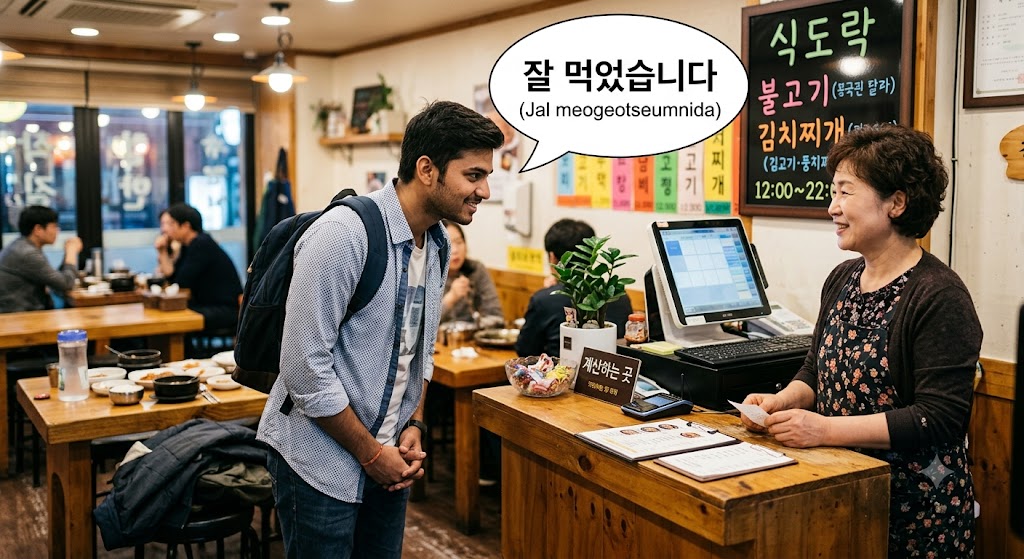
Here is a wonderful secret about traveling in South Korea: **local people deeply appreciate when foreigners make even a modest effort to speak Korean.** In fact, Korean culture places an immense emotional value on politeness, sincerity, and mutual respect. When you enter a traditional restaurant, look your server in the eye, and offer a bright *“Annyeonghaseyo!”*, or thank a vendor with a sincere *“Gamsahamnida!”*, something magical happens. Faces light up, barriers dissolve, and it is remarkably common for local restaurant ajummas to reward your warmth with extra portions, free beverage refills, or bonus banchan side dishes. In this comprehensive guide, we will walk you through essential greetings, practical dining terms, shopping vocabulary, and transportation survival phrases designed to make your journey unforgettable.
2. Essential Greetings, Politeness, and Cultural Respect
Korean society is structured around a refined system of polite language known as *Jondaetmal* (존댓말). Using formal, polite phrasing instantly signals to everyone you meet that you are a respectful, thoughtful guest.
| English Meaning | Korean Hangul | Romanized Pronunciation |
|---|---|---|
| Hello / Good Day | 안녕하세요 | An-nyeong-ha-se-yo |
| Thank You | 감사합니다 | Gam-sa-ham-ni-da |
| Excuse Me (Attention) | 저기요 / 잠시만요 | Jeo-gi-yo / Jam-si-man-yo |
| I Am Sorry | 죄송합니다 | Jwi-song-ham-ni-da |
| Yes / No | 네 / 아니요 | Ne / A-ni-yo |
Cultural Body Language Tip:
- When handing money, a credit card, or your passport to a clerk or taxi driver, always support your right forearm with your left hand as a universal sign of respect.
3. Dining, Street Food, and Restaurant Ordering
Exploring South Korea's legendary food scene is a high point of any journey. Whether you are sitting down for Korean barbecue or browsing night market stalls, these phrases will help you navigate menus with ease.
- Please give me this: I-geot ju-se-yo (이것 주세요) while pointing directly at the menu picture or dish.
- Is it spicy?: Mae-wo-yo? (매워요?) - Essential if you have a sensitive palate.
- Less spicy, please: Deol maep-ge hae-ju-se-yo (덜 맵게 해주세요).
- Water, please: Mul ju-se-yo (물 주세요).
- Check/Bill, please: Gye-san-seo ju-se-yo (계산서 주세요).
4. Shopping, Prices, and Navigating Markets
From Myeongdong cosmetics boutiques to traditional antique alleys in Insadong, shopping is an absolute joy. Use these quick queries to verify pricing and payment options.
- How much is this?: Eol-ma-ye-yo? (얼마예요?)
- Do you take credit cards?: Ka-deu dwae-yo? (카드 돼요?)
- Do you have [item]?: [Item] it-seo-yo? ([Item] 있어요?)
- Bag / Receipt, please: Bong-tu / Yeong-su-jeung ju-se-yo (봉투/영수증 주세요).
5. Transportation, Directions, and Overcoming Language Barriers
Moving efficiently through urban transit networks or communicating with taxi drivers is seamless when you keep these key survival phrases memorized.
- Where is the restroom?: Hwa-jang-sil eo-di-ye-yo? (화장실 어디예요?)
- Where is the subway station?: Ji-ha-cheol-yeok eo-di-ye-yo? (지하철역 어디예요?)
- Please take me to [Destination]: [Destination]-(eu)ro ga-ju-se-yo ([Destination]로 가주세요).
- Do you speak English?: Yeong-eo ha-se-yo? (영어 하세요?)
- I cannot speak Korean well: Han-guk-mal jal mot-hae-yo (한국말 잘 못해요).
Interactive Survival Korean & Browser TTS Toolkit
Utilize the 20 essential survival phrases below to practice your native pronunciation. Click the '▶ Listen' buttons to hear native audio or save your favorites using the '⭐ Fav' buttons.
1. Hello / Good afternoon
안녕하세요
An-nyeong-ha-se-yo
2. Thank you
감사합니다
Gam-sa-ham-ni-da
3. Excuse me / Just a moment
잠시만요
Jam-si-man-yo
4. I am sorry
죄송합니다
Jwi-song-ham-ni-da
5. Yes / No
네 / 아니요
Ne / A-ni-yo
6. Please give me this
이것 주세요
I-geot ju-se-yo
7. Is it spicy?
매워요?
Mae-wo-yo?
8. Please make it less spicy
덜 맵게 해주세요
Deol maep-ge hae-ju-se-yo
9. Water, please
물 주세요
Mul ju-se-yo
10. The bill, please
계산서 주세요
Gye-san-seo ju-se-yo
11. How much is this?
얼마예요?
Eol-ma-ye-yo?
12. Do you accept credit cards?
카드 돼요?
Ka-deu dwae-yo?
13. A bag, please
봉투 주세요
Bong-tu ju-se-yo
14. A receipt, please
영수증 주세요
Yeong-su-jeung ju-se-yo
15. Where is the restroom?
화장실 어디예요?
Hwa-jang-sil eo-di-ye-yo?
16. Where is the subway station?
지하철역 어디예요?
Ji-ha-cheol-yeok eo-di-ye-yo?
17. Please take me here
여기로 가주세요
Yeogi-ro ga-ju-se-yo
18. Do you speak English?
영어 하세요?
Yeong-eo ha-se-yo?
19. I cannot speak Korean well
한국말 잘 못해요
Han-guk-mal jal mot-hae-yo
20. Thank you for the meal
잘 먹었습니다
Jal meo-geot-seum-ni-da
20. Thank you for the meal
잘 먹었습니다
Jal meo-geot-seum-ni-da
Seoul Tourism Center Location Map
Use the interactive map below to locate central Seoul tourist information hubs and assistance centers.
Conclusion & Summary
Core Summary:
- Mastering essential polite phrases like Annyeonghaseyo and Gamsahamnida instantly earns warm local hospitality.
- Utilize practical dining and shopping terms to navigate restaurants and markets seamlessly.
- Leverage Naver Map for navigation and remember cultural body language like using two hands when exchanging items.
Sources & References:
- National Institute of Korean Language Travel Communication Guidelines
- Korea Tourism Organization (KTO) Cultural Etiquette Resources
Compliance Note: This guide is independently curated for educational and practical reference to assist international tourists navigating South Korea.